The United Irishmen's Rebellion and the Easter Rising: Clarification on Historical Context
1800 · Ireland, Ireland
The United Irishmen's Rebellion: The Irish Republican Army attempt to launch a diversionary attack during the Easter Rising.
May 27, 1798
The Battle of Oulart Hill took place during the Irish Rebellion of 1798, where the forces of the United Irishmen defeated the local militia.
Oulart, Ireland | United Irishmen
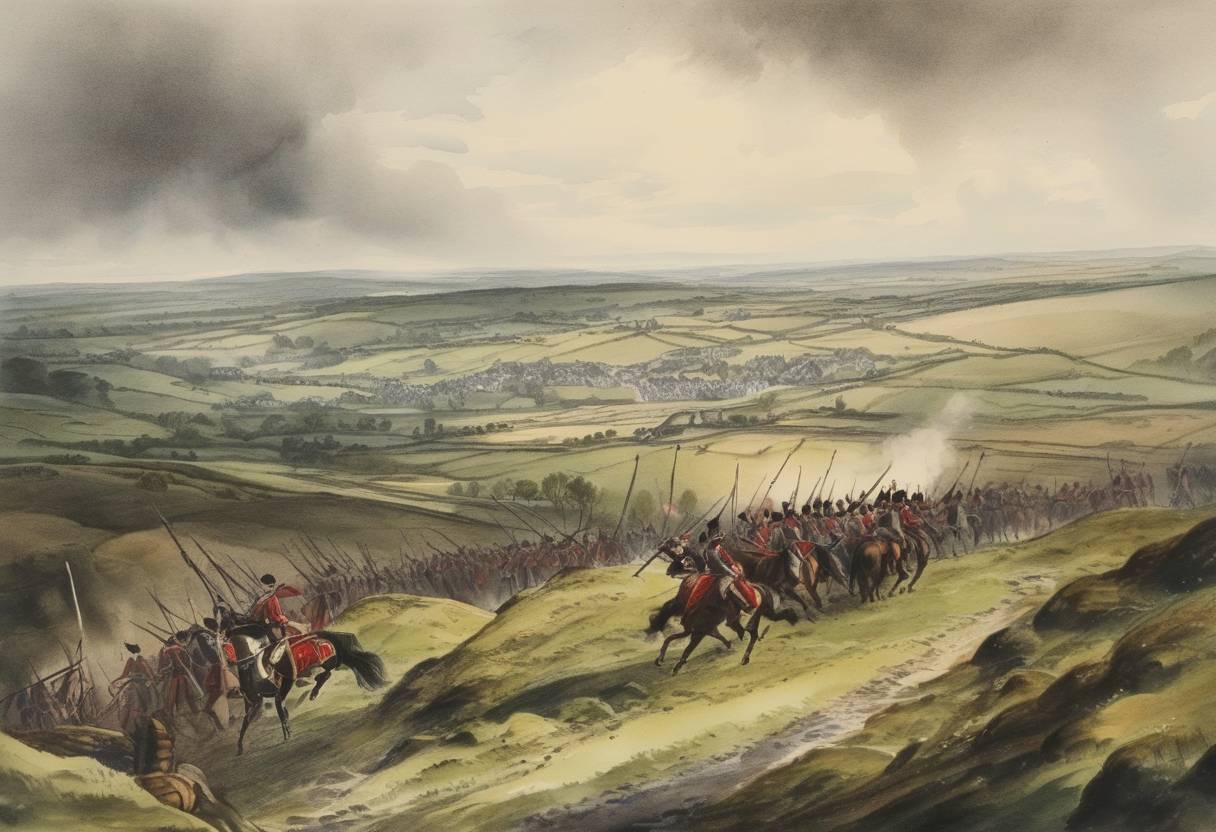
The Battle of Oulart Hill, significant during the Irish Rebellion of 1798, occurred on May 27, 1798, near the village of Oulart in County Wexford, Ireland. It marked a surprising victory for the forces of the United Irishmen against the local Crown forces, underscoring the growing unrest in the region.
In the late 18th century, Ireland faced significant political and social strife. The Society of United Irishmen, formed in the 1790s, sought to reform the Irish political system and reduce English influence, pushing for Irish independence. By 1798, tensions had escalated into armed revolt, particularly inspired by revolutionary movements in France and America.
On the morning of May 27, approximately 1,000 insurgents, largely ill-equipped peasants armed with pikes and a few firearms, gathered at Oulart Hill. Their leader, Father John Murphy, who was originally against violence but was drawn into the uprising by local events, had helped rally the men in rebellion against the repressive local militia.
The Crown forces, a unit of about 110 men drawn from the North Cork Militia under the command of Colonel Granville Stapylton, marched from their base in Wexford to confront the rebels. Overconfident and underestimating the resolve of the insurgents, the militia advanced up Oulart Hill.
The rebels, familiar with their terrain and motivated by desperation for change, used guerrilla tactics to overwhelm the militia. They deployed a flanking strategy that allowed them to ambush the government forces, which were soon surrounded and largely massacred. Stapylton and only a few others managed to escape, with the encounter resulting in the deaths of around 100 militiamen.
The victory at Oulart Hill galvanized United Irishmen across the region, serving as a catalyst for further uprisings in County Wexford and beyond. The battle exposed the vulnerabilities of British forces in Ireland and demonstrated the potential effectiveness of the rebellion. Although the uprising was ultimately suppressed by government forces later that year, battles like Oulart Hill left a lasting impact on the fight for Irish independence.
Oulart Hill remains a symbol of resistance and is remembered as a pivotal moment in Ireland’s struggle against British rule during the 1798 Rebellion. The subsequent rise in insurgent activities in Wexford became one of the most intense phases of the entire rebellion.
Source: en.wikipedia.org