The Battle of Kos: August 5, 1824
1824 · Kos, Ottoman Empire
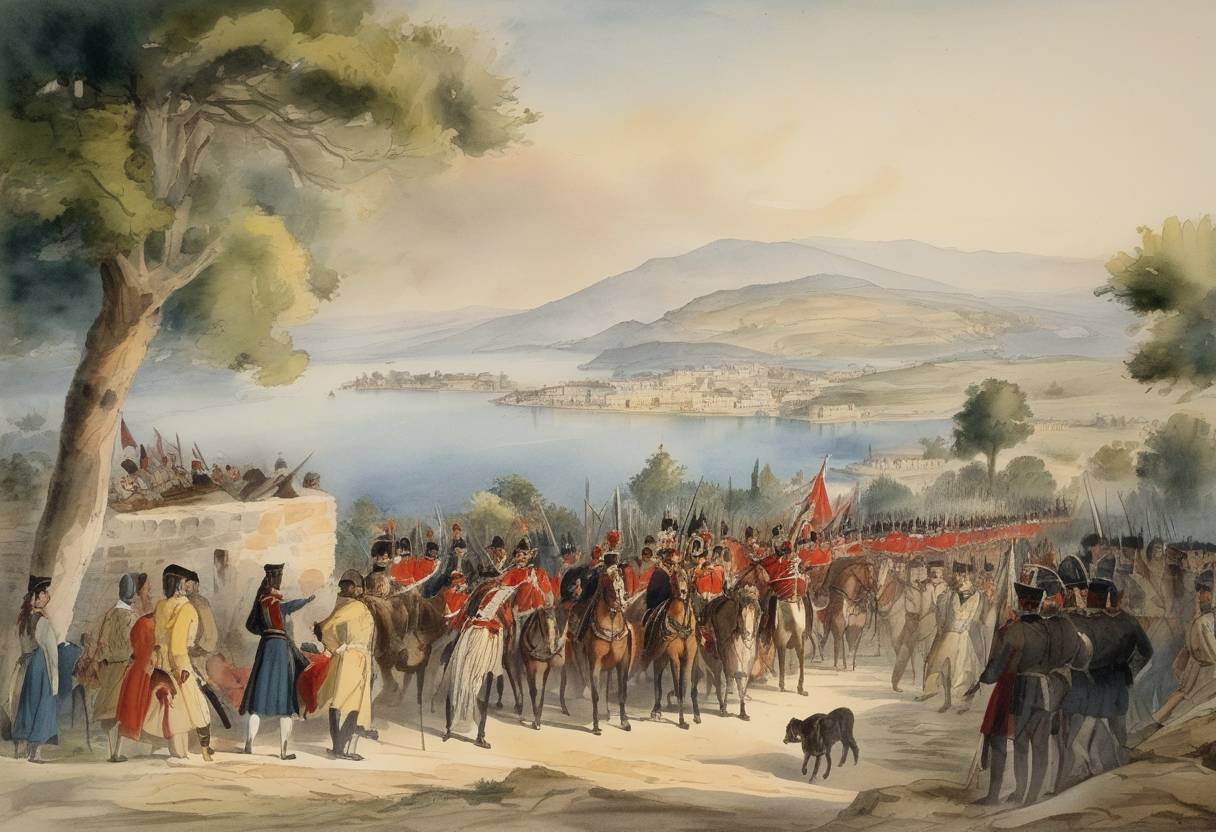
The Battle of Kos took place during the Greek War of Independence, where Greek forces clashed with the Ottoman Empire's forces.
April 19, 1824
The Greek War of Independence against the Ottoman Empire received a significant boost when Lord Byron, a famous British poet and leader in the independence movement, died in Missolonghi, Greece.
Missolonghi, Greece | Greek War of Independence movement
On April 19, 1824, George Gordon Byron, commonly known as Lord Byron, a prominent British poet and active supporter of the Greek War of Independence, died in Missolonghi, Greece. His death marked a significant emotional and symbolic moment for the Greek struggle against the Ottoman Empire.
The Greek War of Independence began in 1821, as Greek revolutionaries sought to liberate Greece from centuries of Ottoman rule. The movement was part of a broader wave of nationalist uprisings across Europe. Given the influence of classical Greek heritage on Western civilization, the Greek cause garnered considerable sympathy from intellectuals, artists, and political figures in Europe.
Lord Byron, a leading figure of the Romantic movement, was both a celebrated poet and an ardent philhellene (lover of Greek culture). Enthusiastic about the Greek cause, Byron sailed to Greece in 1823, contributing not only his personal fortune but also leveraging his fame to draw international attention and support. He joined the insurgents in Missolonghi, a key strategic location in western Greece.
In Missolonghi, Byron worked to organize the Greek forces, using both his financial resources and his leadership. However, he contracted a severe fever, which was exacerbated by the medical practice of bloodletting—a common but often harmful treatment of the time—administered by his physicians. Byron succumbed to this illness on April 19, 1824, at the age of 36.
Byron’s death had a profound impact on both Greece and Europe:
Symbolic Significance: Byron’s sacrifice epitomized the spirit of philhellenism, and his passing became a rallying cry for renewed support for the Greek cause. He was hailed as a martyr for freedom and independence.
International Attention: His death heightened European interest in the Greek struggle, increasing pressure on governments to provide assistance, both diplomatic and material, to the Greek independence movement.
Cultural Legacy: Byron’s involvement and subsequent death immortalized his legacy not only as a literary giant but also as a hero and symbol of international solidarity.
Although the war continued for several more years, ending with the recognition of Greek independence in 1830, Byron’s contribution and sacrifice left an indelible mark on the history of modern Greece and the broader movement for national self-determination in the 19th century. His legacy is reflected in the numerous tributes and memorials dedicated to him in Greece and beyond.
Source: en.wikipedia.org