Firebombing of Tokyo - March 9-10, 1945
1945 · Tokyo, Japan
The United States conducted a massive firebombing raid on Tokyo, Japan, during World War II, resulting in extensive destruction and loss of life.
May 17, 1943
The United States Army Air Forces launched Operation Chastise, targeting German dams in the Ruhr Valley. This operation involved the use of the 'bouncing bomb,' developed by Barnes Wallis, and led to the destruction of the Möhne and Edersee Dams.
Ruhr Valley, Germany | United States Army Air Forces
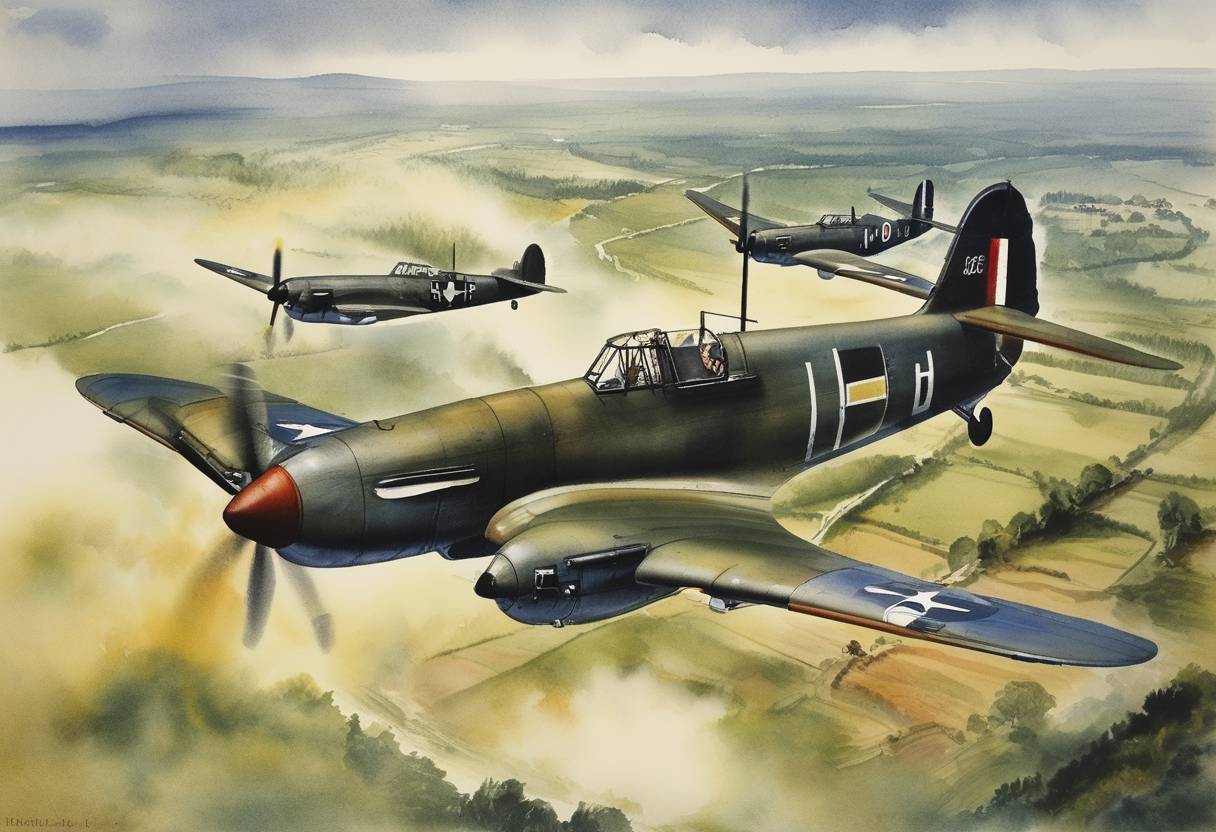
On May 17, 1943, the United States Army Air Forces did not launch Operation Chastise; this operation was actually a mission carried out by the Royal Air Force (RAF) of the United Kingdom. Operation Chastise was a pivotal attack against key infrastructure targets in Nazi Germany’s industrial heartland, particularly aiming to undermine the German war effort by attacking major dams in the Ruhr Valley.
Barnes Wallis, a visionary British engineer and inventor, developed the innovative ‘bouncing bomb’ used in this operation. Wallis’s invention was a response to the need for a weapon capable of breaching the formidable defenses of large dams. These bombs were designed to skip over water, avoiding torpedo nets, and to detonate against the dam walls underwater to cause maximum structural damage.
The mission was executed by the specially-formed 617 Squadron of the RAF, famously known as the “Dambusters.” Nineteen Lancaster bombers participated in the raid, organized into three waves for maximum impact. The operation specifically targeted the Möhne, Eder, and Sorpe dams.
On the night of May 16-17, the carefully timed and executed bombing raid resulted in successfully breaching the Möhne and Edersee dams. The Möhne Dam was attacked first, with the breaching causing a massive flood wave that damaged infrastructure, factories, and homes situated downstream. Shortly after, the Edersee Dam met the same fate, with the release of its waters causing further delays to industrial production and resource movements essential to the Nazi economy.
The destruction led to the inundation of the Ruhr Valley and contributed to a temporary disruption of Germany’s industrial activities. The operation resulted in approximately 1,600 civilian casualties, but conversely, did not cripple the German industry as heavily as intended in the long term due to rapid repairs and reconstruction efforts. Nonetheless, the raid was a significant morale booster for the Allied forces and showcased the potential of precision bombing.
Operation Chastise became legendary for its audacious concept and execution, spotlighting the capabilities and bravery of RAF’s 617 Squadron. The success of the mission was a testament to the ingenuity behind the bouncing bomb and the determination of the Aircrew who risked their lives in this daring operation, as eight aircraft were lost with significant loss of life among the airmen.
In the broader scope of the war, Operation Chastise highlighted the importance of targeting infrastructure and the evolving strategies of aerial warfare, which would continue to be refined throughout the conflict.
Source: www.history.com