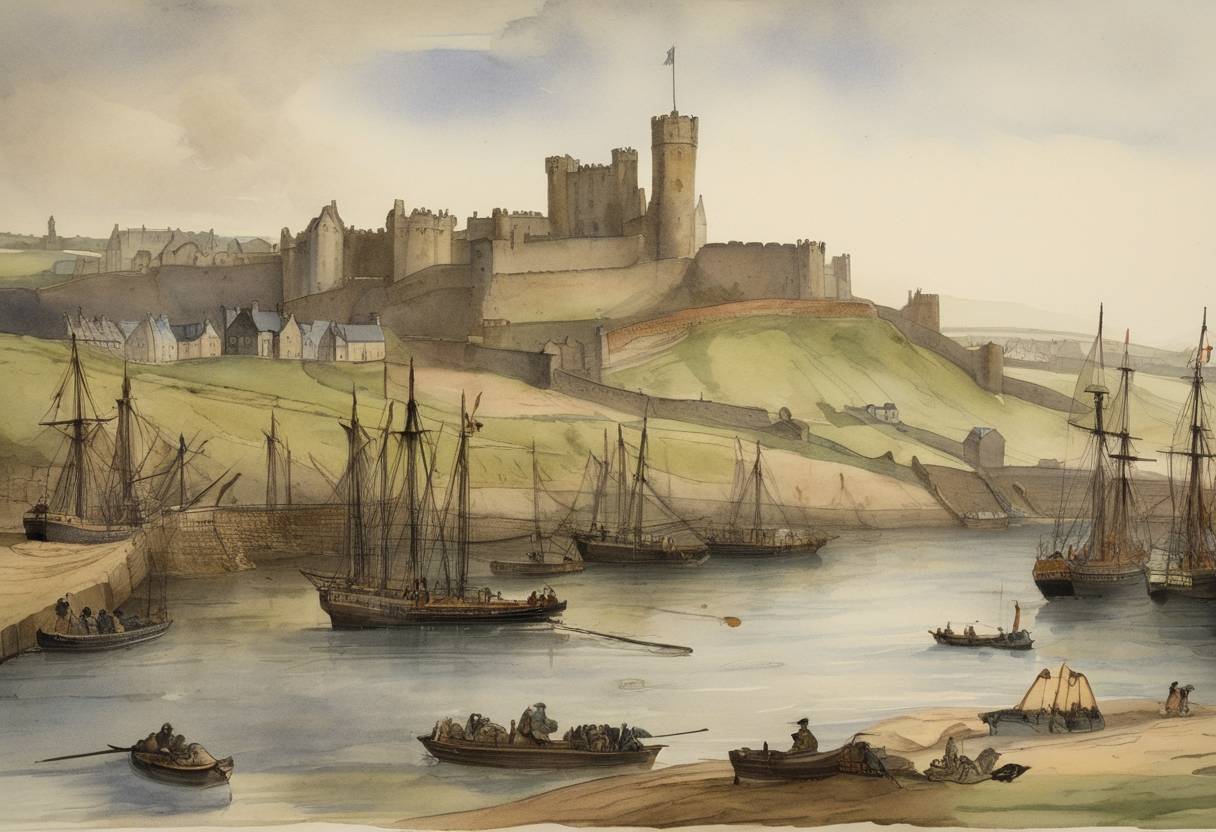
Capture of Berwick-upon-Tweed by the Scots - August 7, 1318
On August 7, 1318, Berwick-upon-Tweed, a strategically crucial town located at the border of England and Scotland, was captured by the Scots following a prolonged siege. This event is an important episode in the ongoing Wars of Scottish Independence, a series of military campaigns and battles between England and Scotland that sought to assert Scotland’s independence from English rule.
Context
The early 14th century was a turbulent period in Anglo-Scottish relations. Edward I of England had launched a series of campaigns attempting to bring Scotland under English control, leading to widespread resistance and the eventual rise of Robert the Bruce as a key figure in the Scottish fight for independence. Following his coronation as King of Scots in 1306, Bruce began reclaiming territories held by the English.
By 1318, the Scottish efforts to regain control over contested lands had intensified. Berwick-upon-Tweed was particularly significant due to its location on the eastern coast and its function as a major port with considerable economic and military value.
The Siege and Capture
The siege of Berwick began in the months leading up to August 1318. The town, at that time a formidable fortress with robust defenses, was initially under English control. Scottish efforts to reclaim Berwick were part of a broader strategy to regain key strongholds and weaken English influence in the region.
Under the leadership of Sir James Douglas and the Earl of Moray, the Scots launched a coordinated and determined assault, cutting off supplies and exploiting weaknesses in the town’s defenses. The campaign was aided by internal strife and lack of support for the English garrison stationed in the town.
On August 7, 1318, the Scots successfully breached the defenses, capturing Berwick-upon-Tweed from the English. This victory was a major morale booster for the Scots and affirmed their growing military capabilities.
Aftermath and Significance
The capture of Berwick was a significant strategic win for Robert the Bruce’s campaign. It not only gave the Scots control over an important border town but also disrupted English supply lines and demonstrated the effectiveness of Scottish military strategies.
The fall of Berwick marked a pivotal point in the Scottish Wars of Independence, leading to subsequent conflicts as the English sought to recapture the town. Its capture strengthened Bruce’s position and further solidified his legitimacy as King of Scotland.
Berwick-upon-Tweed would change hands several times in the subsequent years, underscoring its strategic importance in the Anglo-Scottish conflicts that continued into the later Middle Ages.