Capture of Calcutta by the British, January 2, 1757
1757 · Calcutta, India
The British army captures the city of Calcutta in India from the Nawab of Bengal after the recapture following the Siege of Calcutta.
April 2, 1755
Commodore William James captured Suvarnadurg, a fortress along the western coast of India, as part of a campaign against the Marathas. The capture was a significant achievement for the British East India Company, aiding in their naval supremacy in the region.
Suvarnadurg, India | British East India Company
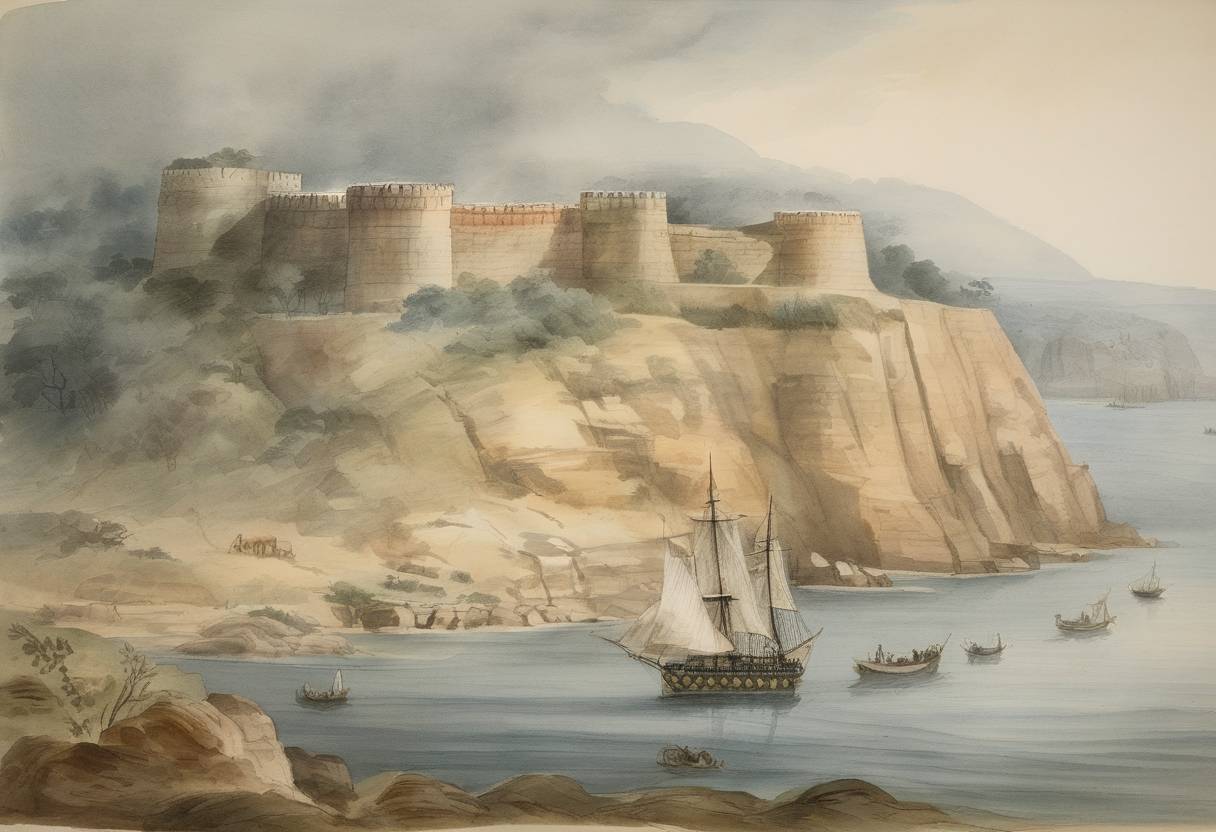
On April 2, 1755, Commodore William James of the British East India Company achieved a significant military victory by capturing the fortress of Suvarnadurg. Located on the western coast of India, Suvarnadurg was a strategically important naval base for the Maratha Empire.
The mid-18th century was a period of intense maritime competition between European powers and local empires in India. The British East India Company sought to expand its influence and control over trade routes along the Indian Ocean, a goal obstructed by the formidable Maratha navy. Suvarnadurg, a key Maratha stronghold, was known for its robust defenses and strategic location, making it a critical target for the British.
Under the command of Commodore William James, a naval force was assembled with the objective of neutralizing the Maratha threat by capturing their coastal fortifications. On April 2, 1755, James led a naval assault against Suvarnadurg. The operation involved a well-coordinated bombardment by British ships, which effectively weakened the fortress’s defenses. Following the naval assault, British forces executed a well-planned land attack, which led to the fort’s swift capture.
The capture of Suvarnadurg marked a major triumph for the British East India Company. It not only weakened the Maratha navy but also enhanced British naval supremacy in the Arabian Sea. This victory allowed the company to secure better control over maritime trade routes and strengthened its position in Western India.
The fall of Suvarnadurg had lasting implications in the regional balance of power. It was part of a wider campaign by the British to dismantle Maratha naval capabilities, which included targeting other forts along the coast. The success of this military operation contributed to the broader British strategy of territorial expansion and consolidation of power in India.
Commodore William James was lauded for his tactical acumen and leadership in this operation. The victory at Suvarnadurg set the stage for further British advances in the region, gradually expanding their influence over the Indian subcontinent.
Source: www.britannica.com