King Henry VIII Marries Anne of Cleves
1540 · Greenwich, England
King Henry VIII of England married Anne of Cleves, his fourth wife.
May 6, 1536
King Henry VIII ordered the arrest of Anne Boleyn and her brother George Boleyn. This was a significant event leading to Anne's trial and execution, influencing the course of English history.
London, England | English Monarchy
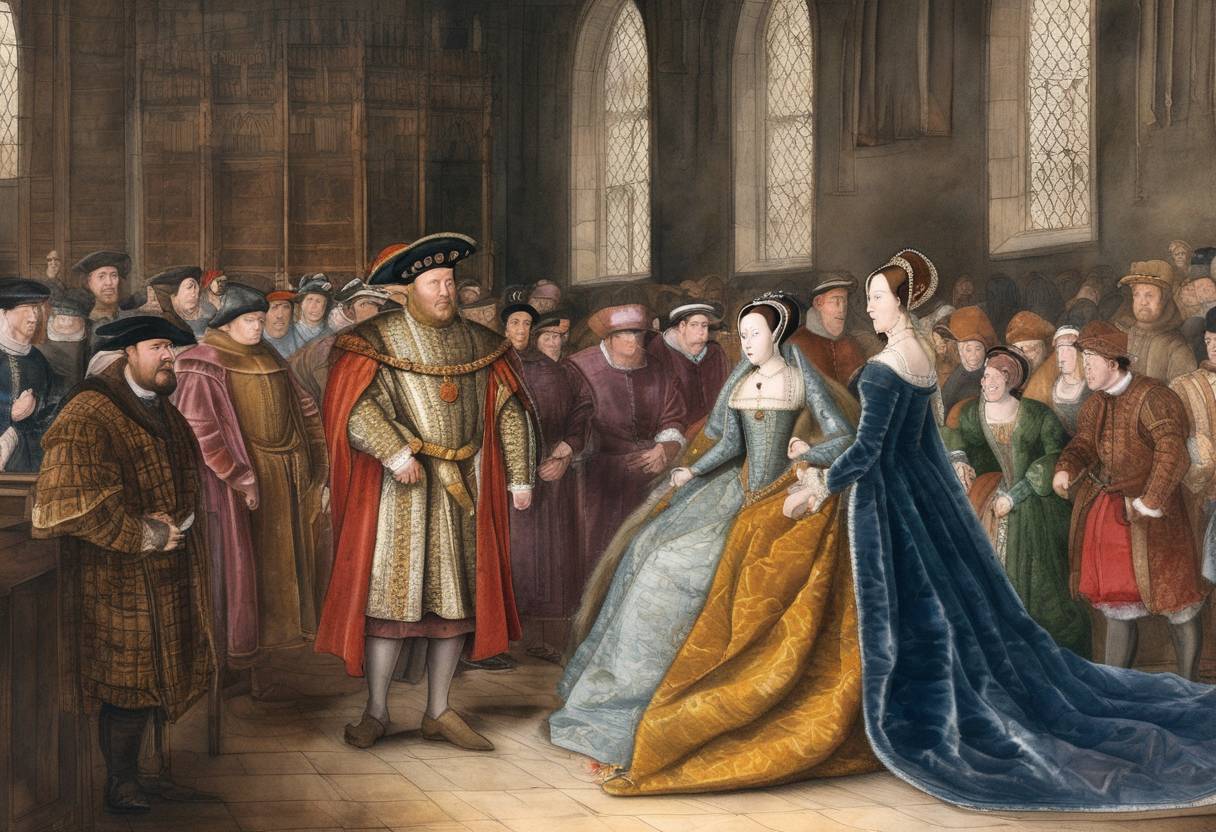
On May 6, 1536, a pivotal moment in English history unfolded as King Henry VIII ordered the arrest of Anne Boleyn, his second wife, and her brother George Boleyn, Viscount Rochford. This action set off a chain of events that would lead to Anne’s trial and eventual execution, fundamentally impacting the English monarchy and the religious landscape of the country.
Anne Boleyn’s relationship with Henry VIII was initially a passionate union that led to the king’s controversial break from the Catholic Church and the creation of the Church of England. However, the marriage was marred by Anne’s failure to produce a male heir and the political and religious ramifications of Henry’s divorce from Catherine of Aragon.
As tensions grew, whispers of Anne’s infidelity began circulating, fueled by Henry’s affiliations with other courtiers and his infatuation with Jane Seymour. The charges against Anne included adultery, incest, and treason, accusations deemed serious and scandalous.
The arrest was orchestrated by Thomas Cromwell, Henry VIII’s chief minister, and took place at Greenwich Palace. Anne was apprehended and taken to the Tower of London, a move premeditated by the need to eliminate her influence and secure a male successor through a new marriage for the king. George Boleyn, along with other courtiers accused of being Anne’s lovers, was similarly arrested.
Anne Boleyn’s subsequent trial was swift and led to her execution on May 19, 1536. The charges, widely believed by historians to be fabricated or exaggerated, underscored the volatile nature of the Tudor court and the dangerous precedence set by royal marriages and political machinations.
The execution marked a dramatic turning point in English history. Henry’s marriage to Jane Seymour soon after and the subsequent birth of Edward VI ensured a male heir, temporarily stabilizing the succession crisis. However, the events surrounding Anne’s downfall had long-lasting implications, contributing to the historical narrative of the Tudor dynasty and the English Reformation.
The arrest and execution of Anne and her brother highlight the complexities of power, gender, and religion during Henry VIII’s reign, leaving a legacy that continues to fascitate scholars and historians.
Source: en.wikipedia.org