The Beginning of the Dominican Restoration War: August 16, 1863
1863 · Capotillo, Dominican Republic
The Dominican Restoration War begins as Gregorio Luperón declares the independence of the Dominican Republic from Spanish annexation.
February 27, 1844
The Dominican Republic gains independence from Haiti. After years of Haitian occupation, the independence was spearheaded by the group La Trinitaria, led by Juan Pablo Duarte.
Santo Domingo, Dominican Republic | La Trinitaria
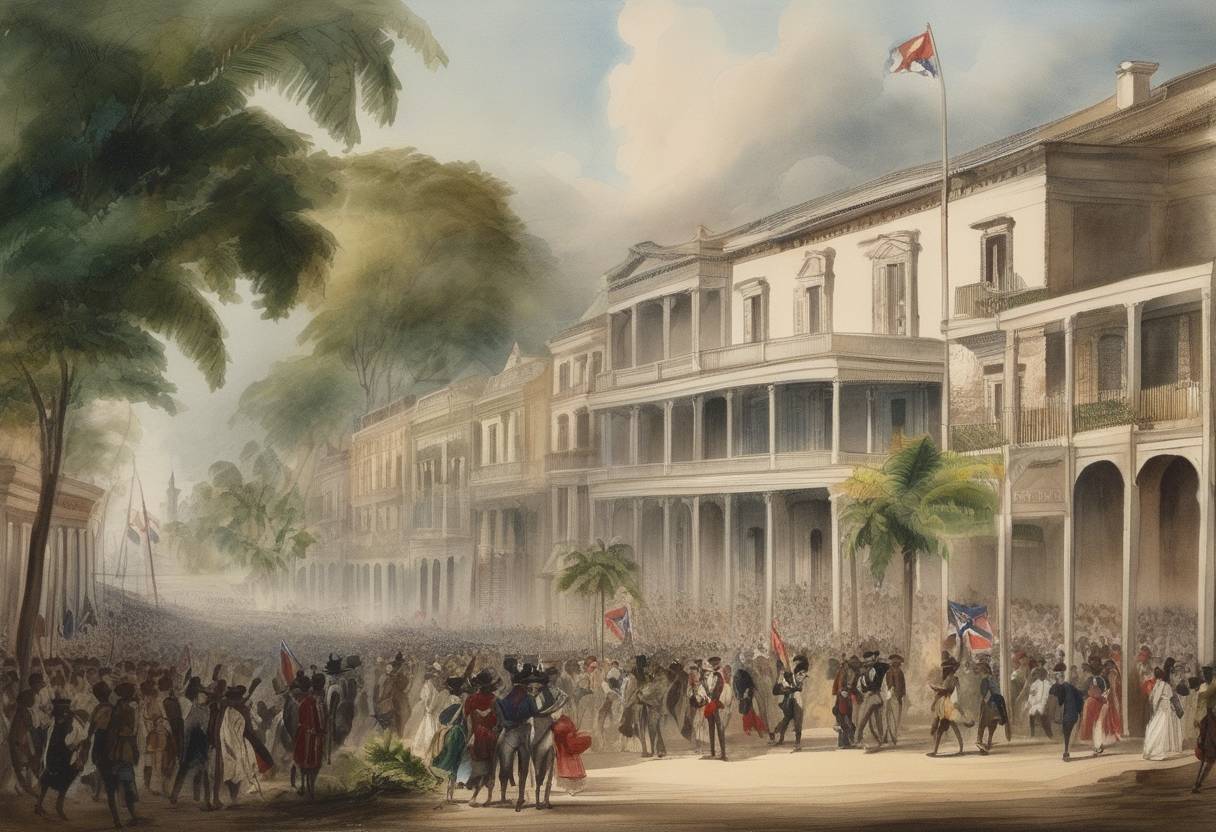
On February 27, 1844, the Dominican Republic declared its independence from Haiti, marking the end of a 22-year period of Haitian rule. The quest for independence was orchestrated by a secret society known as La Trinitaria, founded by the national hero Juan Pablo Duarte and a group of like-minded patriots. This event is a pivotal moment in Dominican history, celebrated annually as the Día de la Independencia.
The island of Hispaniola, which today is divided between Haiti and the Dominican Republic, has a complex colonial history. Originally colonized by the Spanish, the eastern part of the island (present-day Dominican Republic) saw a decline in Spanish influence in the late 18th and early 19th centuries. During this time, Haiti, the western third of the island, emerged as a strong entity following its own revolution against French colonial rule.
In 1822, President Jean-Pierre Boyer of Haiti unified the island under Haitian control, advocating for abolition and land reforms which were unpopular among the Dominican population. Over the ensuing years, dissatisfaction with Haitian governance grew, particularly under Boyer’s regime, which faced economic hardships and cultural tensions.
Founded in July 1838 by Juan Pablo Duarte, La Trinitaria was a covert society dedicated to achieving Dominican independence. The group aimed at unifying Dominicans under a shared national identity separate from that imposed by Haitian occupation. Members of La Trinitaria held clandestine meetings and orchestrated a grassroots campaign to gain support across the region.
In February 1844, as support for independence swelled, La Trinitaria took decisive action. On the night of February 27, a group of revolutionaries led by Francisco del Rosario Sánchez and Matías Ramón Mella initiated the rebellion by taking over the Puerta del Conde, a fort in the capital, Santo Domingo. The rebels raised the Dominican flag, signaling the birth of a new sovereign state.
The successful declaration prompted violent clashes, but Dominican forces quickly secured control. Francisco del Rosario Sánchez, Matías Ramón Mella, and Ramon Matías Mella alongside Duarte, despite being absent due to exile, were recognized as the founding fathers of the Dominican Republic. Though immediate challenges persisted, including political instability and threats from neighboring Haiti, the resolve for sovereignty prevailed.
The struggle for independence in 1844 laid the groundwork for the Dominican Republic’s national identity and its continued struggle for autonomy and political stability. The legacy of these efforts is observed in the annual Independence Day celebrations, honoring the freedom achieved and the sacrifices made by the revolutionaries of La Trinitaria.
Source: en.wikipedia.org