The Beer Hall Putsch: November 9, 1923
1923 · Munich, Germany
The Beer Hall Putsch, an attempted coup by Adolf Hitler and the Nazi Party, was thwarted in Munich, leading to Hitler's arrest and temporary setback for the Nazi movement.
November 11, 1923
Adolf Hitler was arrested for his role in the Beer Hall Putsch, a failed coup attempt in Munich.
Munich, Germany | Nazi Party
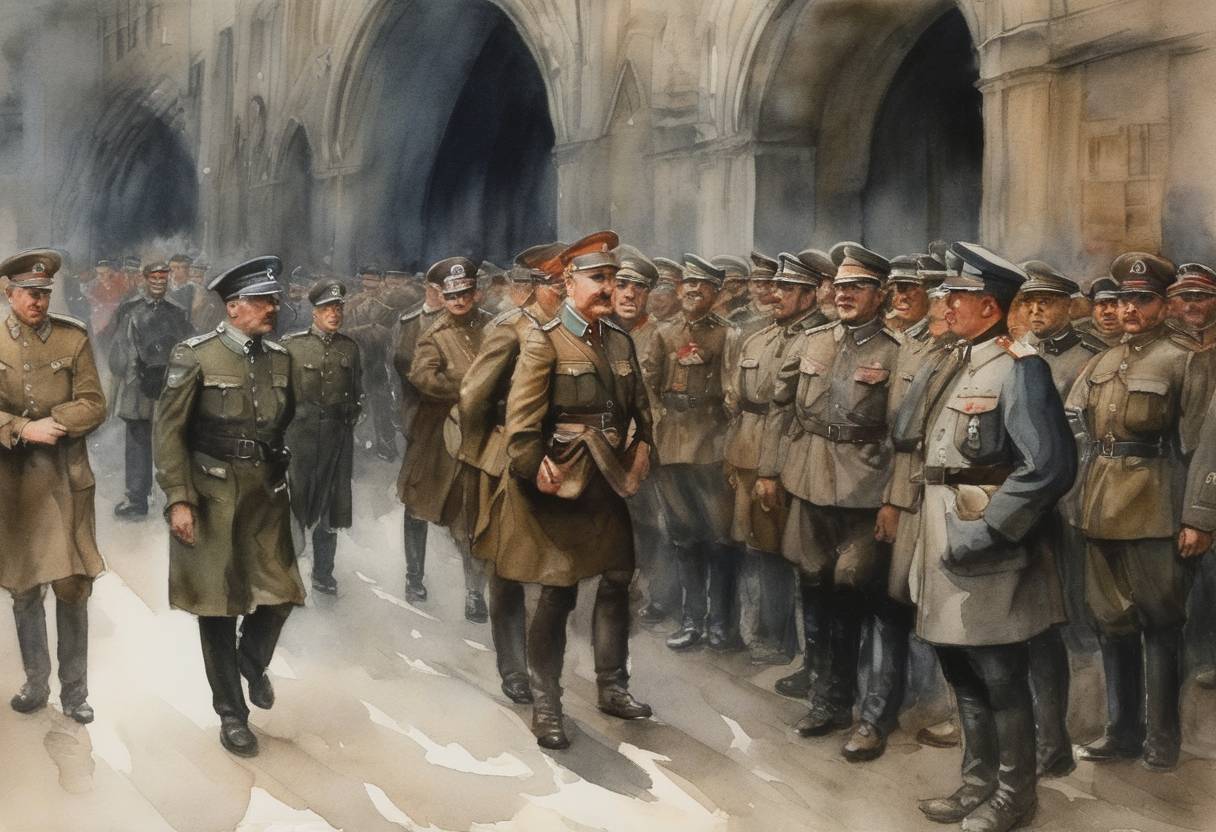
On November 11, 1923, Adolf Hitler was arrested for his involvement in the Beer Hall Putsch, a failed coup attempt in Munich, Germany. This was an early effort by the National Socialist German Workers’ Party (NSDAP), led by Hitler, to seize control of the government.
In the early 1920s, Germany was experiencing severe economic difficulties and political instability following the First World War and the harsh conditions imposed by the Treaty of Versailles. Hyperinflation had devastated the economy, and various political factions were vying for power.
On November 8, 1923, Hitler and prominent nationalist figures, including General Erich Ludendorff, attempted to overthrow the Weimar Republic in what became known as the Beer Hall Putsch. The coup began in the Bürgerbräukeller, a large beer hall in Munich, where Hitler and his co-conspirators sought to rally support from local military and political leaders.
The plan was poorly conceived and executed. The coup failed to gain the necessary support from the military and police forces. By November 9, a confrontation took place in the streets of Munich between the putschists and the police, resulting in the deaths of 16 Nazi Party members and four policemen.
In the aftermath of the failed putsch, Hitler was arrested on November 11, 1923, and later tried for high treason. The trial began in February 1924 and garnered significant public attention. Hitler used the courtroom as a platform to promote his ideas, gaining a larger following.
In April 1924, Hitler was sentenced to five years in Landsberg Prison but served only nine months. During this time, he dictated “Mein Kampf,” which outlined his political ideology and future plans for Germany.
The failure of the Beer Hall Putsch marked a turning point for Hitler and the Nazi Party. Rather than abandoning his political ambitions, Hitler shifted to a strategy of gaining power through legal means. This event laid the groundwork for his eventual rise to power and the establishment of the Third Reich a decade later. The putsch highlighted the vulnerabilities of the Weimar Republic and the growing dissatisfaction among the German populace, which Hitler and the Nazi Party later exploited to attain political dominance.
Source: www.history.com