1969 · A Shau Valley, Vietnam
The Battle of Hamburger Hill during the Vietnam War ended after ten days of intense fighting, with U.S. and South Vietnamese forces capturing the heavily fortified hill from North Vietnamese troops.
November 14, 1965
The Battle of Ia Drang, the first major engagement between regular American and North Vietnamese forces, begins in the Vietnam War.
Ia Drang Valley, Vietnam | US Army
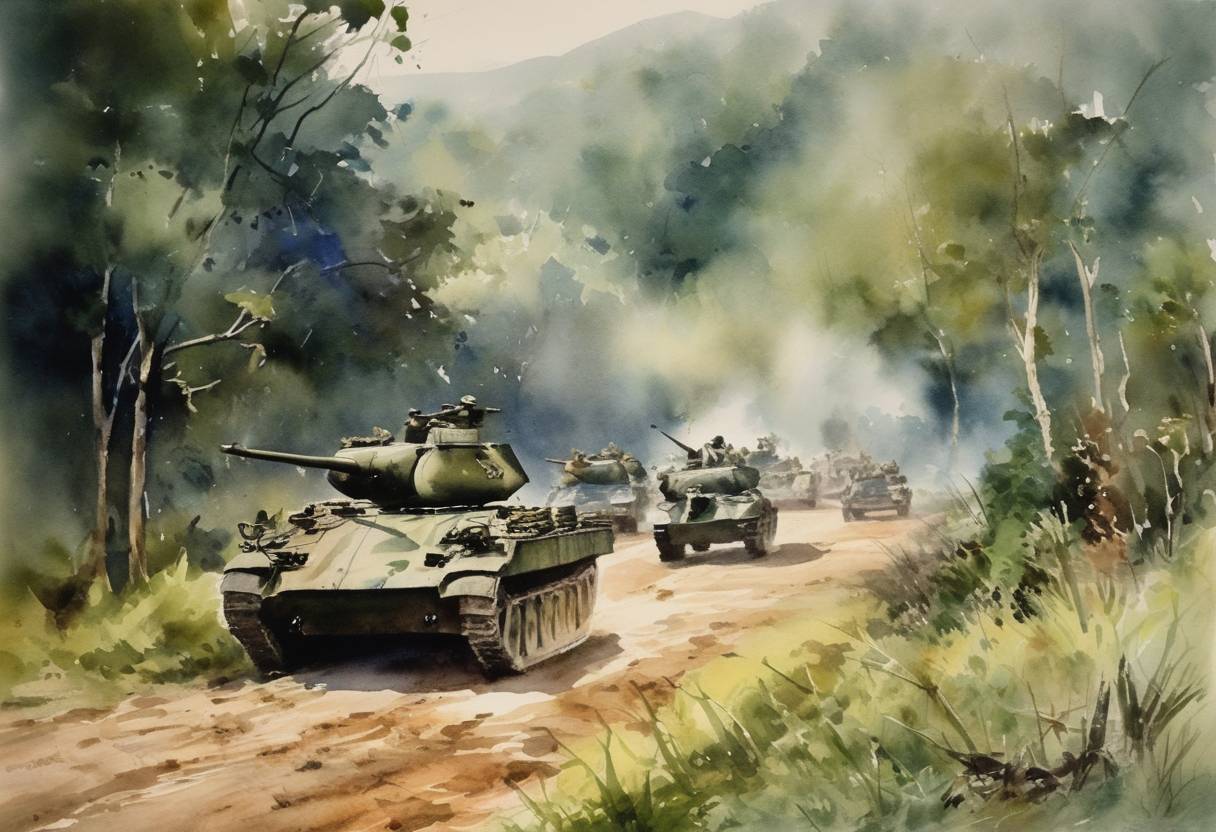
The Battle of Ia Drang, which began on November 14, 1965, marked a significant confrontation during the Vietnam War, as it was the first major engagement between regular United States Army troops and North Vietnamese forces. The battle took place in the Central Highlands of South Vietnam, specifically in the Ia Drang Valley, part of Pleiku Province.
By 1965, the Vietnam War had escalated significantly, with the U.S. increasing its military presence in support of the South Vietnamese government against the communist North Vietnamese Army (NVA) and the Viet Cong. Ia Drang was considered strategically important for both sides. The U.S. forces aimed to deploy and test new air mobility tactics, using helicopters to move troops swiftly across difficult terrain.
On November 14, the 1st Battalion, 7th Cavalry Regiment of the U.S. Army’s 1st Cavalry Division (Airmobile), led by Lieutenant Colonel Harold G. Moore, was airlifted into the Ia Drang Valley, landing at Landing Zone X-Ray. Unbeknownst to them, they were near the base of among three regiments of the North Vietnamese Army, leading to fierce combat.
Shortly after landing, American troops engaged with NVA forces, who launched relentless attacks aiming to overrun the U.S. positions. The battle involved intense close-quarters fighting in jungle terrain, interspersed with artillery and air strikes from the U.S. forces to suppress enemy advances.
The chaotic environment required quick thinking and adaptation by both sides. Air mobility allowed for rapid reinforcement and extraction, proving crucial in maintaining U.S. combat strength and endurance during the multi-day encounter. Moreover, helicopter gunships provided additional air support in repelling NVA assaults.
The battle officially ended on November 18, 1965, with both sides suffering heavy casualties. Approximately 230 American soldiers were killed, along with over 300 wounded, while North Vietnamese losses were significantly higher, estimated to be in the thousands.
Test of Air Mobility: The battle was a crucial test of the U.S.’s air mobility concept, demonstrating both its strengths and vulnerabilities.
Vietnam War Tactics: Ia Drang served as a precursor to the war’s combat style: high-intensity battles with significant reliance on air power and artillery.
Media and Public Perception: Documented by war journalist Joe Galloway, who was on the ground, the engagement and its reporting helped shape American public perception of the war. The detailed accounts contributed to changing U.S. attitudes towards military strategy and involvement in Vietnam.
Lessons Learned: The battle provided lessons on both tactical success and the human cost of protracted conflict, reinforcing the complexities of fighting in Vietnam’s terrain and the determination of the North Vietnamese forces.
The Battle of Ia Drang remains a pivotal event in understanding the Vietnam War, encapsulating the ferocity of the conflict and the evolving nature of modern military engagements.