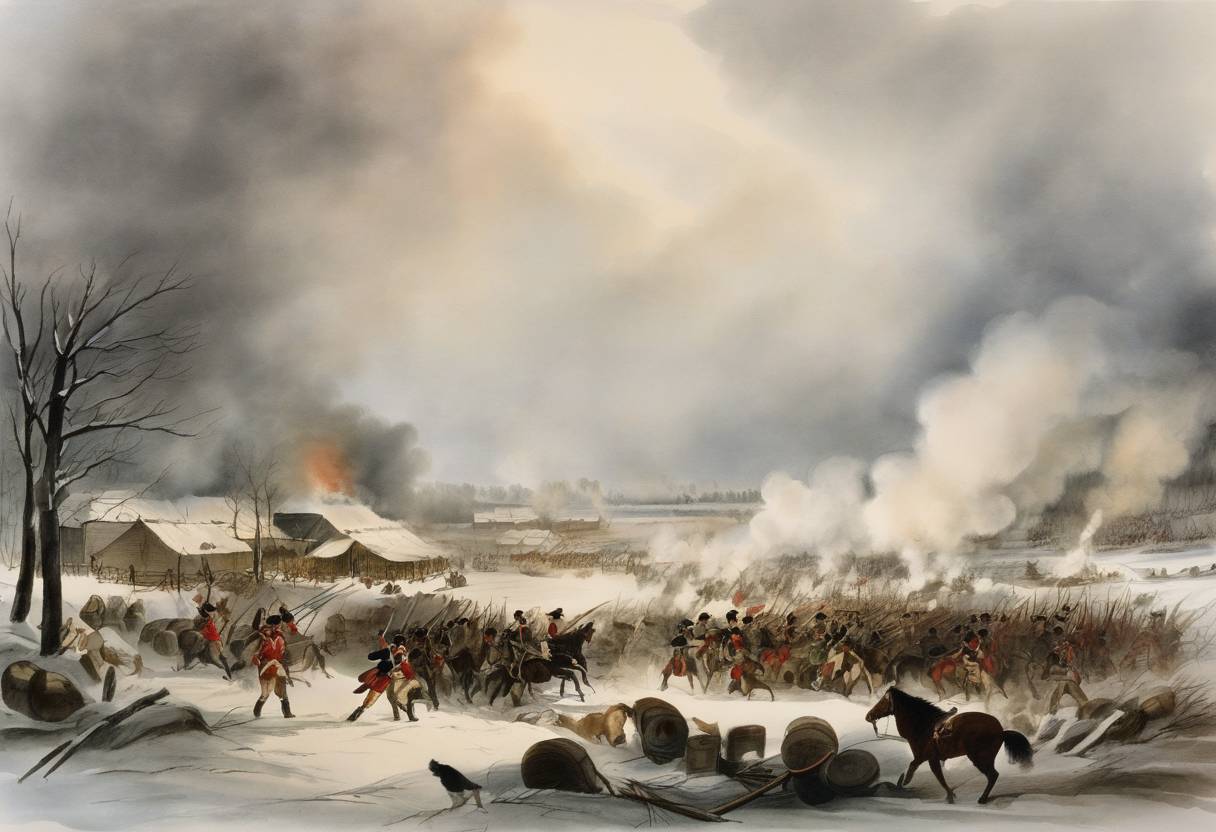
Battle of Seven Oaks
Date and Location
- Date: June 19, 1816
- Location: Near present-day Winnipeg, Manitoba, Canada, specifically in the area known as Seven Oaks.
Background
The Battle of Seven Oaks was a pivotal event in the commercial and territorial conflicts known as the Pemmican Wars, part of a broader series of conflicts in the fur trade era between two major companies, the Hudson’s Bay Company (HBC) and the North West Company (NWC).
Context
- Fur Trade Rivalry: The early 19th century saw intense competition between the HBC and the NWC as they vied for control over fur trading territories in what is now Canada. This rivalry often led to violent clashes and strategic maneuvers aimed at undermining the other’s business.
- Selkirk Settlement: In 1811, Thomas Douglas, 5th Earl of Selkirk, an influential shareholder in the HBC, established the Red River Colony (Selkirk Settlement) in the area. The colony’s settlement was part of HBC’s strategy to establish a permanent presence and food supply (through local agriculture) along critical trade routes.
Key Events of the Battle
- Confrontation: On June 19, 1816, a group of Métis working with the NWC, led by Cuthbert Grant, encountered a party from the HBC at Seven Oaks, led by Governor Robert Semple.
- Battle Dynamics: Tensions between the groups quickly escalated into violence. The NWC forces, comprised largely of Métis fighters, were better organized and equipped compared to the settlers and HBC employees.
- Outcome: The skirmish lasted only about 15 minutes but resulted in the deaths of 21 settlers, including Governor Robert Semple. The Métis suffered only one casualty.
Aftermath and Significance
- Impact on Fur Trade: The battle marked a significant escalation in hostilities between the HBC and NWC. It highlighted the volatility of relations and the critical role of Métis communities in the region.
- Legal and Political Repercussions: Following the incident, Lord Selkirk led a retaliatory expedition and temporarily seized Fort William, a key NWC stronghold. Eventually, British authorities intervened, seeking to mediate the ongoing disputes.
- Merger of Companies: Persisting conflicts and economic pressures eventually led to the merger of the Hudson’s Bay Company and the North West Company in 1821, effectively ending their rivalry.
Broader Historical Significance
- Métis Nation: The Battle of Seven Oaks is a significant event in the history of the Métis people, marking an assertion of their rights and identity in the conflict-ridden fur trade era.
- Colonial Interactions: It underscores the complexities of colonial enterprise in North America, involving economic interests, indigenous alliances, and cultural integrations.
- Legacy: The confrontation is remembered as a defining moment in Canadian history, contributing to the shaping of the Canadian West and the relationships among colonial powers, settlers, and Indigenous peoples.