Introduction of NTSC Color TV Sets on February 28, 1954
1954 · New York City, United States
The first color television sets using the NTSC standard are offered for sale to the general public.
January 3, 1957
The first electric wristwatch, created by the Hamilton Watch Company, was introduced.
Lancaster, United States | Hamilton Watch Company
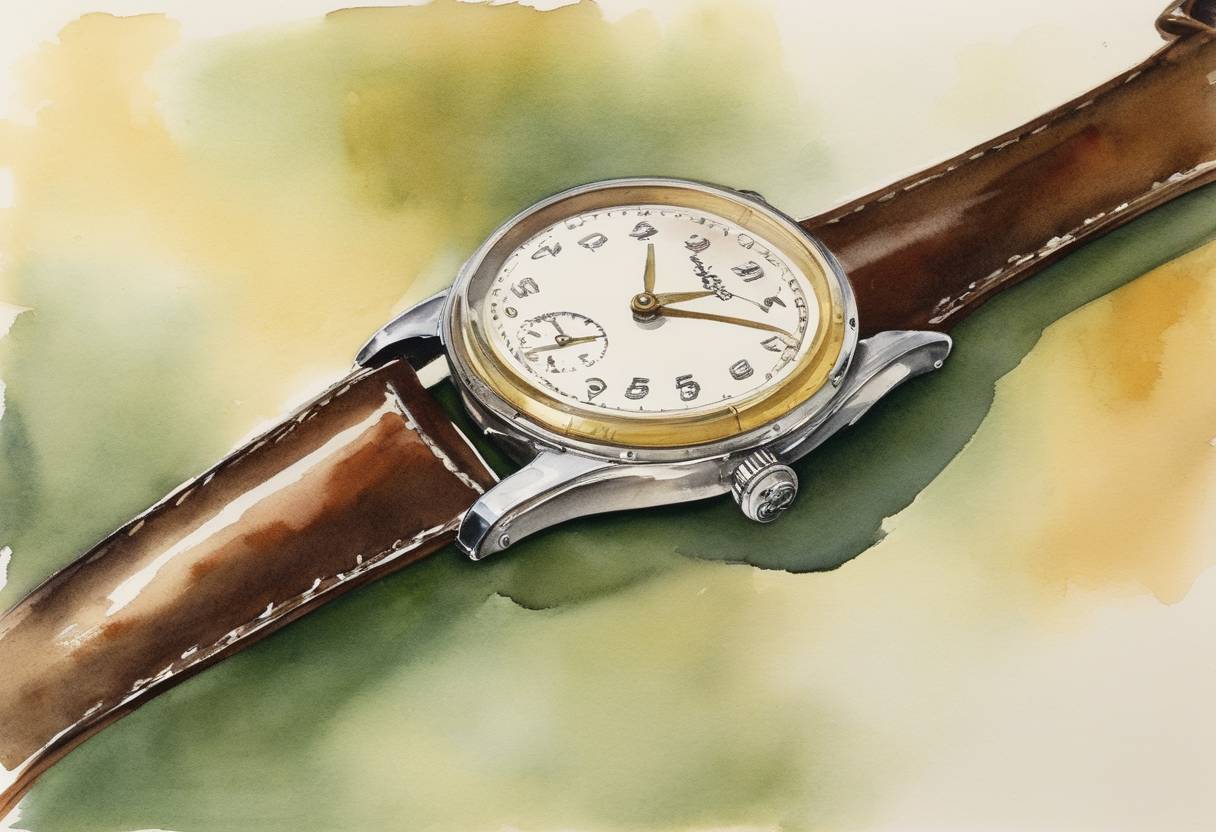
On January 3, 1957, the Hamilton Watch Company made a significant advancement in horology by introducing the first electric wristwatch, marking a pivotal shift from mechanical to electronic timekeeping. This innovation was witnessed in Lancaster, Pennsylvania, where the company was headquartered.
The development of the electric wristwatch began in response to the increasing demand for more reliable and convenient personal timekeeping devices. Traditional mechanical watches, powered by a mainspring and regulated by gears and an escapement, required regular winding. The Hamilton Watch Company aimed to eliminate these limitations by employing electricity as a power source instead.
The breakthrough timepiece, known as the Hamilton Electric 500, featured several innovative elements:
Battery-Powered Movement: It was the first watch to employ a battery, which replaced the conventional manual winding mechanism. This allowed the watch to maintain a more consistent timekeeping precision and hinted at the potential longevity and reduced maintenance of electrically powered timepieces.
Micro-Motor: The watch used a micro-motor mechanism, drawing energy from the battery to power the hands. This was a novel approach compared to the acoustic mechanical movements of its predecessors.
Unique Design: The design of the Hamilton Electric 500 was distinct and futuristic for its time, often featuring asymmetrical cases and bold styling to emphasize its modernity.
The introduction of the electric wristwatch represented a critical transitional moment in watchmaking technology. It laid the groundwork for further innovations in electronic timepieces, eventually paving the way for quartz watches in the 1970s, which became the standard due to their affordability and unmatched accuracy.
Though the initial electric watches by Hamilton encountered several technical challenges, including issues with battery life and reliability, their pioneering efforts marked the beginning of electronic horology. This breakthrough demonstrated the feasibility of battery-powered watches and influenced the broader watchmaking industry to explore and adopt electronic innovations.
By transforming the landscape of personal timekeeping, the Hamilton Electric wristwatch not only marked the dawn of a new era in watch design and functionality but also signified the technological advances embracing mid-20th-century consumer products.
Source: www.hodinkee.com