Sir Robert Walpole Becomes the First Prime Minister of Great Britain
1721 · London, United Kingdom
Sir Robert Walpole takes office as the first Prime Minister of Great Britain.
July 31, 1703
Daniel Defoe, the English writer, was placed in a pillory for seditious libel after publishing a pamphlet criticizing the government.
London, England | British Government
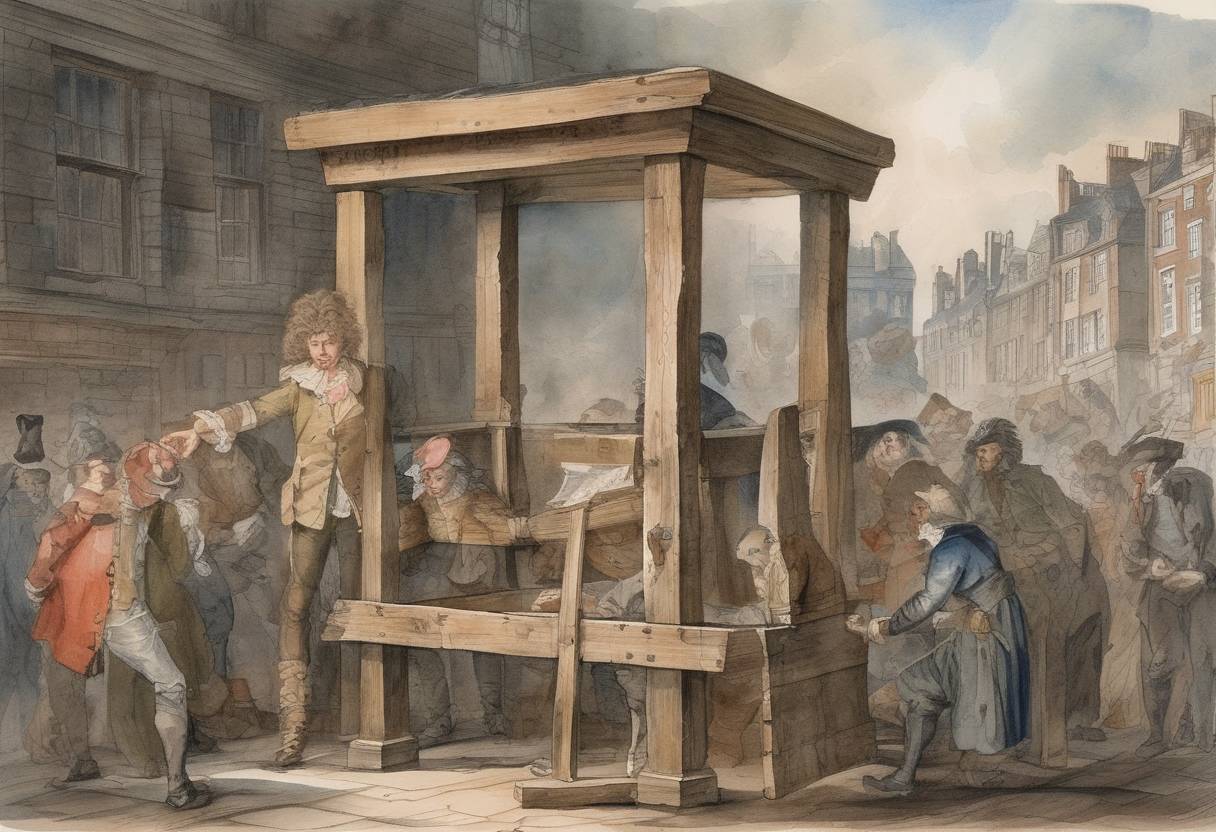
On July 31, 1703, the renowned English writer Daniel Defoe was subjected to public humiliation in the pillory for the crime of seditious libel. This event was a significant moment in Defoe’s life and had broader implications for freedom of expression in early 18th-century England.
Daniel Defoe, born in 1660, was a prolific writer, journalist, and pamphleteer, best known for his later work, “Robinson Crusoe.” However, before achieving literary fame, Defoe was deeply involved in the political and religious controversies of his time. He was a staunch supporter of the Whig government and often used his pen to criticize the Tories and the Church of England.
The incident that led to Defoe’s punishment was the publication of his satirical pamphlet, “The Shortest Way with the Dissenters,” in 1702. In this work, Defoe adopted the voice of an extreme High Churchman, sarcastically advocating for the harsh persecution of Dissenters, who were Protestant Christians not aligned with the Church of England. His intent was to highlight the absurdity and cruelty of such views, but the satire was so convincing that it was initially taken at face value by both supporters and opponents.
The pamphlet quickly drew the ire of the government and the Church. Once the true nature of the satire was understood, Defoe was arrested and charged with seditious libel. In 1703, he was tried and found guilty. The sentence was severe: a fine, imprisonment, and three days in the pillory.
On July 31, 1703, Defoe was placed in the pillory at three different locations in London. The pillory was a wooden framework on a post, with holes for securing the head and hands, used to publicly humiliate offenders. However, Defoe’s time in the pillory did not go as the authorities might have hoped.
Instead of jeering and throwing objects, the crowd reportedly supported Defoe, throwing flowers and drinking to his health. This reaction was partly due to Defoe’s popularity and the public’s sympathy for his cause. Additionally, Defoe had cleverly composed a poem, “A Hymn to the Pillory,” which was sold to the crowd during his punishment, further endearing him to the public.
Following his time in the pillory, Defoe continued to write and became a key figure in the development of the English novel. His experience highlighted the tensions between freedom of expression and government control, a theme that would resonate throughout English history.
Defoe’s punishment and the public’s reaction underscored the power of the press and public opinion, setting a precedent for future debates on censorship and the rights of writers. His resilience and ability to turn a potentially ruinous event into a triumph of public support demonstrated his skill as both a writer and a public figure.
In summary, the pillory incident of July 31, 1703, was a pivotal moment in Daniel Defoe’s life, reflecting the complex interplay of politics, religion, and literature in early 18th-century England.
Source: www.britannica.com