The Battle of Antioch: June 22, 217
217 · Antioch, Roman Empire
The Battle of Antioch took place, where Roman Emperor Macrinus was defeated by the forces of Elagabalus, leading to Macrinus' downfall and Elagabalus becoming emperor.
May 16, 0218
The Battle of Antioch took place, where Roman Emperor Macrinus was defeated by the forces of Elagabalus, leading to Macrinus' eventual downfall.
Antioch, Roman Empire | Roman Empire
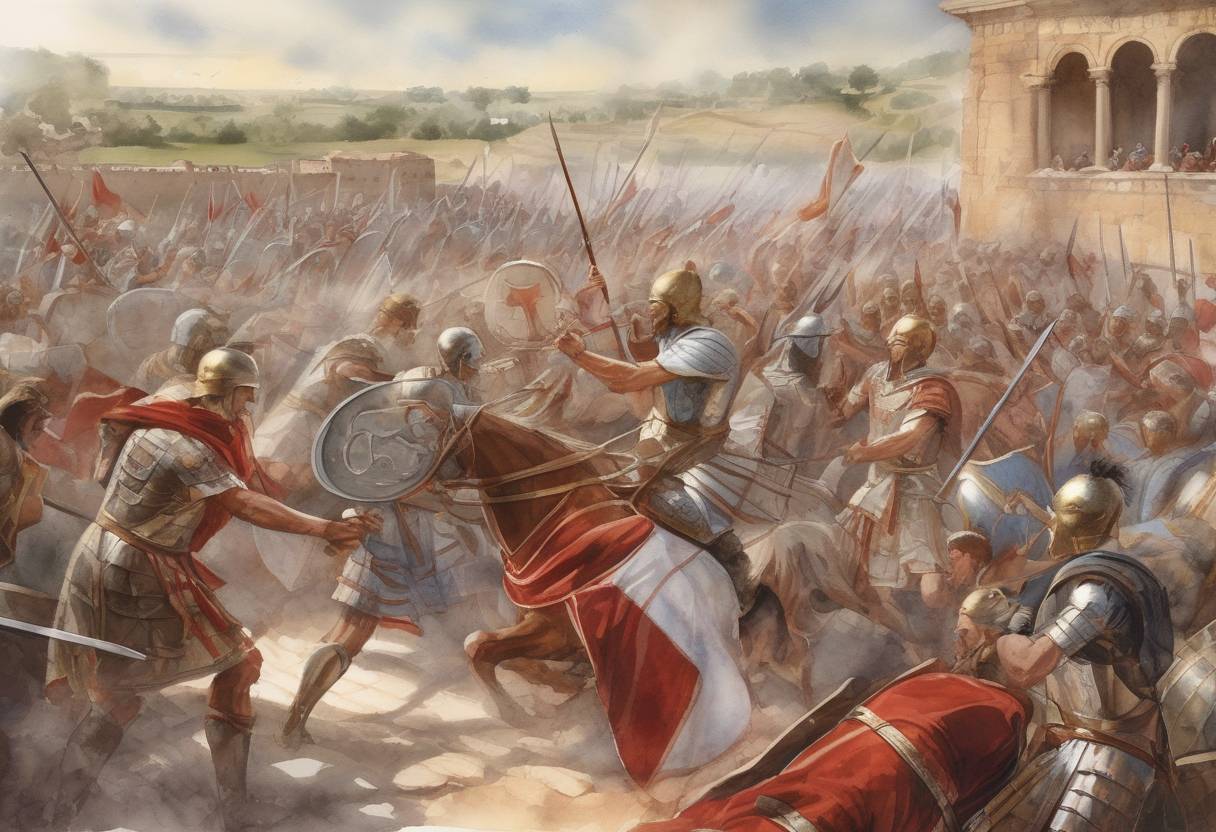
The Battle of Antioch, fought on May 16, 218, was a pivotal conflict in Roman history that marked the downfall of Emperor Macrinus and the rise of Elagabalus. This battle was a significant turning point in the Roman Empire’s Severan dynasty, leading to a change in leadership and a shift in the empire’s political landscape.
Macrinus’ Ascension: Macrinus became the Roman Emperor in April 217 after orchestrating the assassination of Emperor Caracalla. As a former Praetorian Prefect, Macrinus was the first emperor who was not of senatorial rank, which made his position precarious.
Challenges to Macrinus’ Rule: Macrinus faced numerous challenges during his reign, including military dissatisfaction due to his attempts to reduce soldiers’ pay and his failure to secure a decisive victory against the Parthians. These issues weakened his support among the Roman legions.
Rise of Elagabalus: Elagabalus, born Varius Avitus Bassianus, was a young priest of the sun god Elagabal in Emesa (modern-day Homs, Syria). His grandmother, Julia Maesa, a powerful figure and sister-in-law to the late Emperor Septimius Severus, orchestrated a rebellion against Macrinus, promoting Elagabalus as the rightful heir to the Severan dynasty.
Location: The battle took place near Antioch, a major city in the Roman province of Syria, which was a strategic and economically significant location.
Forces Involved: Macrinus commanded the Roman forces loyal to him, while Elagabalus’ forces were primarily composed of troops from the eastern provinces, bolstered by the support of Julia Maesa and other influential Severan loyalists.
Outcome: The battle resulted in a decisive victory for Elagabalus. Macrinus’ forces were defeated, and he was forced to flee the battlefield. His attempt to escape to the east was unsuccessful, and he was captured and executed shortly thereafter.
Elagabalus’ Ascension: Following the victory at Antioch, Elagabalus was declared emperor by his troops. His reign, however, was marked by controversy due to his religious practices and eccentric behavior, which alienated many traditional Roman elites.
Impact on the Severan Dynasty: The battle reinforced the Severan dynasty’s hold on the Roman Empire, albeit temporarily. Elagabalus’ rule was short-lived, ending in 222 when he was overthrown and succeeded by his cousin Severus Alexander.
Historical Context: The Battle of Antioch exemplifies the volatility of Roman imperial politics during the 3rd century, a period characterized by frequent power struggles and military coups. It also highlights the significant role of military loyalty and familial connections in determining the succession of Roman emperors.
In summary, the Battle of Antioch was a crucial event that not only led to the demise of Macrinus but also set the stage for the tumultuous reign of Elagabalus, further illustrating the complexities of Roman imperial succession and governance during this era.
Source: en.wikipedia.org