The Revolt of Basiliscus: January 9, 475
475 · Constantinople, Byzantine Empire
Byzantine Emperor Zeno is forced to flee his capital at Constantinople, as his general Basiliscus stages a revolt and assumes the throne.
February 9, 0474
Zeno is crowned as the sole ruler of the Byzantine Empire after the death of his son Leo II.
Constantinople, Byzantine Empire | Byzantine Empire
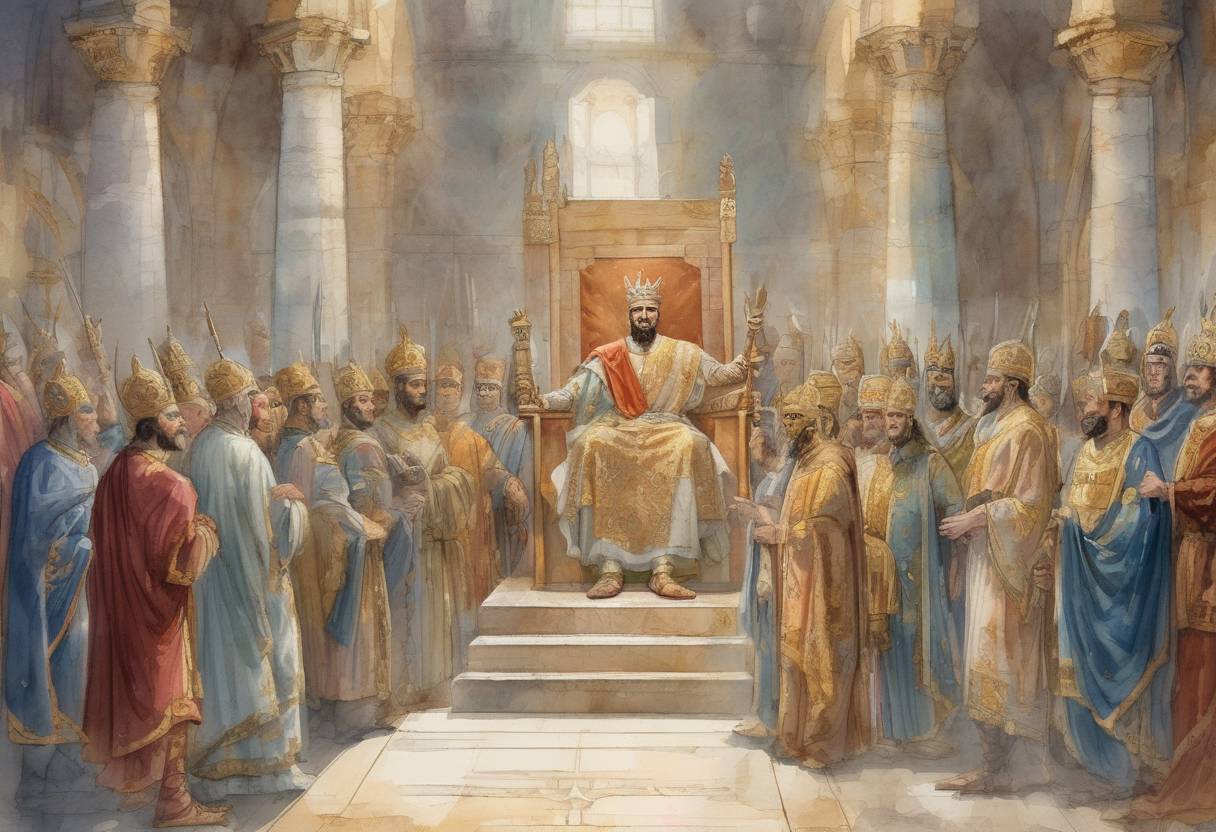
On February 9, 474, Zeno was crowned as the sole ruler of the Byzantine Empire following the death of his son, Leo II. This event marked a significant transition in the leadership of the Eastern Roman Empire, which was undergoing a period of political instability and internal strife.
Zeno, originally named Tarasis, was an Isaurian by birth, a group from the mountainous regions of southern Anatolia. His rise to power was facilitated by his marriage to Ariadne, the daughter of the Eastern Roman Emperor Leo I. This alliance brought Zeno into the imperial fold, and he quickly rose through the ranks, eventually becoming a trusted military commander and political figure.
In 473, Leo I appointed his young grandson, Leo II, as co-emperor. However, due to Leo II’s tender age, Zeno was effectively the power behind the throne. When Leo I died in January 474, Leo II became the sole emperor, but his reign was short-lived due to his untimely death in November of the same year, possibly from natural causes.
Following the death of Leo II, Zeno was crowned as the sole emperor. His ascension was not without challenges. The Byzantine Empire at the time was fraught with internal divisions, and Zeno’s Isaurian heritage made him unpopular with the Constantinopolitan elite, who viewed him as an outsider.
Zeno’s reign was marked by several significant challenges:
Internal Revolts: Zeno faced numerous revolts, the most notable being the rebellion led by Basiliscus, his brother-in-law, who temporarily usurped the throne in 475. Zeno was forced to flee Constantinople but managed to regain power in 476.
Barbarian Threats: The Western Roman Empire was collapsing during Zeno’s reign, culminating in the deposition of the last Western Roman Emperor, Romulus Augustulus, in 476. Zeno’s reign saw increased pressure from barbarian groups, including the Ostrogoths, whom he eventually settled in Italy under their leader Theodoric.
Religious Controversies: Zeno’s reign was also marked by religious disputes, particularly the ongoing conflict between Chalcedonian Christians and Monophysites. Zeno attempted to mediate these tensions through the Henotikon, a decree aimed at reconciling the two factions, though it met with limited success.
Zeno’s reign, despite its challenges, was pivotal in maintaining the continuity of the Eastern Roman Empire during a time of great upheaval. His ability to navigate internal and external threats helped stabilize the empire, setting the stage for future emperors to consolidate and strengthen Byzantine rule.
Zeno’s policies, particularly his handling of the Ostrogoths, had long-lasting implications for the political landscape of Europe. By redirecting the Ostrogoths to Italy, Zeno inadvertently laid the groundwork for the establishment of the Ostrogothic Kingdom, which played a crucial role in the post-Roman history of the Italian peninsula.
In summary, Zeno’s ascension as the sole ruler of the Byzantine Empire on February 9, 474, was a critical moment in the history of the Eastern Roman Empire, reflecting the complex interplay of internal politics, external threats, and religious controversies that characterized the era.
Source: en.wikipedia.org