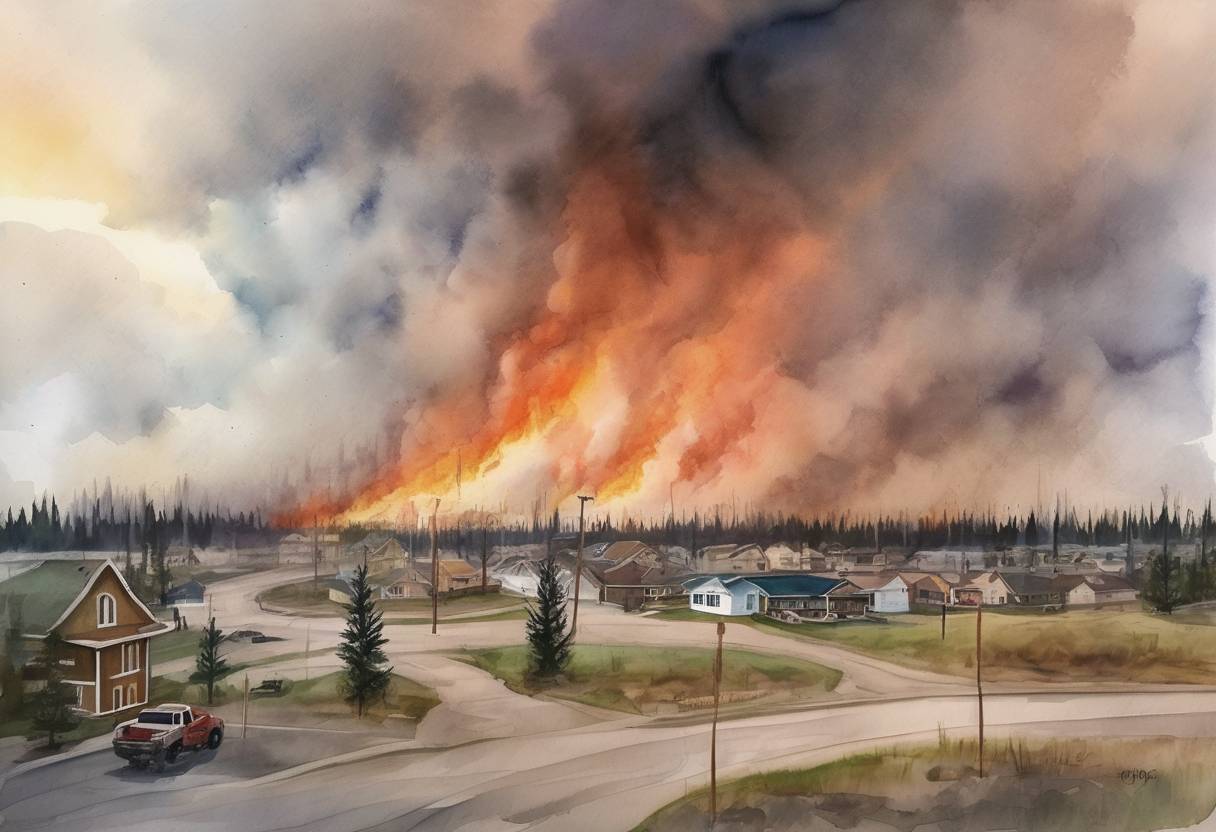
The Fort McMurray Wildfire: May 3, 2016
On May 3, 2016, a devastating wildfire began in Fort McMurray, Alberta, Canada, marking the start of one of the most significant natural disasters in Canadian history. This event led to the evacuation of over 80,000 residents and had far-reaching economic and environmental impacts.
Background
Fort McMurray, located in the heart of Alberta’s oil sands region, is a community heavily reliant on the oil industry. The area is characterized by its boreal forest, which, while beautiful, is also highly susceptible to wildfires, particularly during dry conditions.
In the spring of 2016, Alberta experienced an unusually dry and warm season, creating the perfect conditions for wildfires. The lack of precipitation and high temperatures contributed to the rapid spread of the fire once it ignited.
Key Events
- May 1, 2016: The wildfire was first detected southwest of Fort McMurray. Initially, it was relatively small and manageable.
- May 3, 2016: The fire dramatically escalated, driven by strong winds and dry conditions. It quickly spread into Fort McMurray, prompting a mandatory evacuation order for the entire city.
- Evacuation: Over 80,000 residents were forced to flee, many heading north to oil sands work camps or south to Edmonton and other communities. The evacuation was chaotic, with long lines of vehicles and limited fuel supplies.
- Destruction: The fire destroyed approximately 2,400 homes and buildings, severely impacting the community’s infrastructure and displacing thousands of residents.
Aftermath and Impact
- Economic Cost: The Fort McMurray wildfire became one of the costliest disasters in Canadian history, with insurance claims exceeding CAD 3.7 billion. The disruption to the oil sands industry also had significant economic repercussions.
- Environmental Impact: The fire burned approximately 590,000 hectares (1.5 million acres) of land, releasing large amounts of carbon dioxide and other pollutants into the atmosphere.
- Recovery Efforts: The Canadian government, along with provincial authorities, launched extensive recovery and rebuilding efforts. The community of Fort McMurray showed resilience, with many residents returning to rebuild their lives.
Broader Significance
The Fort McMurray wildfire highlighted the increasing risks of wildfires due to climate change, as warmer and drier conditions become more common. It also underscored the importance of emergency preparedness and the need for robust infrastructure to support large-scale evacuations.
In summary, the Fort McMurray wildfire was a pivotal event in Canadian history, demonstrating the destructive power of natural disasters and the resilience of affected communities.