Execution of Anne Boleyn: May 19, 1536
1536 · London, England
Anne Boleyn, the second wife of King Henry VIII of England, was executed on charges of adultery, treason, and incest.
July 6, 1535
Sir Thomas More, an English lawyer, philosopher, and statesman, was executed for treason after refusing to accept King Henry VIII as the head of the Church of England.
London, England | English monarchy
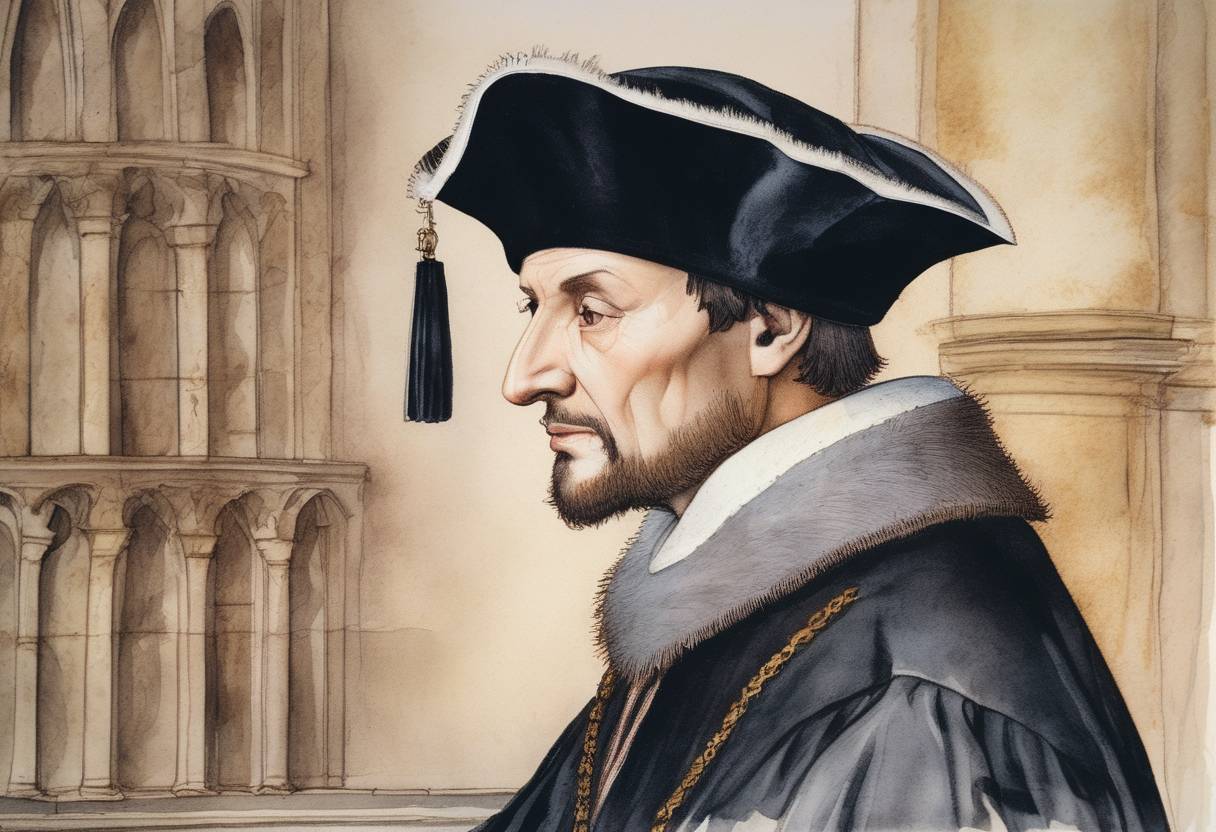
On July 6, 1535, Sir Thomas More, an eminent English lawyer, philosopher, and statesman, was executed for treason. His execution was a significant event in the tumultuous period of the English Reformation, marked by King Henry VIII’s break from the Roman Catholic Church.
Thomas More was born on February 7, 1478, in London. He rose to prominence as a lawyer and scholar, eventually becoming a trusted advisor to King Henry VIII. More was a devout Catholic and a staunch opponent of the Protestant Reformation. His most famous work, Utopia, published in 1516, reflects his humanist ideals and critiques of contemporary society.
The conflict leading to More’s execution stemmed from what is often referred to as “The King’s Great Matter.” King Henry VIII sought to annul his marriage to Catherine of Aragon to marry Anne Boleyn, hoping for a male heir. The Pope’s refusal to grant the annulment led Henry to sever ties with the Catholic Church, establishing the Church of England with himself as its head.
Thomas More, who served as Lord Chancellor from 1529 to 1532, was deeply opposed to Henry’s actions. He resigned from his position, citing health reasons, but his resignation was largely due to his disapproval of the King’s religious policies. More refused to swear the Oath of Supremacy, which acknowledged Henry as the Supreme Head of the Church of England, and the Act of Succession, which recognized the legitimacy of Henry’s marriage to Anne Boleyn.
More’s refusal to comply with the King’s demands led to his arrest in 1534. He was charged with treason for denying the King’s supremacy over the Church. During his trial, More defended his silence on the matter, arguing that it could not be construed as treason. However, he was found guilty, largely based on perjured testimony.
On July 6, 1535, Thomas More was executed by beheading at the Tower of London. His final words reportedly were, “I die the King’s good servant, but God’s first.”
Thomas More’s execution was a poignant moment in the English Reformation, symbolizing the severe consequences of opposing the King’s religious reforms. More was canonized as a saint by the Catholic Church in 1935, recognized for his unwavering faith and moral integrity.
His life and death continue to be subjects of interest, reflecting the complex interplay of politics, religion, and personal conscience during one of England’s most transformative periods.
Source: en.wikipedia.org