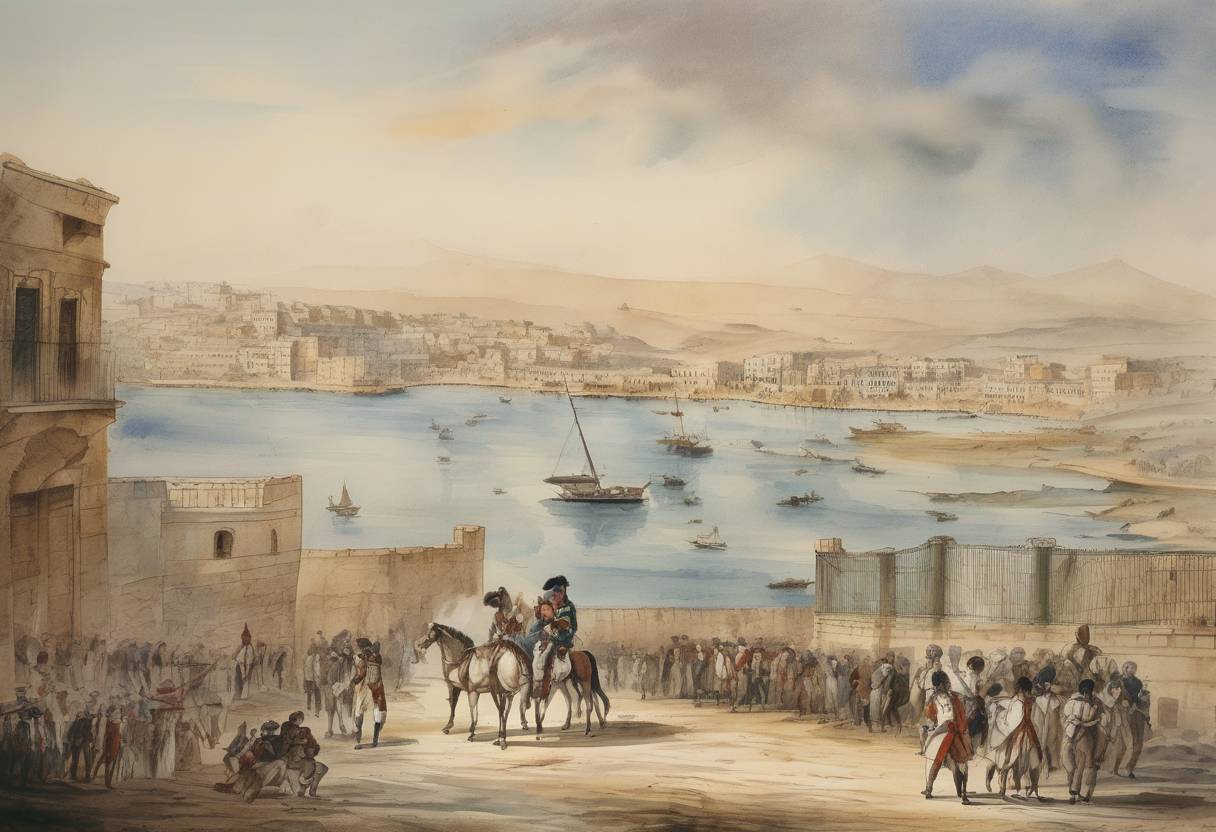
Capture of Jaffa: March 7, 1799
On March 7, 1799, during the French campaign in Egypt and Syria, Napoleon Bonaparte captured the city of Jaffa, a significant event in his Middle Eastern military expedition. This campaign was part of Napoleon’s broader strategy to undermine British interests by disrupting their trade routes and colonial holdings, particularly in India.
Context and Prelude
French Campaign in Egypt and Syria: Initiated in 1798, Napoleon’s campaign aimed to establish a French presence in the Middle East. After successfully capturing Egypt, Napoleon turned his attention to Syria, seeking to weaken the Ottoman Empire, which was allied with Britain.
Strategic Importance of Jaffa: Jaffa, a fortified port city on the Mediterranean coast, was a key target due to its strategic location. Controlling Jaffa would provide the French with a crucial supply line and a base for further operations in the region.
The Siege and Capture
Approach to Jaffa: Napoleon’s forces approached Jaffa in early March 1799. The city was defended by an Ottoman garrison, which included local troops and a contingent of Albanian soldiers.
Assault on the City: The French army laid siege to Jaffa, employing artillery to breach the city’s defenses. After several days of bombardment, French troops stormed the city on March 7, 1799.
Aftermath of the Capture: The capture of Jaffa was marked by significant violence. Reports indicate that French forces executed a large number of Ottoman prisoners, an act that has been widely criticized and remains a controversial aspect of Napoleon’s campaign.
Consequences and Historical Significance
Impact on the Campaign: The fall of Jaffa allowed Napoleon to continue his advance into Syria, although his campaign ultimately stalled at the Siege of Acre, where he faced stiff resistance and logistical challenges.
Napoleon’s Reputation: The brutal treatment of prisoners at Jaffa tarnished Napoleon’s reputation, highlighting the harsh realities of his military campaigns and contributing to the complex legacy of his leadership.
Broader Implications: The campaign in Egypt and Syria, including the capture of Jaffa, demonstrated Napoleon’s ambition and strategic vision but also exposed the limits of French military power in the region. It underscored the challenges of sustaining long-distance military operations and foreshadowed future conflicts in the Middle East.
In summary, the capture of Jaffa on March 7, 1799, was a pivotal moment in Napoleon’s Middle Eastern campaign, reflecting both his military prowess and the controversial aspects of his conquests.