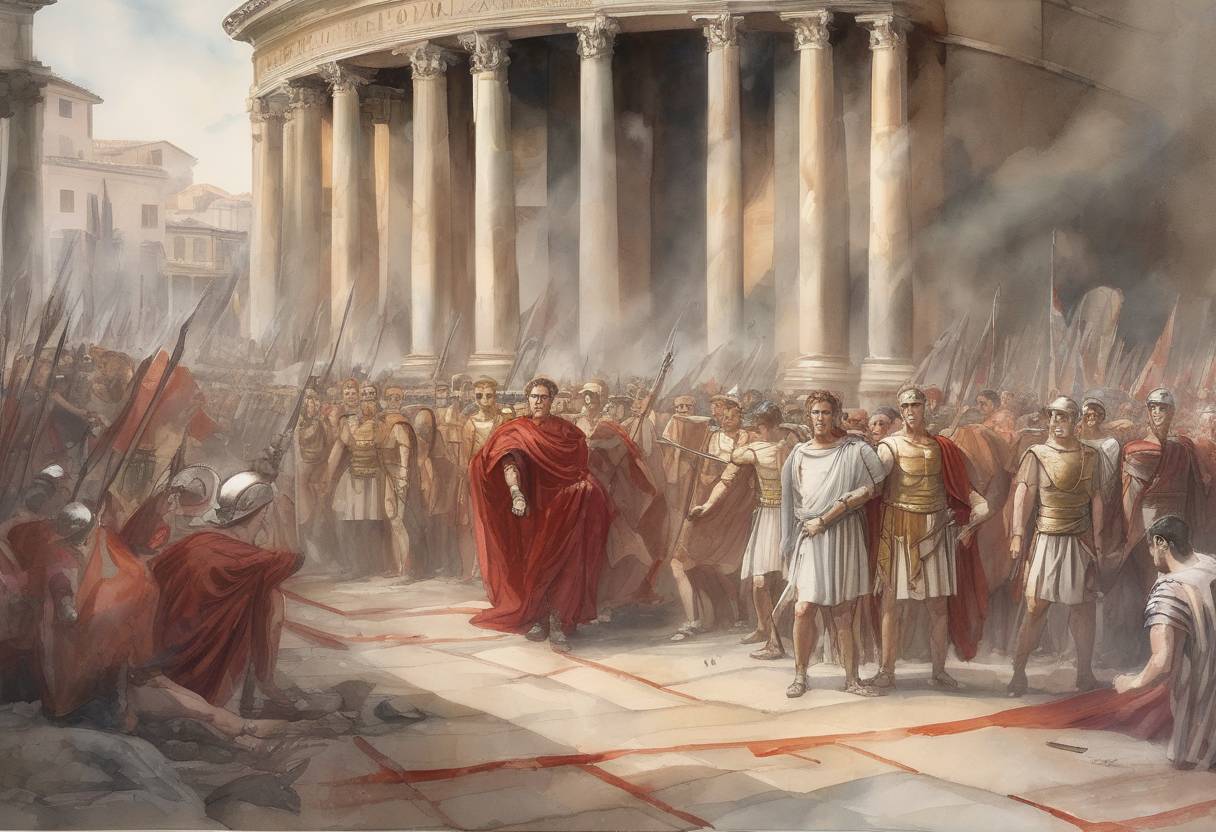
The Assassination of Julius Caesar: Events Leading to the Ides of March
Julius Caesar, a pivotal figure in Roman history, was assassinated on the Ides of March, March 15, 44 BCE. The events leading up to his assassination were marked by political tension and conspiracy, reaching a critical point by March 14.
Context and Background
Julius Caesar had risen to power through a combination of military prowess, political alliances, and reforms that expanded his influence. His appointment as “dictator perpetuo” (dictator in perpetuity) in February 44 BCE alarmed many senators who feared the erosion of the Roman Republic and the establishment of a monarchy.
Key Events Leading to the Assassination
Political Climate: Caesar’s accumulation of power and the perception of his monarchical ambitions created unrest among the Roman Senate. Many senators, including those who had once been his allies, grew increasingly wary of his intentions.
Formation of the Conspiracy: By early March 44 BCE, a group of senators, later known as the Liberators, began plotting Caesar’s assassination. Key figures included Gaius Cassius Longinus and Marcus Junius Brutus, who were motivated by a mix of personal grievances and a desire to restore the Republic.
March 14, 44 BCE: On the eve of the assassination, the conspirators finalized their plans. They chose the Senate meeting on March 15 as the setting, believing it would provide the opportunity to strike with relative ease and public support.
Omens and Warnings: In the days leading up to the Ides of March, Caesar reportedly received several warnings, including a soothsayer’s caution to “beware the Ides of March.” Despite these, he dismissed the threats, confident in his security and popularity.
The Assassination on March 15
On the Ides of March, Caesar attended a Senate meeting at the Theatre of Pompey. As he took his seat, the conspirators surrounded him and launched their attack. Caesar was stabbed 23 times, with Brutus delivering one of the final blows, a moment immortalized by the phrase “Et tu, Brute?”
Aftermath and Historical Significance
The assassination of Julius Caesar plunged Rome into a period of civil war and turmoil. It ultimately led to the end of the Roman Republic and the rise of the Roman Empire under Caesar’s adopted heir, Octavian (later Augustus). The event remains a powerful symbol of political betrayal and the complexities of power.
In conclusion, the events leading up to March 15, 44 BCE, were marked by a calculated conspiracy driven by fears of tyranny and the desire to preserve the Republic. Caesar’s assassination was a turning point in Roman history, with profound and lasting consequences.