The Attack on Pearl Harbor: December 7, 1941
1941 · Pearl Harbor, United States
The Imperial Japanese Navy attacks the United States naval base at Pearl Harbor, Hawaii, leading to the United States' entry into World War II.
January 20, 1887
The United States Senate allowed the Navy to lease Pearl Harbor as a naval base, which later became a pivotal location in World War II.
Pearl Harbor, United States | United States Navy
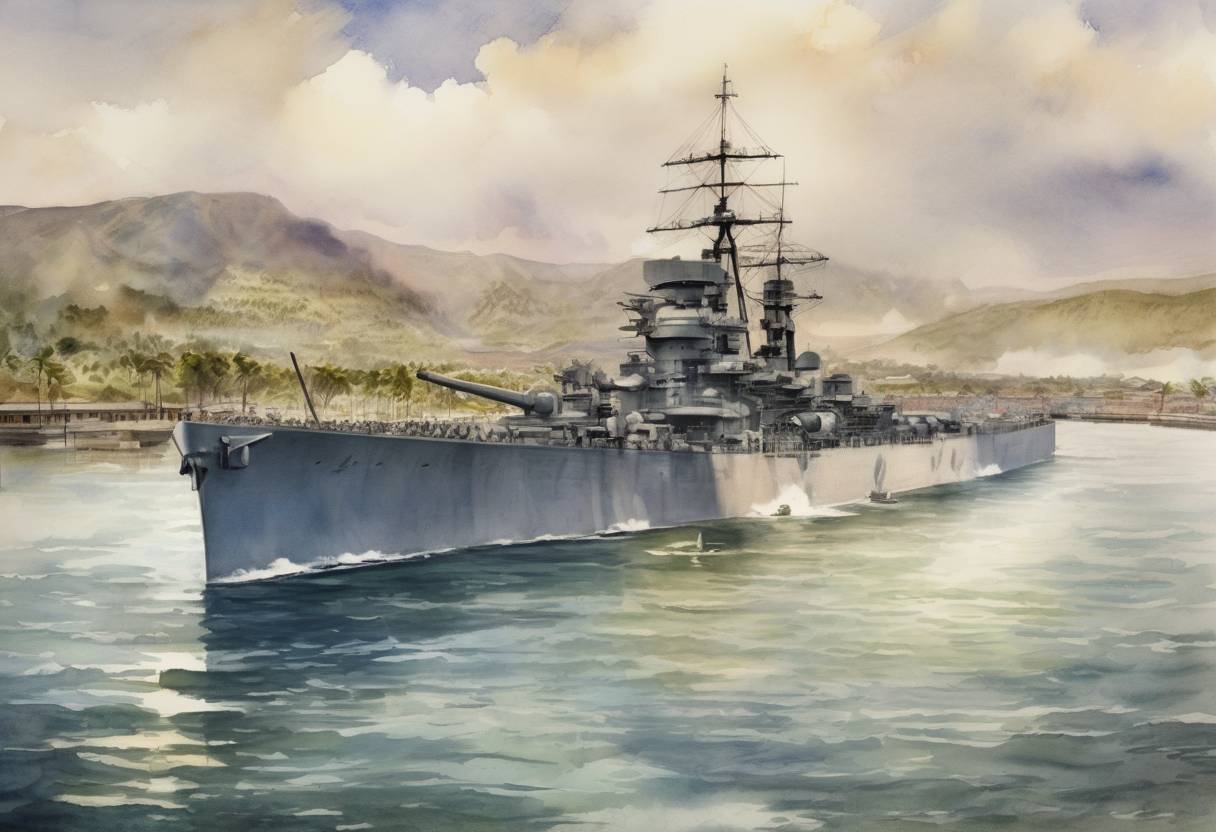
On January 20, 1887, the United States Senate approved the leasing of Pearl Harbor in Hawaii, marking a significant step in the expansion of American naval power in the Pacific. This decision laid the groundwork for Pearl Harbor’s future role as a pivotal naval base, especially during World War II.
In the late 19th century, the United States was increasingly interested in expanding its influence in the Pacific region. Hawaii, with its strategic location, became a focal point for American interests. The Kingdom of Hawaii, under King Kalākaua, was under pressure from foreign powers, and the U.S. sought to secure its position in the Pacific by establishing a naval presence.
Reciprocity Treaty of 1875: This treaty between the United States and the Kingdom of Hawaii allowed for duty-free importation of Hawaiian sugar into the U.S. In exchange, the U.S. gained economic influence in Hawaii.
Bayonet Constitution of 1887: Under pressure from American and European business interests, King Kalākaua was forced to sign a new constitution that reduced the monarchy’s power and increased the influence of foreign interests in Hawaiian politics.
Pearl Harbor Lease: As part of the renewed Reciprocity Treaty in 1887, the U.S. secured exclusive rights to establish a coaling and repair station at Pearl Harbor. This agreement was crucial for the U.S. Navy, providing a strategic foothold in the Pacific.
Following the lease, the U.S. began to develop Pearl Harbor into a major naval base. Over the years, it was expanded and fortified, becoming a critical component of America’s Pacific defense strategy.
Pearl Harbor’s strategic importance was underscored on December 7, 1941, when it was attacked by the Japanese Imperial Navy. This surprise attack led to the United States’ formal entry into World War II, marking a turning point in the conflict. The base became a central hub for American military operations in the Pacific theater throughout the war.
The leasing of Pearl Harbor in 1887 was a pivotal moment in U.S. history, reflecting the nation’s growing imperial ambitions and strategic interests in the Pacific. Today, Pearl Harbor remains an active naval base and a symbol of American resilience and military strength. It also serves as a memorial site, honoring those who lost their lives during the 1941 attack.
In summary, the decision to lease Pearl Harbor was a foundational step in establishing the United States as a dominant Pacific power, with lasting implications for both American and global history.
Source: www.history.com