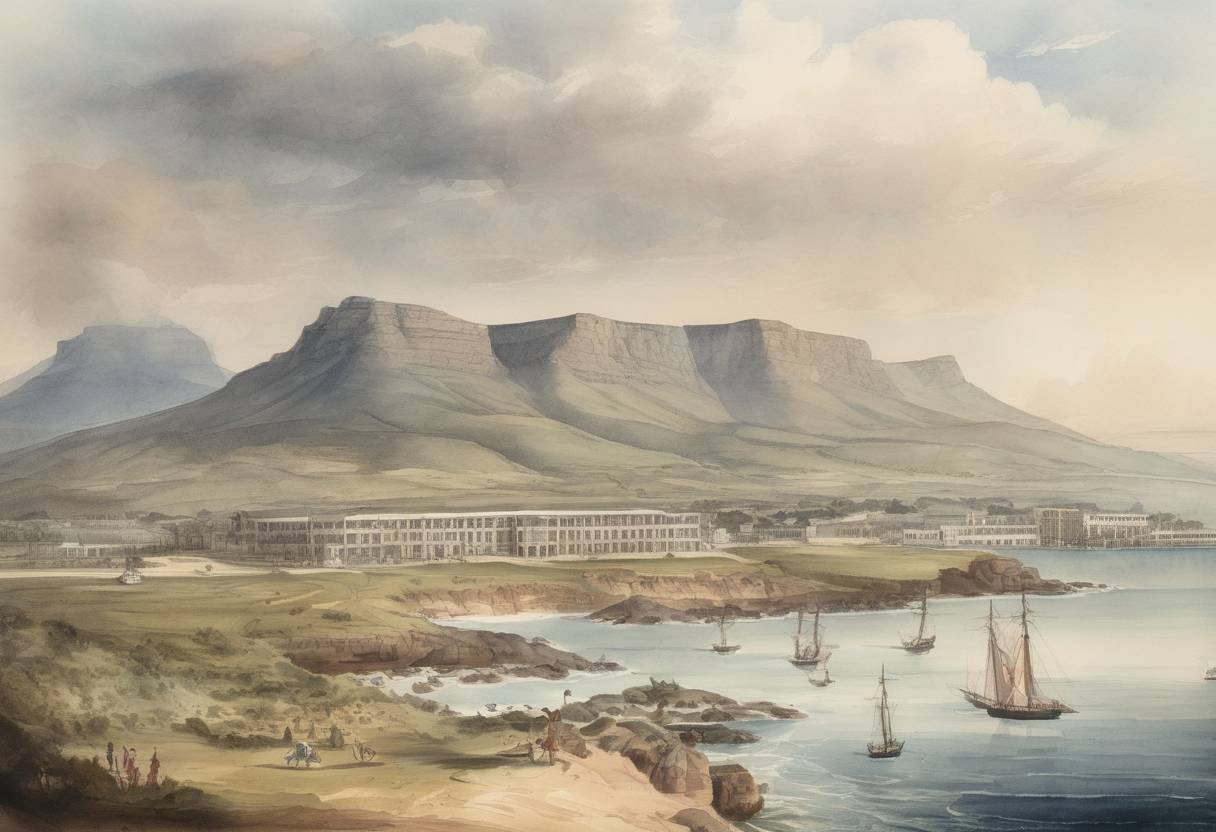
British Occupation of the Cape Colony - January 19, 1806
On January 19, 1806, the United Kingdom formally occupied the Cape Colony in South Africa, marking the beginning of British rule in the region. This event was a significant moment in the colonial history of South Africa and had lasting implications for the region’s political, social, and economic landscape.
Historical Context
The Cape Colony was originally established by the Dutch East India Company in 1652 as a supply station for ships traveling between Europe and Asia. Over time, it grew into a settler colony with a diverse population, including Dutch settlers (known as Boers), indigenous Khoikhoi and San peoples, and enslaved individuals brought from other parts of Africa and Asia.
During the late 18th and early 19th centuries, Europe was embroiled in the Napoleonic Wars, which saw shifting alliances and territorial conflicts. The strategic importance of the Cape Colony, located at the southern tip of Africa, made it a valuable asset for controlling sea routes.
Key Events Leading to British Occupation
First British Occupation (1795-1803): The British first occupied the Cape Colony in 1795 to prevent it from falling into French hands after the Netherlands was invaded by France. The British returned the colony to the Dutch in 1803 under the Treaty of Amiens.
Renewed Conflict: The resumption of hostilities between Britain and Napoleonic France led to renewed British interest in securing the Cape Colony. The British feared that French control over the colony would threaten their maritime dominance.
Battle of Blaauwberg: On January 8, 1806, British forces, led by General Sir David Baird, defeated the Dutch forces at the Battle of Blaauwberg, near Cape Town. This victory paved the way for British occupation.
The Occupation
Following the Battle of Blaauwberg, the British formally took control of the Cape Colony on January 19, 1806. The Dutch governor, Jan Willem Janssens, capitulated, and the British flag was raised over the colony. The occupation was solidified by the Treaty of Paris in 1814, which formally ceded the Cape Colony to Britain.
Consequences and Significance
Colonial Administration: The British introduced new administrative structures and legal systems, which included the abolition of the Dutch East India Company’s monopoly and the introduction of English as the official language.
Economic Changes: The British encouraged the development of agriculture and trade, leading to economic growth in the region. However, their policies also led to increased tensions with the Boer settlers, who were resistant to British rule.
Social Impact: The British occupation had profound effects on the indigenous populations, as land dispossession and cultural disruptions intensified under colonial rule.
Long-term Implications: The British occupation set the stage for future conflicts, including the Great Trek (1830s-1840s) and the Anglo-Boer Wars (late 19th to early 20th centuries), as Boer settlers sought to escape British control and establish independent republics.
The British occupation of the Cape Colony in 1806 was a pivotal moment in South African history, shaping the region’s colonial dynamics and laying the groundwork for future developments in the country’s complex history.