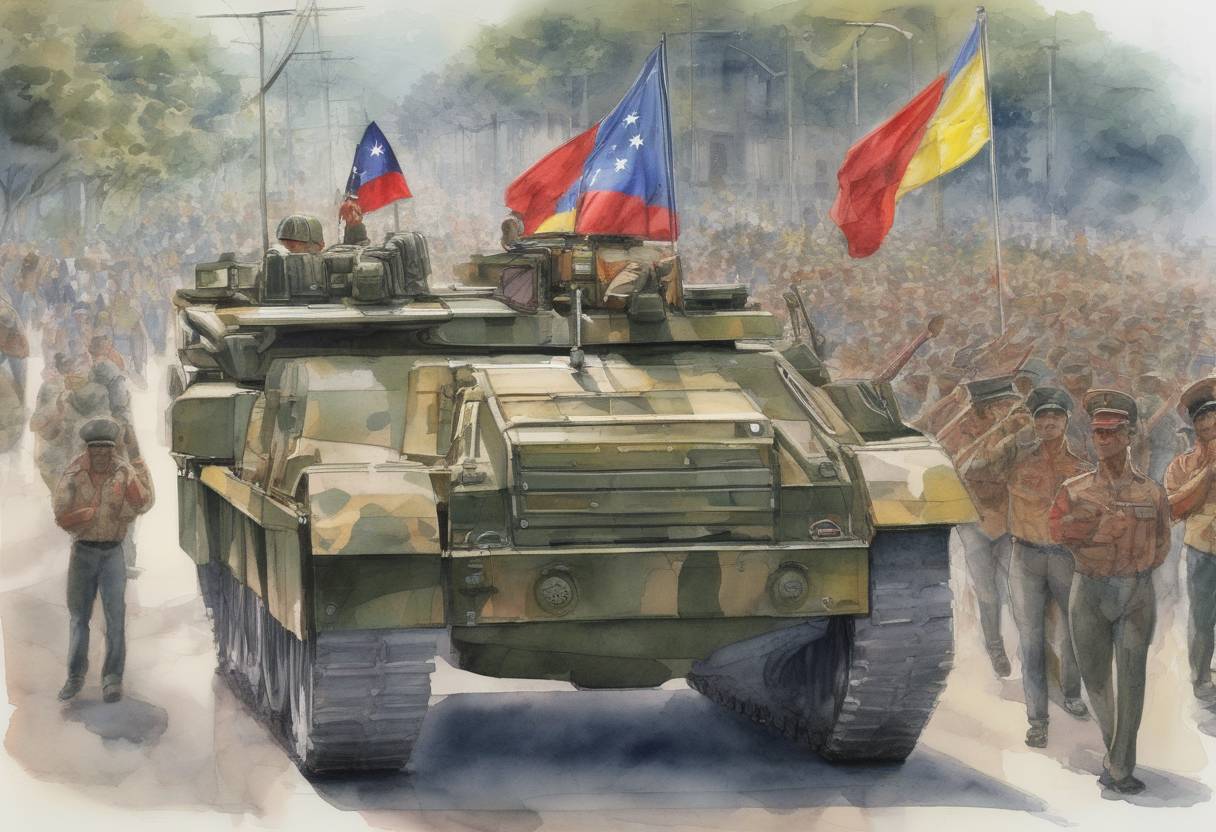
The 2002 Venezuelan Coup d’État
On April 11, 2002, a significant political upheaval occurred in Venezuela when a coup d’état temporarily ousted President Hugo Chávez from power. This event was a pivotal moment in Venezuelan history, marked by intense political conflict and social unrest.
Background
Hugo Chávez, a former military officer, was elected President of Venezuela in 1998. His presidency was characterized by the implementation of socialist policies and the nationalization of key industries, which garnered both widespread support and significant opposition. Chávez’s leadership style and policies polarized the nation, leading to heightened tensions between his government and various opposition groups, including business leaders, labor unions, and segments of the military.
The Coup
On April 11, 2002, a large opposition-led protest march in Caracas, initially intended to reach the headquarters of the state oil company PDVSA, was redirected towards the presidential palace, Miraflores. The situation escalated into violence, resulting in the deaths of several protesters and bystanders. The military, citing the need to restore order, detained Chávez and announced his resignation, which Chávez later claimed was coerced.
Pedro Carmona, the head of the Venezuelan Federation of Chambers of Commerce, was installed as interim president. His government quickly dissolved the National Assembly and the Supreme Court, actions that were met with widespread condemnation both domestically and internationally.
Restoration of Chávez
The coup faced immediate backlash from Chávez’s supporters, who took to the streets in massive demonstrations demanding his return. Additionally, key military units remained loyal to Chávez, and internal dissent within the armed forces grew against the interim government.
On April 13, just two days after the coup, Chávez was restored to power. The combination of popular uprisings and military support forced Carmona to resign, and Chávez was flown back to Caracas, where he resumed his presidency.
Aftermath and Significance
The failed coup had several lasting impacts:
Strengthening of Chávez’s Position: The event solidified Chávez’s support among his base and allowed him to portray himself as a defender of democracy against oligarchic forces.
Polarization: The coup deepened the political divide in Venezuela, leading to increased polarization and setting the stage for future conflicts.
International Relations: The coup strained Venezuela’s relations with countries perceived to have supported or recognized the interim government, notably the United States.
Media and Misinformation: The role of media in the coup, particularly in how events were reported, became a point of contention, leading to increased government scrutiny and regulation of media outlets.
The 2002 coup attempt remains a critical event in understanding the complexities of Venezuelan politics and the enduring legacy of Hugo Chávez’s presidency.