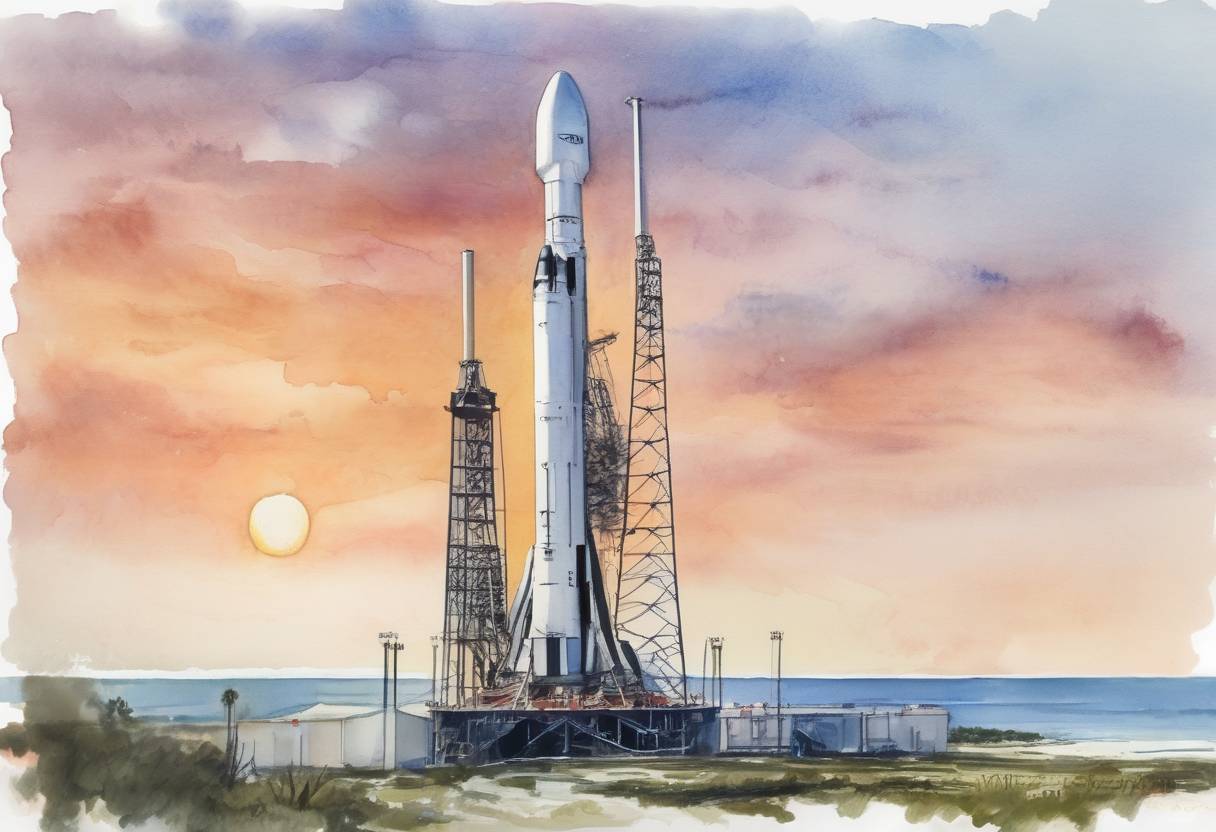
SpaceX’s First Successful Reuse of a Falcon 9 Rocket
On March 30, 2017, SpaceX achieved a significant milestone in the field of aerospace engineering and space exploration by successfully reusing a Falcon 9 rocket. This event marked a pivotal moment in the company’s ongoing efforts to reduce the cost of space travel through the development of reusable rocket technology.
Background
SpaceX, founded by Elon Musk in 2002, has been at the forefront of innovation in the aerospace industry. One of the company’s primary goals has been to make space travel more affordable and accessible. A key strategy to achieve this has been the development of reusable rockets, which can significantly lower the cost of launching payloads into space by allowing the same hardware to be used multiple times.
The Mission
- Launch Date: March 30, 2017
- Rocket: Falcon 9
- Payload: SES-10 communications satellite
- Launch Site: Kennedy Space Center, Florida
The mission involved launching the SES-10 satellite, operated by SES S.A., a global satellite operator. The satellite was intended to provide enhanced telecommunications services to Latin America.
Key Events
Launch and Landing:
- The Falcon 9 rocket lifted off successfully from Launch Complex 39A at Kennedy Space Center.
- After delivering the SES-10 satellite into geostationary transfer orbit, the first stage of the Falcon 9 rocket returned to Earth.
- The booster executed a controlled landing on the drone ship “Of Course I Still Love You” stationed in the Atlantic Ocean.
Significance of Reuse:
- This mission marked the first time a previously flown orbital-class rocket was reused and successfully launched again.
- The specific first stage used in this mission had previously been launched and recovered during a mission in April 2016.
Aftermath and Impact
- Cost Reduction: The successful reuse of the Falcon 9 rocket demonstrated the potential for significant cost savings in space travel, as refurbishing a rocket is cheaper than building a new one.
- Industry Influence: This achievement set a new standard in the aerospace industry, encouraging other companies and space agencies to invest in reusable technology.
- Future Missions: SpaceX continued to refine its reusable rocket technology, leading to more frequent and reliable reuse of Falcon 9 boosters in subsequent missions.
Broader Historical Significance
The successful reuse of the Falcon 9 rocket on March 30, 2017, was a landmark event in the history of space exploration. It underscored the viability of reusable rocket technology and paved the way for more sustainable and cost-effective space missions. This milestone not only advanced SpaceX’s mission to make space travel more economical but also contributed to the broader goal of making human life multi-planetary, aligning with Elon Musk’s vision of colonizing Mars.
Overall, this event marked a transformative moment in the aerospace industry, highlighting the potential for innovation to drive down costs and expand the possibilities of space exploration.