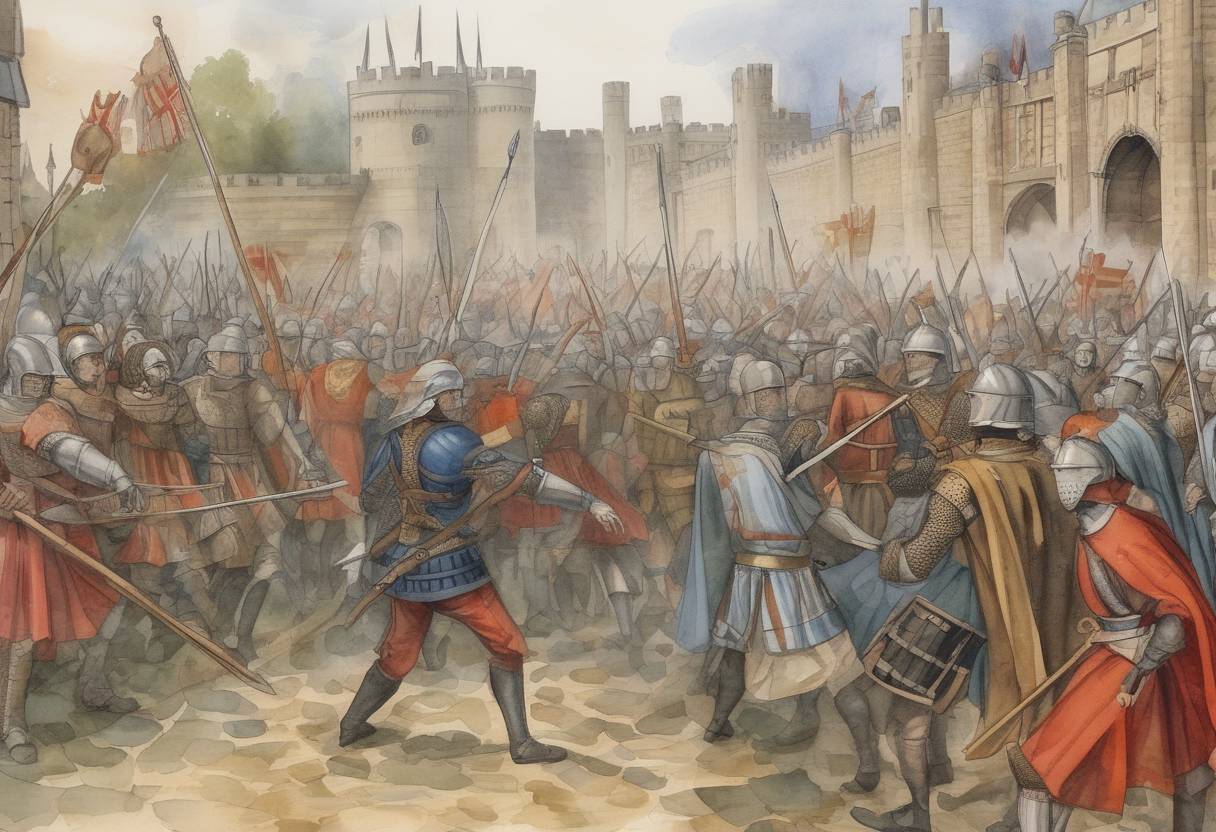
The Death of Wat Tyler: The Peasants’ Revolt of 1381
On June 15, 1381, a pivotal moment in the Peasants’ Revolt occurred when Wat Tyler, the leader of the uprising, was killed at Smithfield, London. This event marked a turning point in the revolt, which had been one of the most significant uprisings in medieval England.
Background of the Peasants’ Revolt
The Peasants’ Revolt was fueled by a combination of social, economic, and political factors:
Economic Hardship: The aftermath of the Black Death had drastically reduced the population, leading to labor shortages and increased demands for higher wages by the peasantry. However, the Statute of Labourers (1351) attempted to freeze wages at pre-plague levels, causing widespread discontent.
Poll Taxes: The imposition of successive poll taxes, particularly the third one in 1380, was deeply unpopular. It was seen as an unfair burden on the lower classes, exacerbating existing tensions.
Social Inequality: The rigid feudal system and the perceived corruption and incompetence of the ruling class further fueled resentment among the peasantry and lower classes.
The Revolt
The revolt began in Essex and quickly spread to Kent and other parts of England. Wat Tyler emerged as a charismatic leader, rallying the rebels with demands for the abolition of serfdom, fairer taxation, and the removal of corrupt officials.
The rebels marched on London, where they were initially successful in capturing the Tower of London and executing several unpopular figures, including the Archbishop of Canterbury, Simon Sudbury.
The Meeting at Smithfield
On June 15, 1381, King Richard II, then only 14 years old, agreed to meet the rebels at Smithfield. During this meeting, tensions escalated. Accounts vary, but it is generally believed that a disagreement or misunderstanding led to violence. Wat Tyler was struck down by William Walworth, the Lord Mayor of London, and subsequently killed by officers loyal to the king.
Aftermath and Significance
Suppression of the Revolt: Following Tyler’s death, the revolt quickly lost momentum. King Richard II promised clemency and reforms but soon reneged on these promises. The rebellion was suppressed, and many of its leaders were executed.
Long-term Impact: Although the immediate demands of the rebels were not met, the revolt highlighted the deep-seated issues within English society. It is often seen as a precursor to later social changes, contributing to the gradual decline of the feudal system.
Legacy: The Peasants’ Revolt remains a significant event in English history, symbolizing the struggle for social justice and the power of collective action against oppressive systems.
The death of Wat Tyler at Smithfield was a dramatic and decisive moment in the Peasants’ Revolt, underscoring the volatile nature of medieval English society and the challenges faced by those seeking reform.