The Arrest of John T. Scopes: May 5, 1925
1925 · Dayton, United States
John T. Scopes is arrested for teaching evolution in violation of Tennessee's Butler Act, leading to the famous Scopes Trial.
July 21, 1925
The Scopes Trial, also known as the Scopes Monkey Trial, concluded in Dayton, Tennessee. John T. Scopes was found guilty of teaching evolution in violation of Tennessee's Butler Act.
Dayton, United States | Tennessee State Court
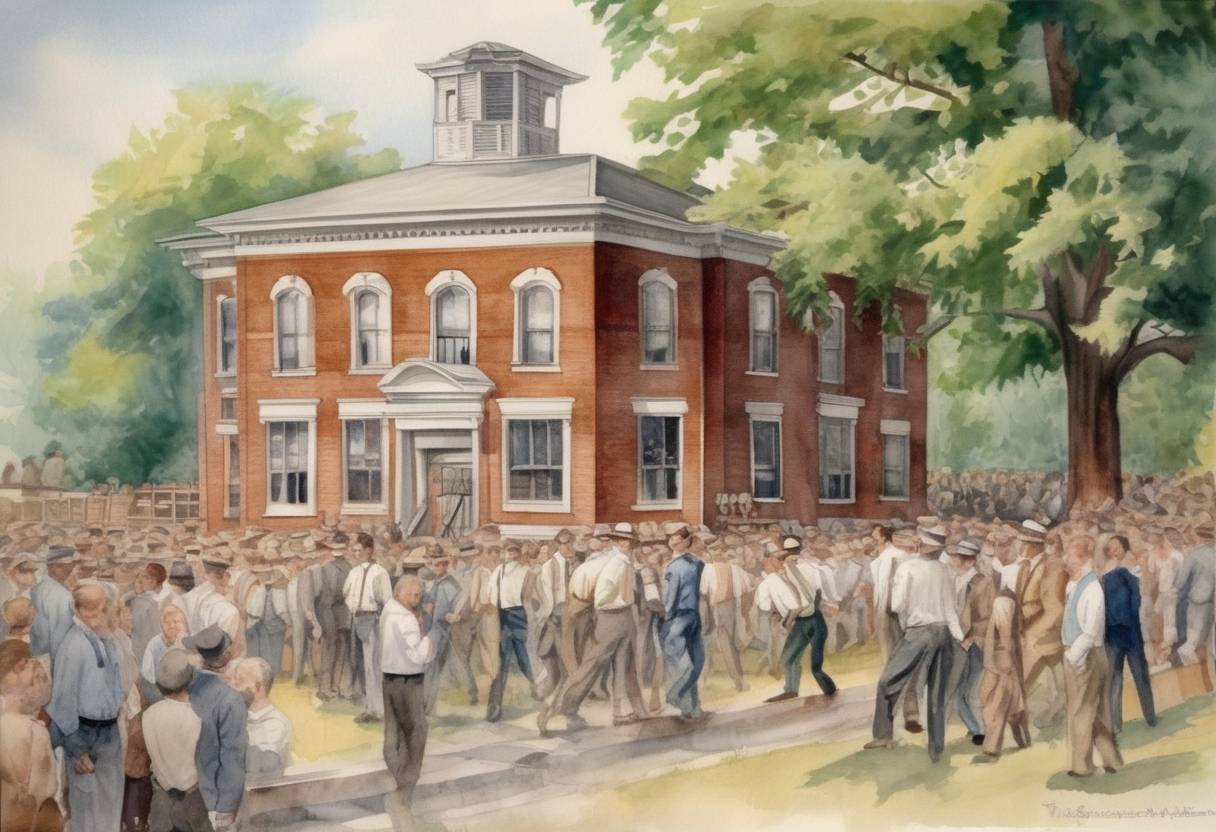
The Scopes Trial, formally known as The State of Tennessee v. John Thomas Scopes, was a pivotal legal case that took place in Dayton, Tennessee, in 1925. It centered around the Butler Act, a Tennessee law enacted in March 1925, which prohibited the teaching of human evolution in state-funded schools. The trial highlighted the tension between modern scientific theories and traditional religious beliefs, becoming a focal point in the broader debate over science and religion in American society.
The trial began on July 10, 1925, and quickly garnered national attention, often referred to as the “Scopes Monkey Trial” due to its focus on the teaching of evolution. The courtroom proceedings were broadcasted on the radio, making it one of the first American trials to receive such widespread media coverage.
On July 21, 1925, the jury found John T. Scopes guilty of teaching evolution, and he was fined $100. The verdict was later overturned on a technicality by the Tennessee Supreme Court, which ruled that the fine had been improperly imposed by the judge rather than the jury.
In summary, the Scopes Trial was a landmark case that not only tested the legality of the Butler Act but also highlighted the broader societal tensions between science and religion, leaving a lasting impact on American culture and legal history.
Source: en.wikipedia.org