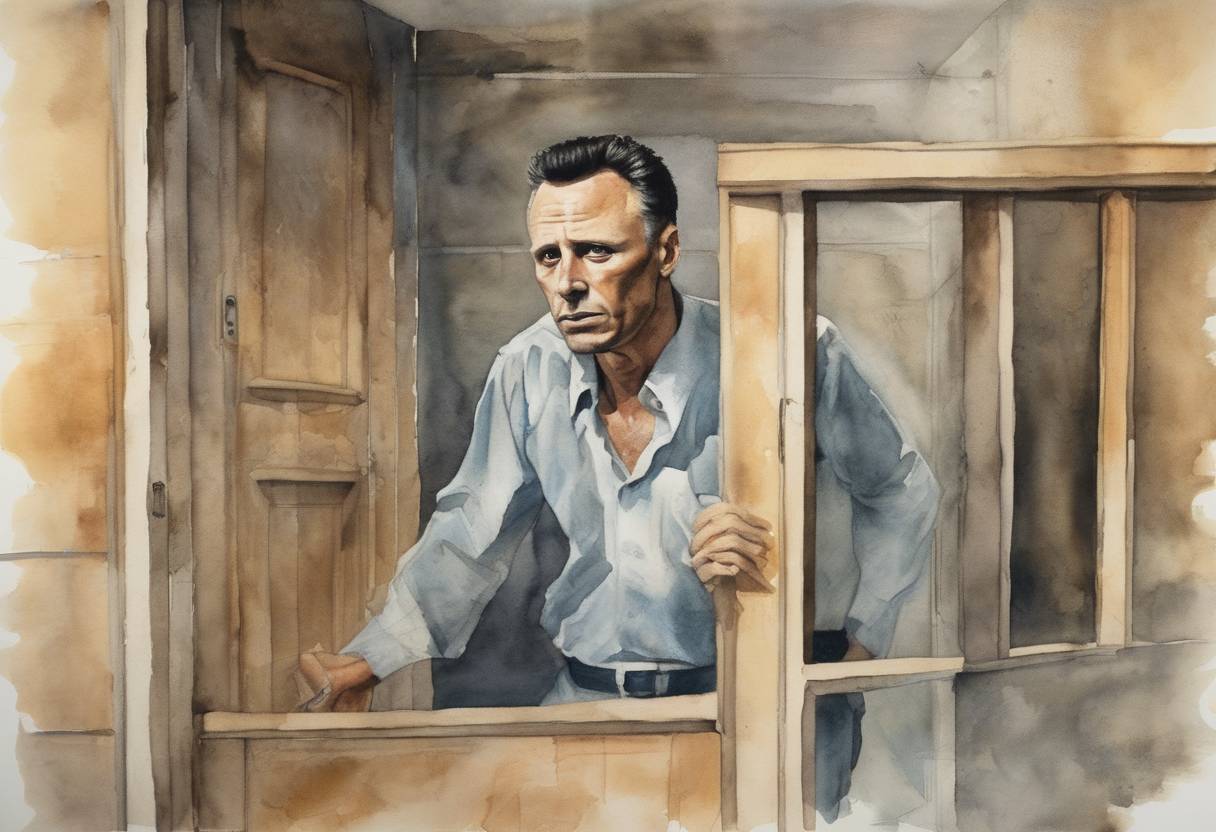
Escape of James Earl Ray from Brushy Mountain State Penitentiary
On June 10, 1977, James Earl Ray, the convicted assassin of civil rights leader Martin Luther King Jr., made a daring escape from Brushy Mountain State Penitentiary in Tennessee. This event marked a significant moment in the history of American criminal justice and civil rights.
Background
James Earl Ray was convicted of assassinating Martin Luther King Jr. on April 4, 1968, in Memphis, Tennessee. King, a prominent leader in the American civil rights movement, was shot while standing on the balcony of the Lorraine Motel. Ray was apprehended two months later at London’s Heathrow Airport and extradited to the United States, where he pleaded guilty to the murder, avoiding a jury trial, and was sentenced to 99 years in prison.
The Escape
Ray’s escape from Brushy Mountain State Penitentiary occurred on June 10, 1977. He and six other inmates managed to break out of the maximum-security facility, which was known for its rugged terrain and high-security measures. The escape involved cutting through a fence and navigating the challenging landscape surrounding the prison.
Recapture
The escape triggered a massive manhunt involving local, state, and federal law enforcement agencies. After three days on the run, Ray was recaptured on June 13, 1977, approximately eight miles from the prison. His brief taste of freedom ended when he was found hiding in a pile of leaves by a team of searchers, including bloodhounds and helicopters.
Aftermath and Significance
Ray’s escape and subsequent recapture highlighted several issues within the prison system, including security lapses at Brushy Mountain State Penitentiary. The incident drew significant media attention and public interest, given Ray’s notoriety as the assassin of Martin Luther King Jr.
The escape also reignited discussions about Ray’s conviction and the circumstances surrounding King’s assassination. Some conspiracy theories suggested that Ray was not the sole actor in the assassination, although these claims have been widely disputed and remain unproven.
Conclusion
James Earl Ray’s escape from Brushy Mountain State Penitentiary was a dramatic episode in the history of American criminal justice. It underscored the challenges of maintaining security in correctional facilities and the enduring impact of Martin Luther King Jr.’s assassination on American society. Ray remained incarcerated until his death in 1998, serving his sentence for one of the most consequential crimes in U.S. history.