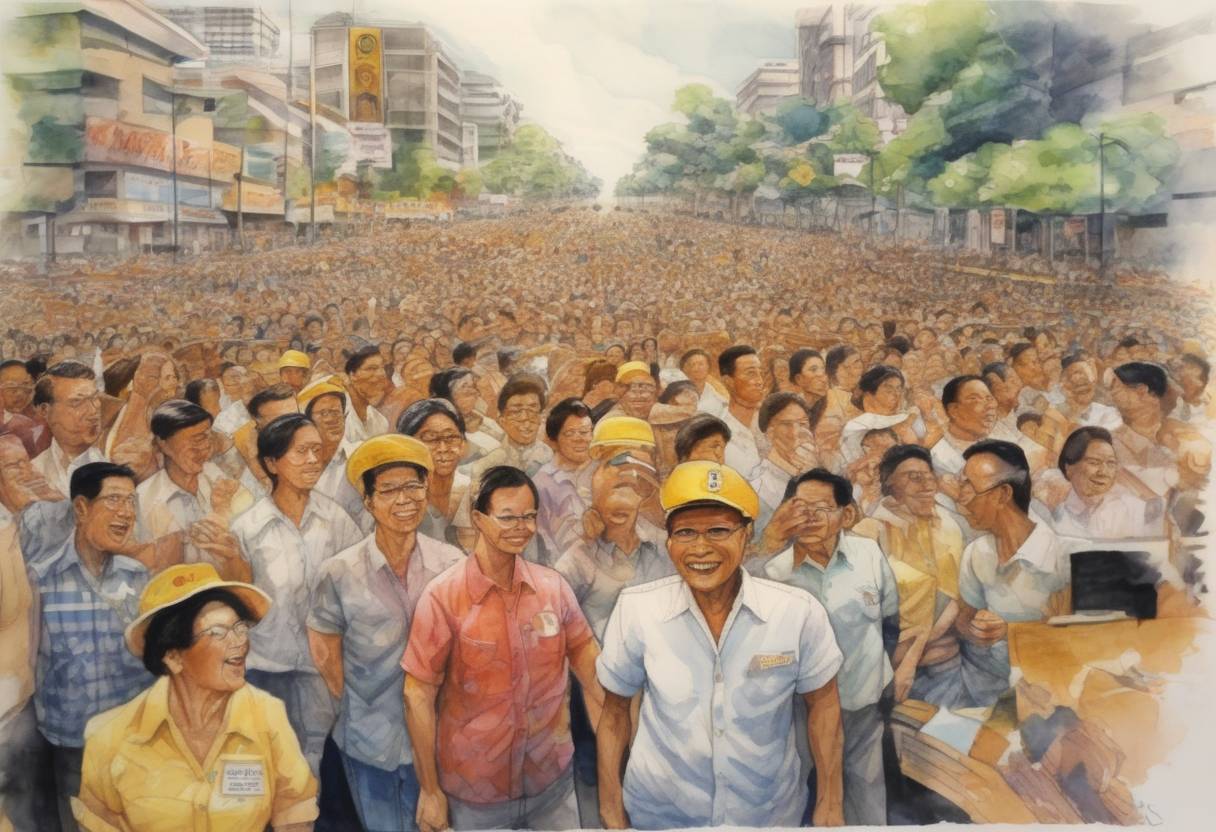
The People Power Revolution: February 25, 1986
The People Power Revolution, also known as the EDSA Revolution, was a pivotal series of events in the Philippines that led to the ousting of President Ferdinand Marcos and the inauguration of Corazon Aquino as president on February 25, 1986. This nonviolent revolution marked a significant turning point in Philippine history and was a watershed moment for democracy in the region.
Background
Ferdinand Marcos had been in power since 1965, and his regime was characterized by authoritarian rule, martial law (declared in 1972), human rights abuses, and widespread corruption. The assassination of opposition leader Benigno “Ninoy” Aquino Jr. in 1983 galvanized public discontent and intensified opposition against Marcos.
Key Events Leading Up to February 25, 1986
Snap Elections: In an attempt to legitimize his rule, Marcos called for a snap presidential election on February 7, 1986. Corazon Aquino, the widow of Ninoy Aquino, emerged as the primary opposition candidate.
Election Fraud: The elections were marred by widespread reports of fraud and vote-rigging. Despite this, the official results declared Marcos the winner, sparking outrage and protests.
Defections and Military Support: On February 22, 1986, Defense Minister Juan Ponce Enrile and Armed Forces Vice Chief of Staff Fidel Ramos withdrew their support for Marcos and barricaded themselves in Camp Aguinaldo and Camp Crame, calling for his resignation.
Mass Mobilization: In response, millions of Filipinos took to the streets, particularly along Epifanio de los Santos Avenue (EDSA) in Metro Manila, in a massive display of nonviolent resistance. The Catholic Church, led by Cardinal Jaime Sin, played a crucial role in mobilizing the populace.
February 25, 1986: The Climax
Marcos’s Departure: On February 25, amid mounting pressure and the defection of key military units, Ferdinand Marcos and his family fled the Philippines, seeking asylum in Hawaii.
Aquino’s Inauguration: On the same day, Corazon Aquino was inaugurated as the 11th President of the Philippines. Her presidency marked the restoration of democratic institutions and the end of two decades of authoritarian rule.
Aftermath and Significance
Restoration of Democracy: Aquino’s presidency initiated a period of democratic restoration and constitutional reform. Her administration focused on rebuilding democratic institutions and addressing human rights abuses.
Global Impact: The People Power Revolution became an inspiration for other nonviolent movements worldwide, demonstrating the power of peaceful protest in effecting political change.
Legacy: The events of February 1986 remain a symbol of Filipino unity and resilience, celebrated annually as the EDSA People Power Revolution Anniversary.
The People Power Revolution is a testament to the strength of collective action and the enduring pursuit of democracy and justice.