Swearing in of Chief Justice John G. Roberts Jr.
2005 · Washington, D.C., United States
John G. Roberts Jr. was sworn in as Chief Justice of the United States, becoming the 17th person to hold the position.
July 11, 1921
Former U.S. President William Howard Taft was sworn in as the Chief Justice of the United States, becoming the only person to have served in both offices.
Washington, D.C., United States | Supreme Court of the United States
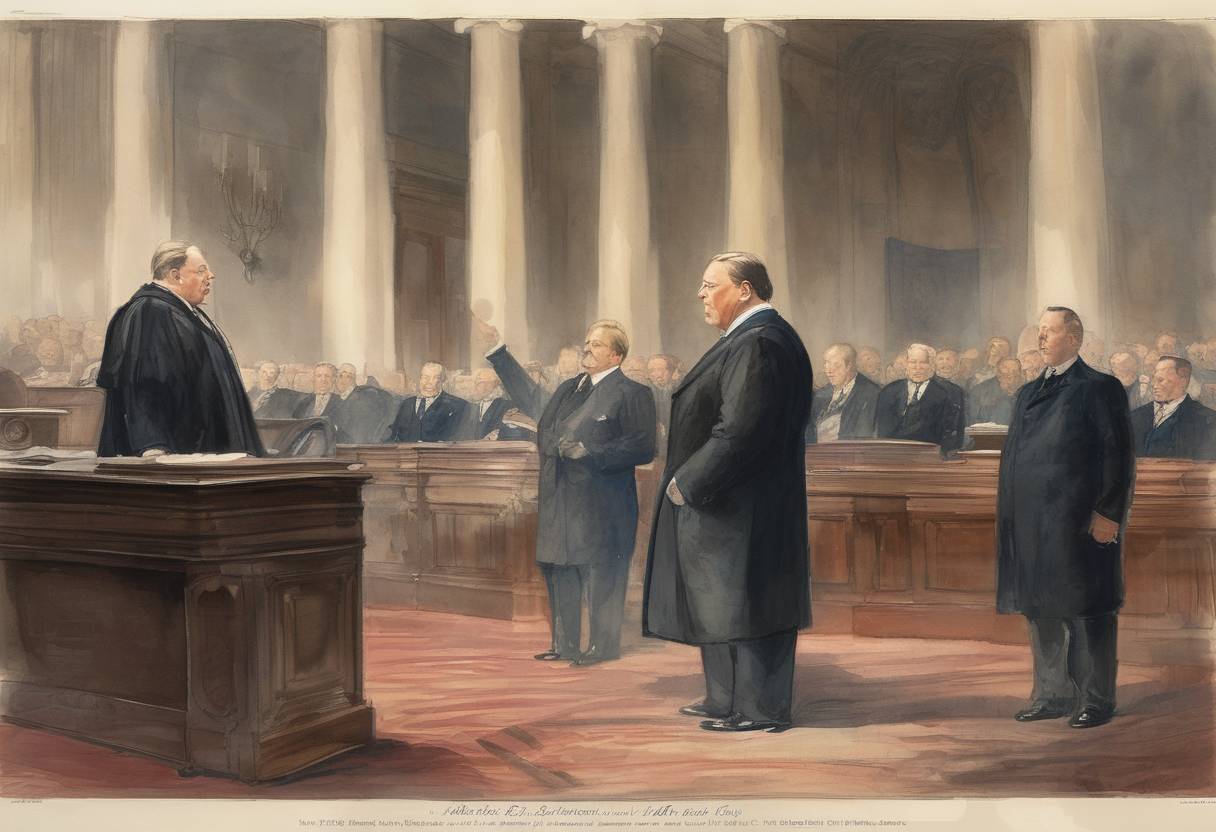
On July 11, 1921, William Howard Taft was sworn in as the Chief Justice of the United States, marking a unique moment in American history. Taft remains the only individual to have served both as President and as Chief Justice, two of the highest offices in the United States government.
Presidency (1909-1913): Taft served as the 27th President of the United States from 1909 to 1913. His presidency was marked by efforts to continue the progressive reforms initiated by his predecessor, Theodore Roosevelt, although his administration faced criticism for its perceived conservatism and failure to fully embrace progressive changes.
Post-Presidency: After his presidency, Taft returned to academia, becoming a professor of constitutional law at Yale University. He remained active in public service and legal circles, expressing his desire to serve on the Supreme Court.
Nomination: President Warren G. Harding nominated Taft to the position of Chief Justice on June 30, 1921. Taft’s nomination was well-received, given his extensive legal background and previous experience as Solicitor General and a federal judge.
Confirmation: The U.S. Senate confirmed Taft’s appointment swiftly, reflecting broad bipartisan support for his candidacy.
Judicial Philosophy: As Chief Justice, Taft was known for his administrative skills and efforts to improve the efficiency of the Supreme Court. He advocated for the Judiciary Act of 1925, which gave the Supreme Court greater control over its docket, allowing it to focus on cases of national significance.
Legacy: Taft’s tenure as Chief Justice lasted until his retirement in 1930. He left a lasting impact on the judicial system, particularly through his work to modernize court procedures and his influence on the development of federal jurisprudence.
Unique Achievement: Taft’s dual service as both President and Chief Justice underscores his significant contributions to both the executive and judicial branches of the U.S. government.
Broader Impact: His leadership in the judiciary helped shape the modern Supreme Court, emphasizing the importance of judicial efficiency and the role of the Court in addressing key constitutional issues.
William Howard Taft’s swearing-in as Chief Justice on July 11, 1921, remains a notable event in American history, highlighting his enduring legacy in shaping the nation’s legal and political landscape.
Source: en.wikipedia.org