The Comprehensive Peace Agreement: Ending the Second Sudanese Civil War
2005 · Nairobi, Kenya
The Sudan People's Liberation Movement and the Government of Sudan signed the Comprehensive Peace Agreement, ending the Second Sudanese Civil War.
April 4, 2002
The Angolan government and UNITA rebels signed a peace agreement, ending the Angolan Civil War that had lasted for 27 years.
Luanda, Angola | Angolan government, UNITA
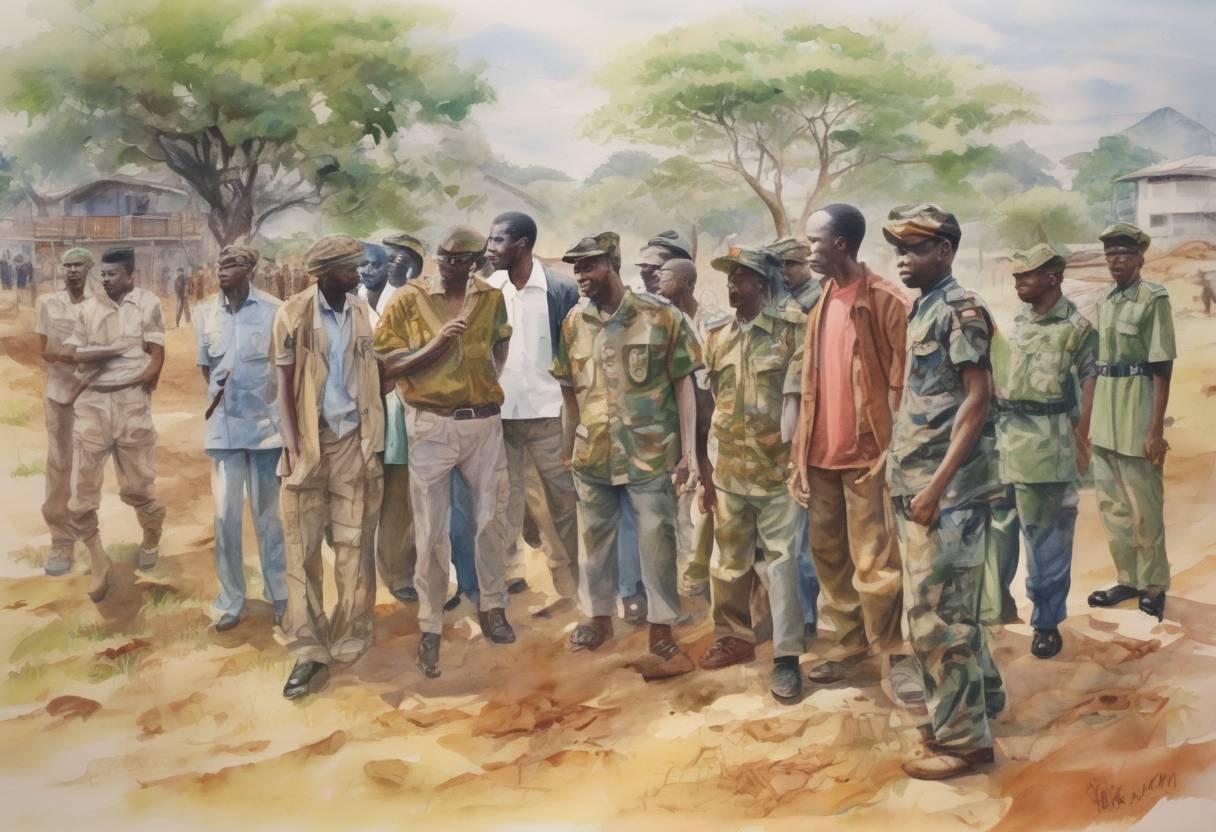
On April 4, 2002, a significant milestone was reached in Angola’s history when the Angolan government and the National Union for the Total Independence of Angola (UNITA) rebels signed a peace agreement, effectively ending a brutal civil war that had ravaged the country for 27 years.
The Angolan Civil War began in 1975, immediately following Angola’s independence from Portugal. The conflict was primarily a power struggle between two former liberation movements:
The war was characterized by its Cold War dynamics, with both superpowers providing military and financial support to their respective allies. The conflict resulted in significant loss of life, widespread displacement, and severe economic disruption.
Death of Jonas Savimbi: The turning point in the conflict came on February 22, 2002, when UNITA’s leader, Jonas Savimbi, was killed in a military ambush. His death significantly weakened UNITA’s military capabilities and morale.
Ceasefire Negotiations: Following Savimbi’s death, the Angolan government and UNITA began negotiations to end hostilities. The desire for peace was fueled by war fatigue and the realization that a military victory was unlikely for either side.
Lusaka Protocol and Bicesse Accords: Previous attempts at peace, such as the Lusaka Protocol in 1994 and the Bicesse Accords in 1991, had failed due to mutual distrust and violations by both parties. However, the new negotiations were more promising due to the changed political landscape.
The peace agreement signed on April 4, 2002, in Luena, Moxico Province, was a comprehensive accord that included:
The signing of the peace agreement marked the end of one of Africa’s longest and most devastating conflicts. The aftermath of the agreement saw:
The peace agreement of April 4, 2002, stands as a pivotal moment in Angola’s history, symbolizing the end of decades of conflict and the beginning of a new chapter focused on peace and development.
Source: www.bbc.com