April 22, 1889

The Oklahoma Land Rush begins at noon, with an estimated 50,000 people lined up to claim land in the Oklahoma Territory.


Guthrie, United States | United States government
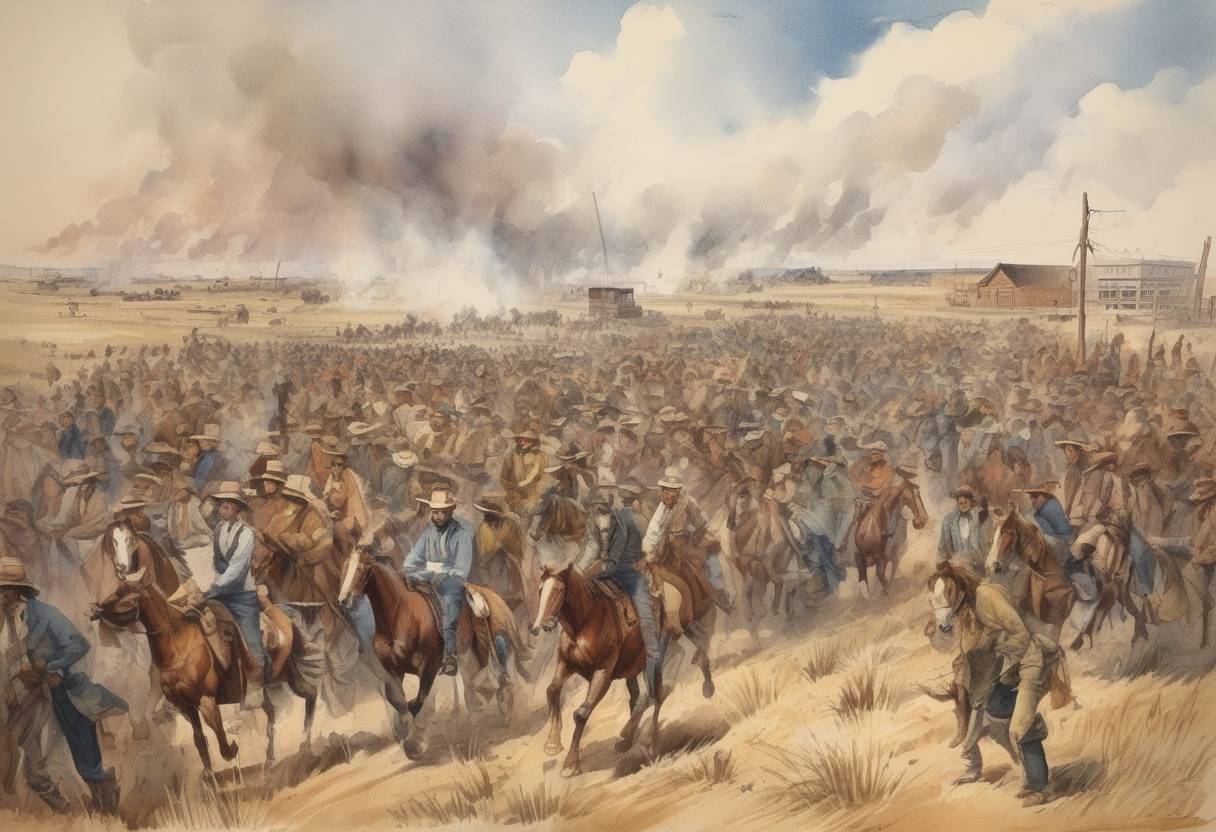
Watercolor painting based depiction of The Oklahoma Land Rush begins at noon, with an estimated 50,000 people lined up to claim land in the Oklahoma Territory. (1889)

The Oklahoma Land Rush of April 22, 1889

On April 22, 1889, a significant event in American history unfolded as the Oklahoma Land Rush commenced at precisely noon. This event marked the opening of the Unassigned Lands in the Oklahoma Territory to non-Native American settlers, following the U.S. government’s decision to allow settlement in this region.

Background

The land in question had previously been designated as Indian Territory, reserved for Native American tribes who had been forcibly relocated there, such as the Cherokee, Creek, and Seminole, among others. However, by the late 19th century, pressure from settlers and land speculators led the U.S. government to reconsider its use. The Indian Appropriations Act of 1889 authorized the opening of approximately 2 million acres of land for settlement.

The Land Rush

  • Date and Time: The rush began at noon on April 22, 1889.
  • Participants: An estimated 50,000 people, known as “Boomers,” lined up at the borders of the designated lands, eager to stake their claims.
  • Method: At the sound of a gunshot or bugle, participants raced into the territory on horseback, wagons, bicycles, and even on foot to claim plots of land, which were typically 160 acres each.

Key Events

  • Preparation: In the days leading up to the rush, potential settlers camped along the borders of the territory, ready to make their move as soon as the signal was given.
  • Sooners: Some individuals, known as “Sooners,” illegally entered the territory before the official start time to claim the best plots of land. This term has since become synonymous with those who gain an advantage by acting ahead of time.
  • Chaos and Competition: The rush was marked by chaos, with many disputes over land claims. The lack of organized procedures led to conflicts and legal battles.

Aftermath and Significance

  • Settlement: The land rush resulted in the rapid establishment of towns and settlements, including the founding of Oklahoma City, which grew almost overnight.
  • Impact on Native Americans: The opening of these lands further displaced Native American tribes, exacerbating tensions and contributing to the loss of their traditional lands.
  • Statehood: The settlement of the Oklahoma Territory was a crucial step toward Oklahoma’s eventual statehood, which was achieved in 1907.

The Oklahoma Land Rush of 1889 is a notable example of the American frontier spirit and the complex history of westward expansion, highlighting both the opportunities and the injustices of this era.