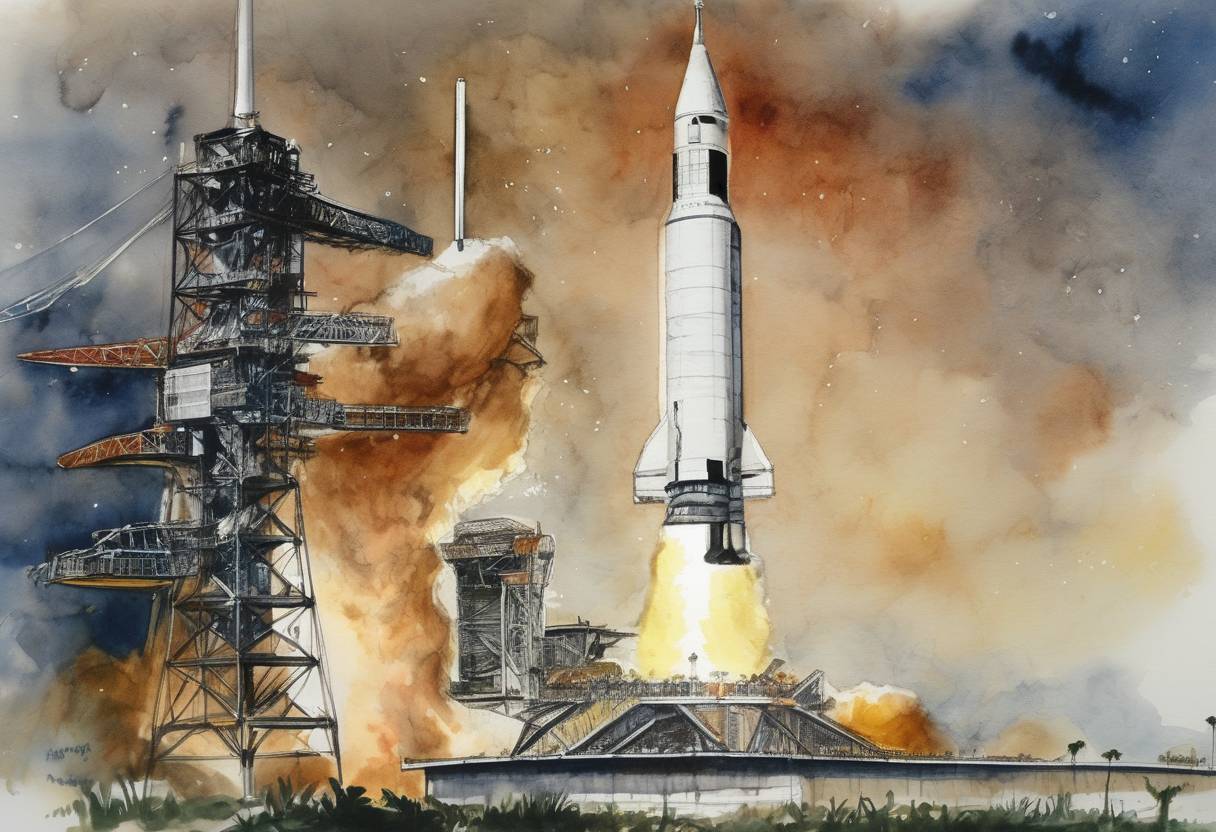
Apollo 11: Launch of the First Manned Moon Landing Mission
On July 16, 1969, Apollo 11, the historic mission that would lead to the first human landing on the Moon, was launched from Kennedy Space Center in Florida. This mission marked a significant milestone in space exploration and was a pivotal moment in the Space Race between the United States and the Soviet Union.
Background
The Apollo program was initiated by NASA with the goal of landing humans on the Moon and safely returning them to Earth. This ambitious objective was set forth by President John F. Kennedy in 1961, who famously declared the goal of sending an American astronaut to the Moon before the end of the decade.
Key Details of the Launch
- Date and Time: July 16, 1969, at 9:32 AM EDT
- Launch Vehicle: Saturn V rocket, the most powerful rocket ever built at the time
- Launch Site: Launch Complex 39A at Kennedy Space Center, Florida
Crew Members
- Neil Armstrong - Mission Commander
- Edwin “Buzz” Aldrin - Lunar Module Pilot
- Michael Collins - Command Module Pilot
Mission Objectives
The primary objective of Apollo 11 was to perform a crewed lunar landing and return safely to Earth. The mission also aimed to collect lunar surface materials, conduct scientific experiments, and take photographs of the lunar terrain.
The Launch
The Saturn V rocket, standing 363 feet tall, lifted off flawlessly, propelling the Apollo 11 spacecraft into Earth’s orbit. After completing one and a half orbits, the spacecraft’s third stage reignited, sending Apollo 11 on its trajectory toward the Moon.
Historical Significance
The launch of Apollo 11 was a monumental achievement in human history, showcasing the technological prowess and determination of NASA and the United States. It was watched by millions of people around the world, both in person and via live television broadcasts.
Aftermath
Following the successful launch, Apollo 11 continued its journey to the Moon, culminating in the historic lunar landing on July 20, 1969. Neil Armstrong and Buzz Aldrin became the first and second humans to walk on the lunar surface, respectively, while Michael Collins orbited the Moon in the Command Module.
The success of Apollo 11 fulfilled President Kennedy’s vision and solidified the United States’ leadership in space exploration. It also inspired generations to dream about the possibilities of space travel and exploration.
Apollo 11’s legacy continues to influence space exploration efforts today, serving as a testament to human ingenuity and the spirit of exploration.