German Forces Occupy Brussels during World War I - August 20, 1914
1914 · Brussels, Belgium
German forces occupy Brussels during World War I.
August 4, 1914
World War I: Germany invades Belgium, leading the United Kingdom to declare war on Germany.
Brussels, Belgium | German Empire
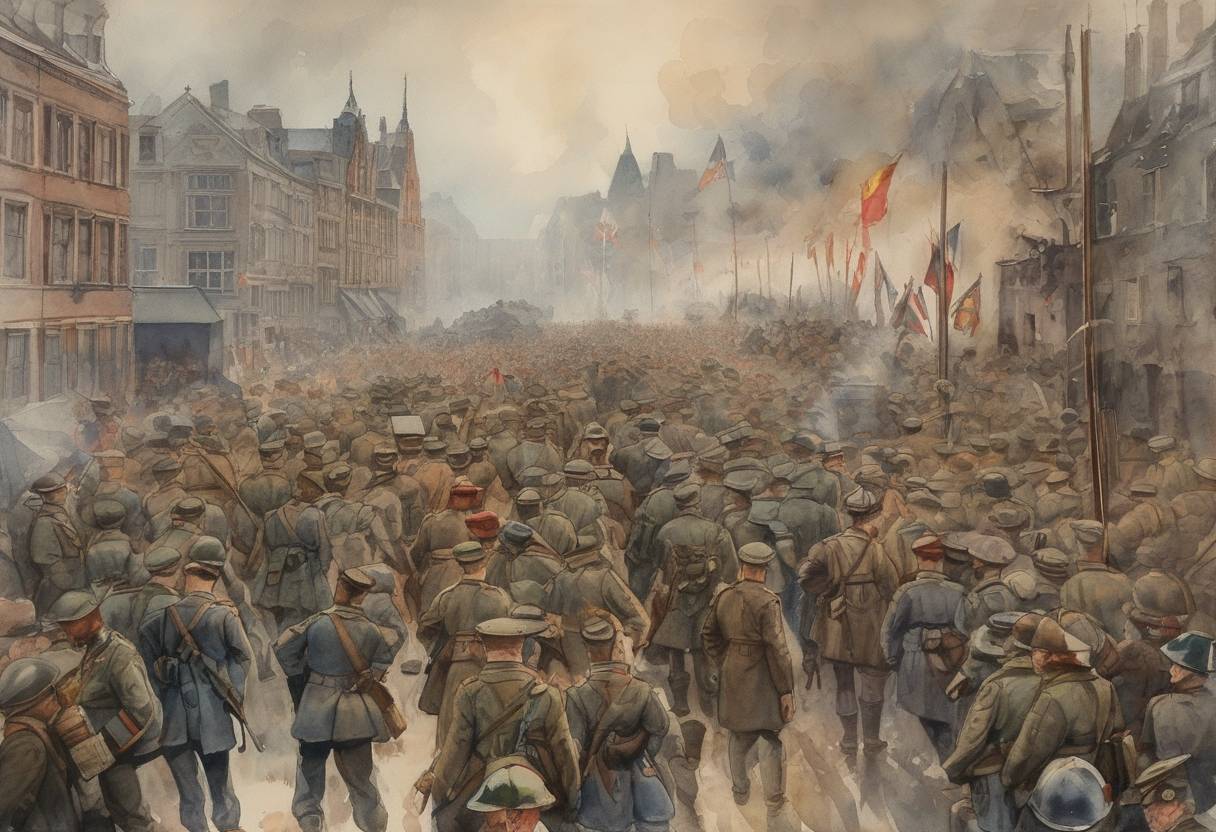
The invasion of Belgium by Germany on August 4, 1914, was a pivotal moment in the early stages of World War I. This event was part of the broader conflict that had been escalating in Europe due to a complex web of alliances, militarism, imperial ambitions, and nationalist fervor. The assassination of Archduke Franz Ferdinand of Austria-Hungary on June 28, 1914, had set off a chain reaction of diplomatic and military maneuvers among the major European powers.
The Schlieffen Plan: Germany had developed a military strategy known as the Schlieffen Plan, which aimed to avoid a prolonged two-front war against France in the west and Russia in the east. The plan involved a rapid German advance through Belgium to quickly defeat France before turning to face Russia, which was expected to be slower to mobilize.
Belgium’s Neutrality: Belgium had been recognized as a neutral country by the Treaty of London in 1839, which was guaranteed by several European powers, including the United Kingdom. Germany’s invasion of Belgium was a direct violation of this treaty.
Diplomatic Tensions: As tensions rose, Germany issued an ultimatum to Belgium on August 2, 1914, demanding free passage for its troops. Belgium refused, asserting its neutrality and sovereignty.
Invasion Begins: On August 4, 1914, German forces crossed into Belgium, initiating a brutal campaign characterized by the destruction of towns and civilian casualties. The Belgian army, though outmatched, resisted fiercely, slowing the German advance.
The UK’s Declaration of War: The violation of Belgian neutrality prompted the United Kingdom to issue an ultimatum to Germany, demanding a withdrawal from Belgium. When Germany failed to comply, the UK declared war on Germany on the same day, August 4, 1914. This marked the UK’s entry into World War I, aligning with France and Russia against the Central Powers, which included Germany and Austria-Hungary.
Global Conflict: The invasion of Belgium and the subsequent British declaration of war marked the transition of the conflict from a regional European war into a global conflict, drawing in nations from around the world.
Public Opinion: The invasion galvanized public opinion in the UK and other Allied nations against Germany, as the violation of Belgian neutrality was widely condemned as an act of aggression.
Military Stalemate: The initial German advance through Belgium was slowed, contributing to the eventual stalemate on the Western Front, characterized by trench warfare that would last for much of the war.
Long-term Impact: The events of August 4, 1914, set the stage for a prolonged and devastating conflict that reshaped the political and social landscape of Europe and the world, leading to significant changes in international relations and the eventual redrawing of national boundaries.
The invasion of Belgium and the UK’s subsequent declaration of war were critical moments in the early days of World War I, underscoring the complex interplay of alliances and the far-reaching consequences of military strategies and diplomatic decisions.
Source: en.wikipedia.org