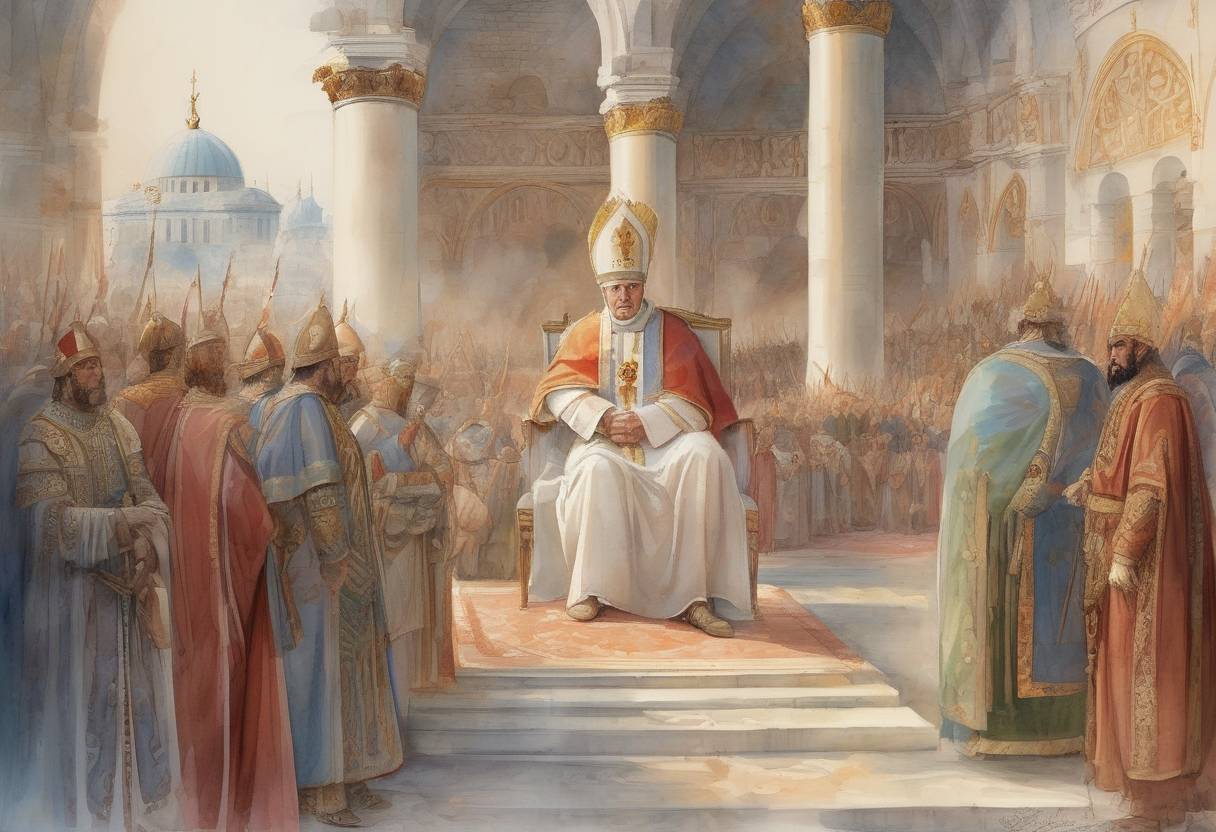
Pope John I’s Visit to Constantinople on August 6, 523
On August 6, 523, Pope John I became the first pope to visit Constantinople, marking a significant moment in the history of the early Christian Church. This visit was primarily a diplomatic mission aimed at negotiating with the Byzantine Emperor Justin I.
Context and Background
Religious Tensions: The early 6th century was a period of religious tension between the Western Roman Empire, where the papacy was based, and the Eastern Roman Empire, centered in Constantinople. The primary issue was the Arian controversy, which revolved around differing beliefs about the nature of Christ. The Western Church, led by the papacy, adhered to the Nicene Creed, which opposed Arianism, a belief that denied the full divinity of Christ.
Political Climate: The Western Roman Empire had fallen, and the Ostrogothic Kingdom, under King Theodoric the Great, controlled Italy. Theodoric, an Arian Christian, sought to maintain peace with the Eastern Empire, which was staunchly orthodox under Emperor Justin I.
The Mission
Objective: Pope John I’s mission was to negotiate with Emperor Justin I to ease the persecution of Arians in the Eastern Empire. Theodoric feared that the harsh treatment of Arians could lead to similar actions against Catholics in his realm, potentially destabilizing his rule.
Diplomatic Efforts: The visit was a delicate balancing act. Pope John I had to advocate for the Arian Christians while maintaining the orthodoxy of the Nicene Creed. His role was to mediate and seek a compromise that would protect the interests of both the Arian and orthodox communities.
The Visit
Historical Significance: This visit was unprecedented, as it was the first time a pope traveled to the Eastern capital. It underscored the importance of diplomacy in religious and political matters during this era.
Outcomes: While specific details of the negotiations are sparse, it is known that Pope John I’s efforts were partially successful. Emperor Justin I agreed to moderate his policies towards Arians, which helped to prevent immediate conflict between the Eastern and Western Christian communities.
Aftermath and Consequences
Pope John I’s Fate: Unfortunately, the mission had dire consequences for Pope John I. Upon his return to Italy, Theodoric, suspicious of the pope’s intentions and fearing betrayal, imprisoned him. Pope John I died in captivity in 526, and he was later venerated as a martyr.
Legacy: The visit set a precedent for future papal diplomacy and highlighted the complex relationship between religious and political powers in the early medieval period. It also illustrated the challenges faced by the papacy in navigating the diverse theological and political landscapes of the time.
In summary, Pope John I’s visit to Constantinople was a pivotal moment in church history, reflecting the intricate interplay of faith, diplomacy, and power in the early 6th century.