The First Long-Distance Telephone Call: March 27, 1884
1884 · Boston, United States
The first long-distance telephone call was made between Boston and New York City by Alexander Graham Bell and Thomas Watson.
February 21, 1878
The first telephone directory was issued in New Haven, Connecticut, containing 50 names. It marked a significant development in telecommunications.
New Haven, United States | District Telephone Company of New Haven
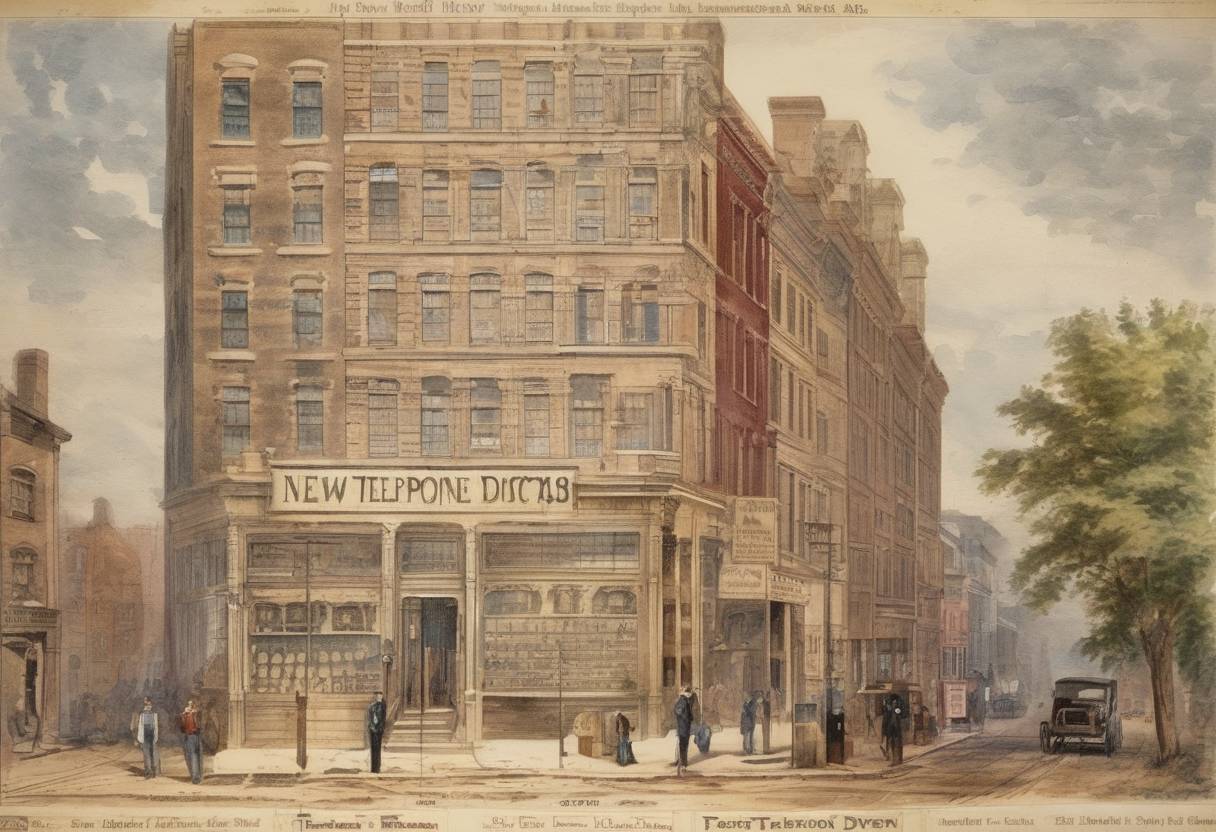
On February 21, 1878, the first telephone directory was issued in New Haven, Connecticut, marking a significant development in the history of telecommunications. This directory was a modest but pioneering document, containing just 50 names. It represented a crucial step in the evolution of communication technology and the organization of telecommunication networks.
The invention of the telephone by Alexander Graham Bell in 1876 revolutionized the way people communicated. Prior to the telephone, communication over long distances relied heavily on written correspondence and the telegraph. The telephone introduced the possibility of real-time voice communication, which was a groundbreaking advancement.
As the telephone began to gain popularity, there was a need to organize and manage the growing number of users. This led to the creation of the first telephone directory, which served as a practical tool for connecting individuals and businesses.
The directory was a simple list, providing the names of individuals and businesses that had subscribed to the telephone service. Unlike modern directories, it did not include phone numbers, as the concept of dialing had not yet been developed. Instead, users would connect through an operator who would manually connect calls.
The issuance of the first telephone directory was a significant milestone for several reasons:
Organizational Innovation: It introduced a systematic way to manage and access telephone subscribers, laying the groundwork for more complex telecommunication systems.
Facilitating Communication: By providing a centralized list of subscribers, the directory made it easier for people to connect with one another, enhancing the utility of the telephone.
Growth of Telecommunication Networks: The directory was a precursor to the expansive telephone networks that would develop in the following decades, supporting the rapid expansion of telephone usage.
Cultural Shift: The ability to communicate quickly and efficiently over long distances began to change social and business interactions, influencing the pace and nature of everyday life.
Following the introduction of the first directory, telephone directories became a standard feature of telecommunication services. As telephone technology advanced, directories evolved to include more detailed information, such as addresses and phone numbers. They became essential tools for both personal and business communication.
The concept of the telephone directory has persisted into the digital age, with online directories and contact lists serving similar functions in today’s interconnected world. The first directory issued in New Haven remains a testament to the early days of telecommunication and the continuous evolution of communication technology.
Source: en.wikipedia.org