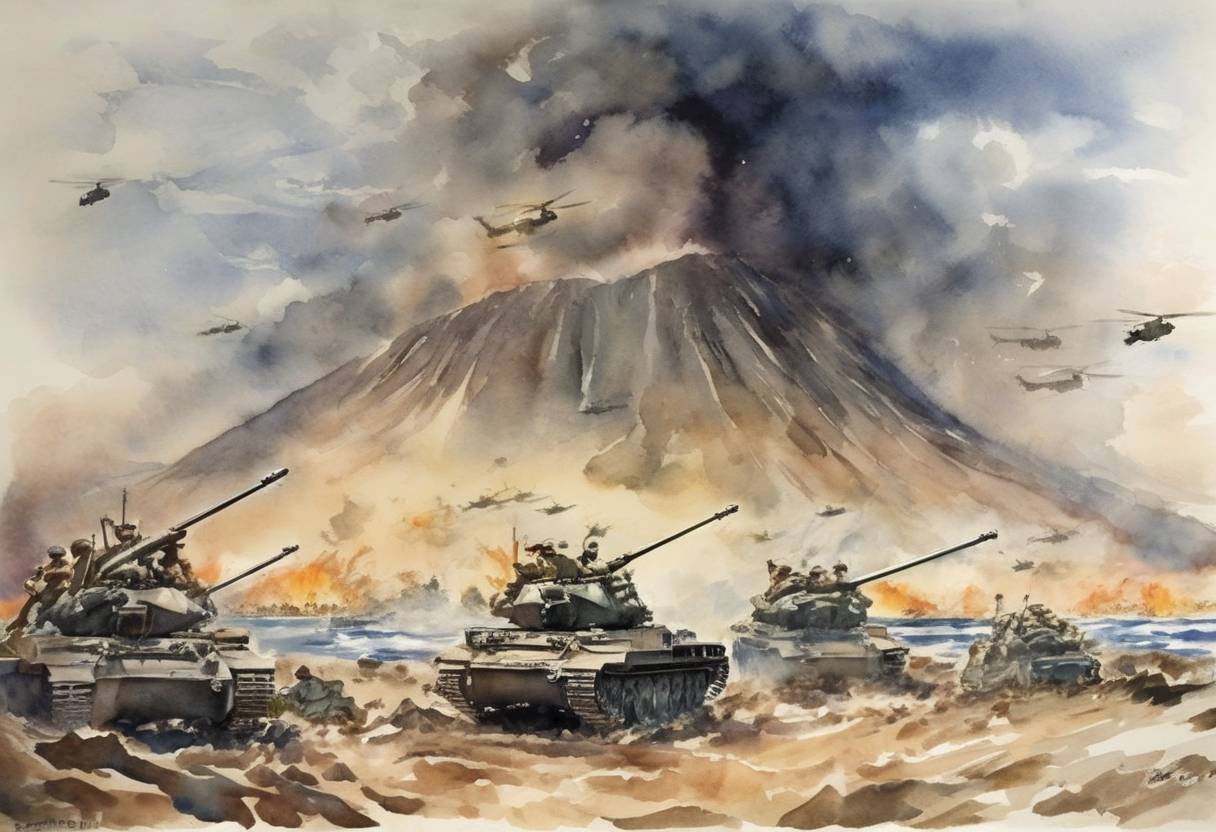
The Battle of Iwo Jima: February 19, 1945
Context and Prelude
The Battle of Iwo Jima was a pivotal conflict in the Pacific Theater during World War II. By early 1945, the United States aimed to capture Iwo Jima, a small volcanic island strategically located halfway between Japan and American bomber bases in the Mariana Islands. The island was crucial for the U.S. as it provided a base for fighter escorts and emergency landing for bombers conducting raids on the Japanese mainland.
The Landing
On February 19, 1945, the battle commenced with the landing of U.S. Marines on the beaches of Iwo Jima. The operation, codenamed Operation Detachment, involved approximately 70,000 U.S. Marines from the 3rd, 4th, and 5th Marine Divisions. The Japanese defenders, numbering around 21,000, were well-entrenched in a network of bunkers, tunnels, and fortified positions.
Initial Assault
The initial assault was preceded by a massive naval bombardment intended to weaken Japanese defenses. However, the Japanese, under the command of General Tadamichi Kuribayashi, had prepared extensively, and their defenses remained largely intact. As the Marines landed, they faced fierce resistance, with the Japanese employing a strategy of attrition, aiming to inflict maximum casualties.
Key Events
Mount Suribachi: One of the most iconic moments of the battle occurred on February 23, 1945, when U.S. Marines famously raised the American flag atop Mount Suribachi. This event was immortalized in the iconic photograph taken by Joe Rosenthal.
Intense Combat: The battle was characterized by brutal and intense combat, with both sides suffering heavy casualties. The rugged terrain and well-fortified Japanese positions made progress slow and costly for the American forces.
Aftermath and Significance
The battle lasted until March 26, 1945, when the island was declared secure. The U.S. suffered approximately 26,000 casualties, including nearly 7,000 dead. Japanese forces were almost entirely annihilated, with only about 1,000 soldiers taken prisoner.
Strategic Importance
The capture of Iwo Jima provided the U.S. with a critical airbase, significantly aiding the bombing campaign against Japan. The battle also demonstrated the tenacity and resilience of Japanese forces, foreshadowing the fierce resistance expected in the planned invasion of the Japanese mainland.
Legacy
The Battle of Iwo Jima remains one of the most significant and costly battles in the Pacific War. It highlighted the strategic importance of air superiority and the challenges of amphibious assaults against fortified positions. The courage and sacrifice of the Marines and the iconic flag-raising have become enduring symbols of American valor and determination during World War II.