Release of Mac OS X: A Pivotal Moment for Apple Inc.
2001 · Cupertino, United States
Apple Inc. released the Mac OS X operating system, marking a significant shift in the company's software strategy.
January 24, 1984
The first Apple Macintosh computer was introduced during a Super Bowl commercial, revolutionizing personal computing.
Cupertino, United States | Apple Inc.
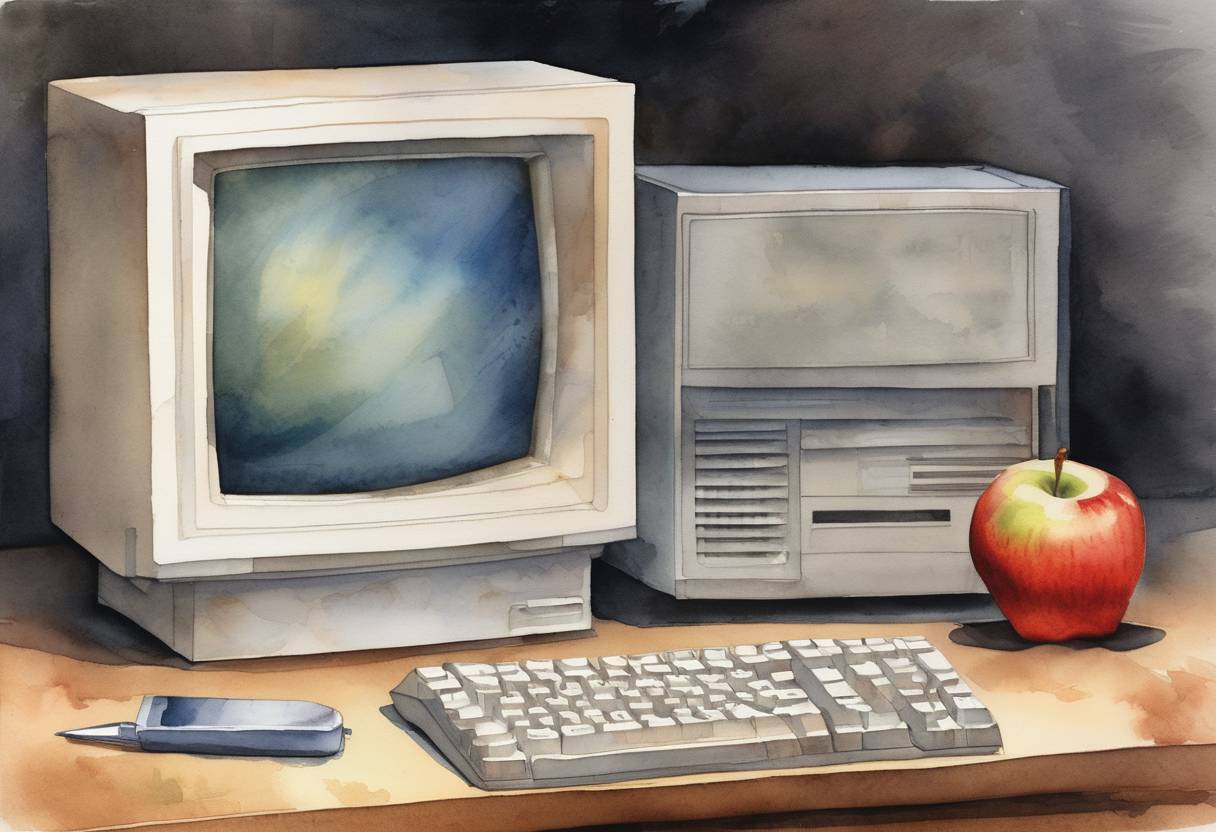
On January 24, 1984, Apple Inc. introduced the first Macintosh computer, a pivotal moment in the history of personal computing. This launch was famously heralded by a groundbreaking commercial aired during Super Bowl XVIII, directed by Ridley Scott. The commercial, titled “1984,” is often credited with revolutionizing both advertising and the personal computer industry.
Apple Inc.: Founded in 1976 by Steve Jobs, Steve Wozniak, and Ronald Wayne, Apple had already made significant strides in the personal computer market with the Apple II series. However, the company faced stiff competition from IBM and other PC manufacturers.
Development of the Macintosh: The Macintosh project was initiated by Jef Raskin in the late 1970s, with the goal of creating a user-friendly and affordable personal computer. Steve Jobs took over the project in 1981, steering it towards a more ambitious vision.
Super Bowl XVIII: The commercial aired on January 22, 1984, during the third quarter of the Super Bowl, watched by millions of viewers. It depicted a dystopian future inspired by George Orwell’s novel “1984,” where a heroine destroys a screen displaying a Big Brother-like figure, symbolizing Apple’s challenge to the status quo.
Impact: The ad was a sensation, generating significant buzz and anticipation for the Macintosh. It is considered one of the greatest commercials of all time, not only for its cinematic quality but also for its bold message.
Product Features: The Macintosh was notable for its graphical user interface (GUI), which was more intuitive than the command-line interfaces of its competitors. It featured a 9-inch monochrome display, a mouse, and a built-in floppy disk drive.
User Experience: The Macintosh was designed to be user-friendly, with a focus on ease of use and design. It introduced the concept of WYSIWYG (What You See Is What You Get) in word processing and desktop publishing.
Market Impact: Although initial sales were modest compared to expectations, the Macintosh set a new standard for personal computing. It influenced the development of future operating systems and software, particularly in the areas of design and multimedia.
Legacy: The Macintosh established Apple as a leader in innovation and design. It paved the way for future products like the iMac, iPod, iPhone, and iPad, contributing to Apple’s reputation as a pioneer in technology.
Cultural Influence: The “1984” commercial and the Macintosh launch are often cited as key moments in the intersection of technology and culture, demonstrating the power of marketing and the potential of personal computing to transform society.
In summary, the introduction of the Apple Macintosh on January 24, 1984, marked a significant milestone in the evolution of personal computing, characterized by its innovative design and user-friendly interface, and heralded by one of the most iconic advertisements in history.
Source: en.wikipedia.org