The Battle of Tertry - March 20, 687
687 · Tertry, Frankish Kingdom
The Battle of Tertry takes place, where Pepin of Herstal defeats Theuderic III, consolidating his power over the Frankish territories.
April 17, 0690
The Battle of Dorestad takes place, where the Frisians, led by King Radbod, defeat the Frankish forces, temporarily halting Frankish expansion.
Dorestad, Frisia | Frisian Kingdom
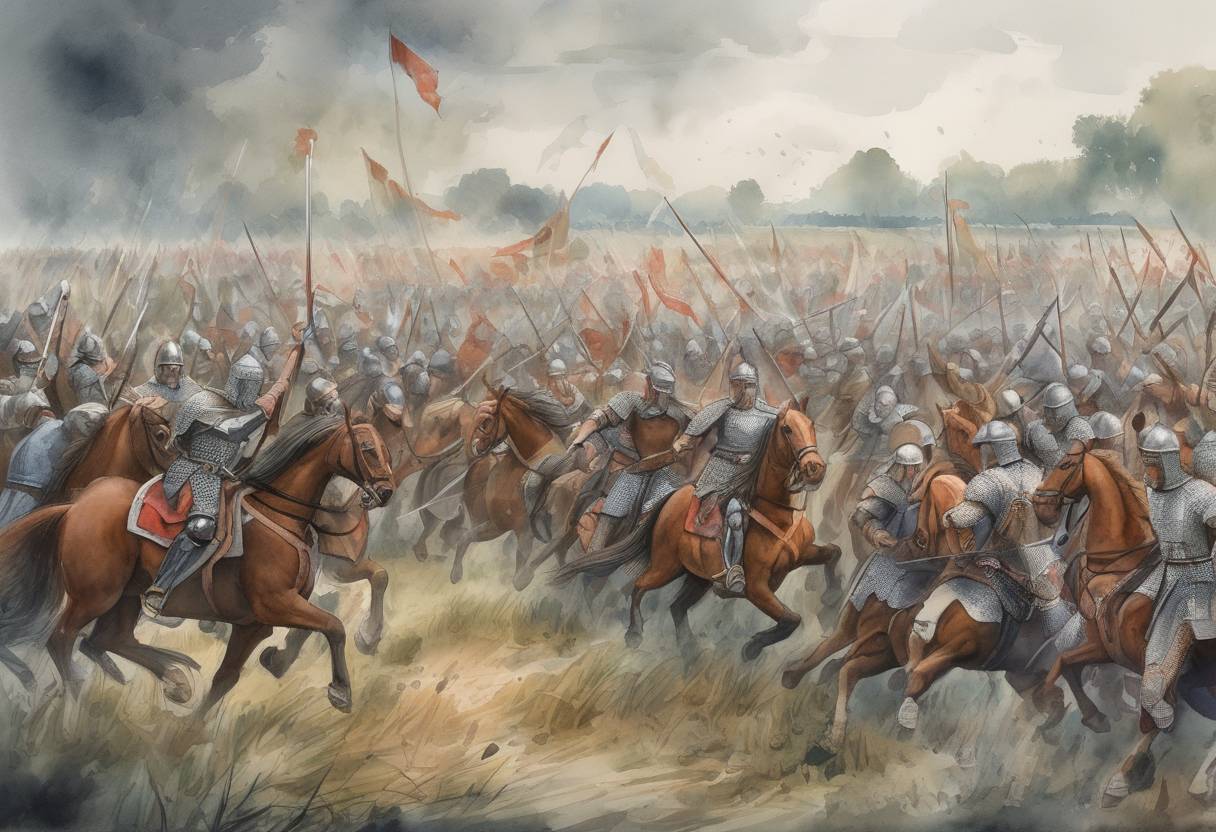
The Battle of Dorestad, which took place on April 17, 690, was a significant conflict between the Frisians, led by King Radbod, and the Frankish forces. This battle is notable for temporarily halting the expansion of the Frankish Empire under the Merovingian dynasty.
During the late 7th century, the region that is now the Netherlands was a contested area between the Frisians and the Franks. The Frisians, a Germanic tribe, controlled a significant portion of the North Sea coast, including the important trading center of Dorestad. The Franks, under the Merovingian kings, were seeking to expand their influence and territory northward.
The Battle of Dorestad was a critical engagement in the ongoing struggle between the Frisians and the Franks. The Frisians, under King Radbod, managed to achieve a decisive victory against the Frankish forces. This victory was significant as it temporarily halted the Frankish expansion into Frisian territory and maintained Frisian control over Dorestad, a vital trading hub.
The victory at Dorestad allowed the Frisians to maintain their independence for a time and preserved their control over the lucrative trade routes in the region. However, this was not the end of Frankish ambitions in the area. The Franks would eventually regroup and continue their efforts to expand northward.
In summary, the Battle of Dorestad on April 17, 690, was a pivotal moment in the struggle between the Frisians and the Franks, highlighting the complex interplay of power, culture, and religion in early medieval Europe.
Source: en.wikipedia.org