The Battle of Edington: A Turning Point in English History
On May 21, 878, the Battle of Edington concluded with a decisive victory for King Alfred the Great of Wessex over the Viking forces led by Guthrum. This battle was a pivotal moment in the Viking invasions of England and had significant long-term implications for the future of the British Isles.
Context and Lead-Up to the Battle
The late 9th century was a tumultuous period in English history, marked by frequent Viking raids and invasions. The Great Heathen Army, a coalition of Norse warriors, had been campaigning in England since 865, capturing large swathes of territory. By 878, the Vikings had established a strong presence in much of England, and Wessex, under the rule of King Alfred, was one of the few remaining Anglo-Saxon kingdoms resisting their advance.
In early 878, the Vikings launched a surprise attack on Chippenham, forcing Alfred to retreat into the marshes of Somerset. From his stronghold at Athelney, Alfred regrouped and gathered support from local militias. By May, he had assembled a formidable force to confront the Vikings.
The Battle of Edington
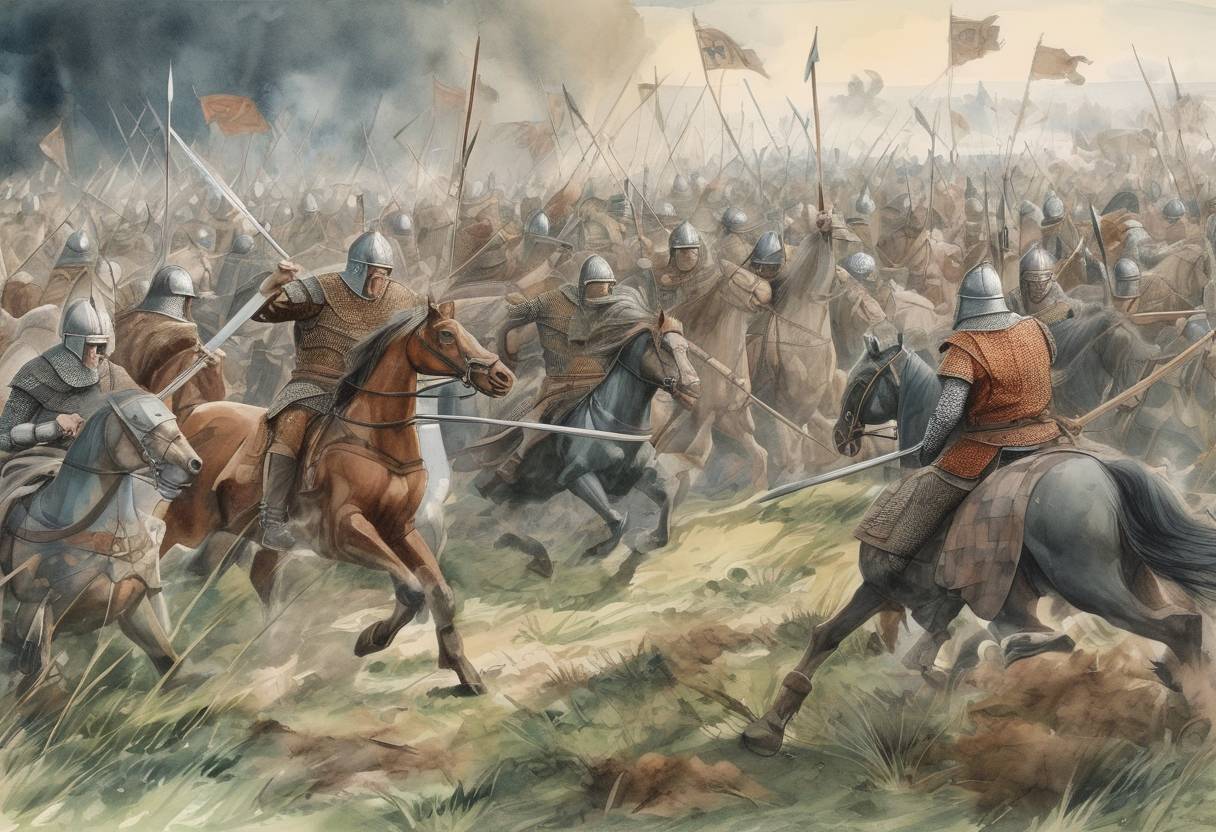
The battle took place near Edington in Wiltshire. Alfred’s forces, though outnumbered, were well-prepared and motivated. The Anglo-Saxon army employed a shield wall tactic, a defensive formation that proved effective against the Viking onslaught. After a fierce and bloody engagement, Alfred’s forces broke through the Viking lines, leading to a comprehensive victory.
Aftermath and the Treaty of Wedmore
The defeat at Edington forced Guthrum and his remaining forces to retreat. Recognizing the futility of continued conflict, Guthrum sought terms of peace. This led to the Treaty of Wedmore, a significant diplomatic agreement that had several key provisions:
Baptism of Guthrum: As part of the treaty, Guthrum agreed to be baptized as a Christian, symbolizing a commitment to peace and integration into Anglo-Saxon society. Alfred stood as his godfather during the ceremony.
Withdrawal of Viking Forces: The treaty stipulated that Guthrum’s forces would withdraw from Wessex and return to East Anglia, where they would settle and govern under the Danelaw, a region of England under Viking control.
Establishment of Boundaries: The treaty helped establish boundaries between the territories controlled by the Anglo-Saxons and the Vikings, providing a framework for coexistence.
Historical Significance
The Battle of Edington and the subsequent Treaty of Wedmore were crucial in halting the Viking advance into southern England. Alfred’s victory solidified his reputation as a formidable leader and strategist, earning him the epithet “Alfred the Great.” The peace established by the treaty allowed for a period of stability and recovery in Wessex, laying the groundwork for the eventual unification of England under Alfred’s descendants.
The events of 878 also marked a turning point in the Viking presence in England, transitioning from raiders to settlers, and influencing the cultural and political landscape of the region for generations to come.