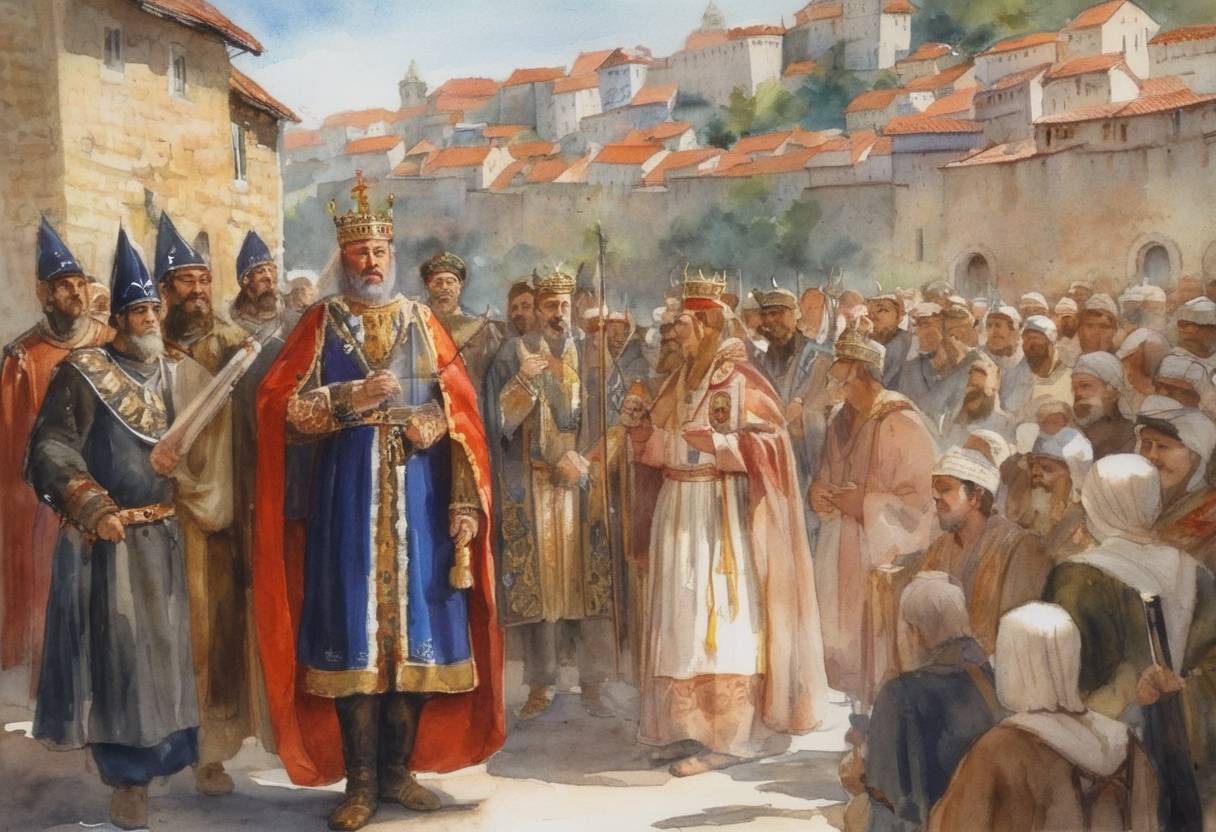
Stephen Uroš IV Dušan Declares Himself King of Serbia
On September 8, 1331, Stephen Uroš IV Dušan declared himself King of Serbia, marking a significant turning point in Serbian medieval history. His reign would usher in the expansion of the Serbian Kingdom and lay the groundwork for the establishment of the Serbian Empire.
Context and Prelude
Prior to Dušan’s ascension, the Serbian Kingdom experienced internal strife and power struggles. Dušan, born in 1308, was the son of King Stefan Dečanski and belonged to the Nemanjić dynasty, a royal family that had ruled Serbia for over a century and a half. Tensions between Dušan and his father peaked, culminating in a coup. Dušan seized power following a decisive victory at the Battle of Zvečan in August 1331, leading to his father’s capture and deposition.
Reign and Expansion
Once crowned king, Dušan embarked on a series of military campaigns that expanded the Serbian state considerably. His ambitions and military prowess allowed him to annex significant territories in the Balkans. Under his leadership, Serbia conquered parts of Byzantium, including significant areas of Greece and Albania, and parts of the medieval Bulgarian and Hungarian territories.
Dušan’s expansionist policies were accompanied by domestic reforms. He is credited with centralizing power and issuing the monumental legal code known as Dušan’s Code in 1349, which sought to standardize and strengthen the legal and administrative structure of the growing kingdom.
Legacy
Dušan’s rule set the stage for the proclamation of the Serbian Empire in 1346, when he assumed the imperial title of “Emperor of Serbs and Greeks”. This shift in status marked a peak in Serbia’s territorial and political influence in the Balkans.
Although the empire would face challenges after Dušan’s death in 1355, his reign is often regarded as a golden age for Serbia, reflecting a period of prosperity, territorial expansion, and cultural flourishing. The influence of Dušan’s legacy persisted, shaping not only the immediate history of the region but also influencing future generations in the Balkans.