The Catcher in the Rye: First Publication
1951 · New York City, United States
The Catcher in the Rye by J.D. Salinger is published for the first time.
December 6, 1933
A federal judge in New York rules that James Joyce's novel 'Ulysses' is not obscene, allowing it to be imported into the United States.
New York City, United States | U.S. Federal Court
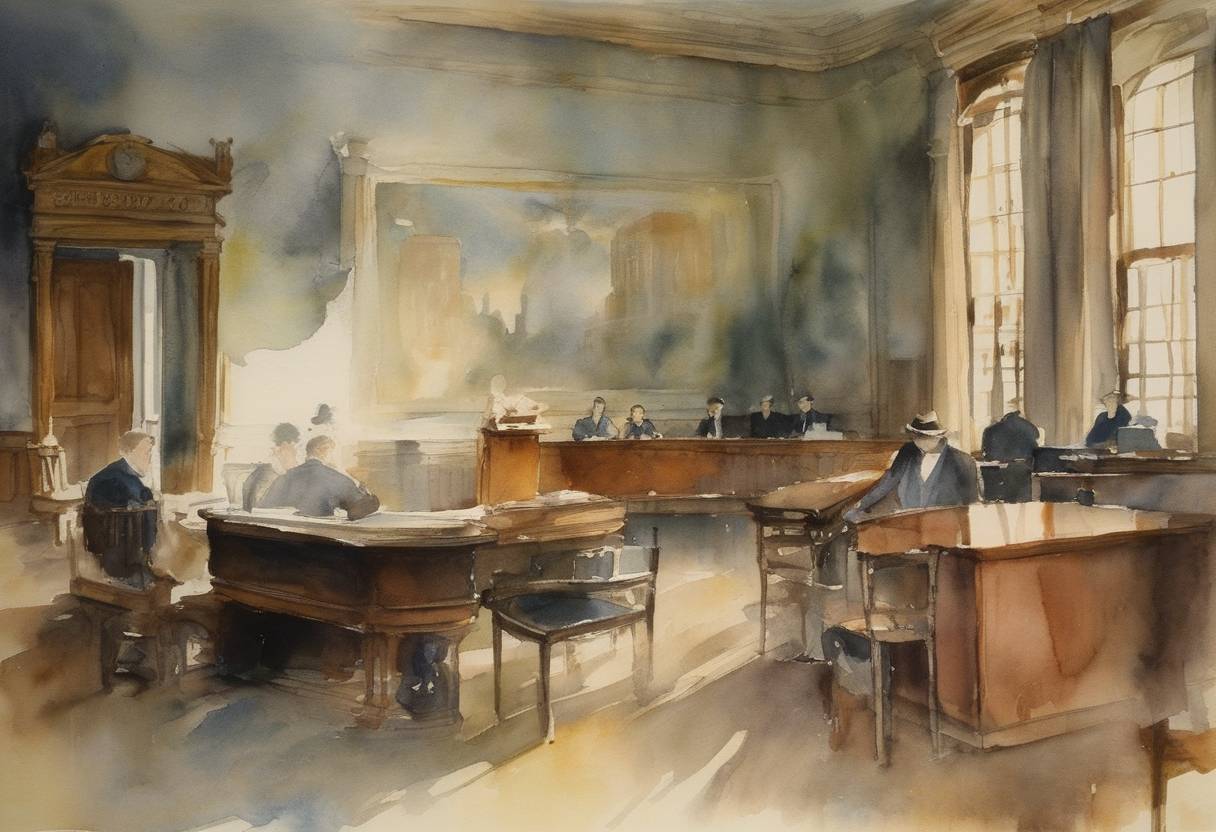
On December 6, 1933, a landmark legal decision marked a turning point in American literary freedom. U.S. District Judge John M. Woolsey ruled that James Joyce’s novel “Ulysses” was not obscene, thereby allowing its import into the United States. This decision effectively lifted the ban on the novel, which had been prohibited under the Comstock Law, a statute that barred obscene materials from being mailed.
James Joyce’s “Ulysses” was first published in 1922 and quickly became controversial for its stream-of-consciousness style, intricately structured parallels to Homer’s “Odyssey,” and its candid exploration of the human psyche and sexuality. Due to its explicit content, the novel faced bans in several countries. In the United States, copies were confiscated and destroyed by the Customs Office, labeling it obscene material.
The American publisher Random House attempted to circumvent this ban by orchestrating a legal test case. They arranged for a copy of “Ulysses” to be seized by the U.S. Customs as it entered the country, thereby prompting judicial review. This case is famously known as United States v. One Book Called “Ulysses.”
Judge Woolsey’s evaluation focused not only on isolated content but also on the novel’s artistic merit and intent. His decision was based on a comprehensive literary analysis, concluding that “Ulysses” should be regarded as a serious literary work, not an obscene one. Woolsey noted that Joyce’s use of frank language was a candid expression of reality rather than a deliberate attempt to corrupt morals.
The ruling by Judge Woolsey was upheld by the United States Court of Appeals for the Second Circuit in 1934, fortifying the precedent for greater literary freedom. The decision not only enabled “Ulysses” to be legally imported, published, and sold in the United States but also set an important legal standard for evaluating alleged obscenity in literature. It emphasized context, artistic intent, and literary value, paving the way for greater freedom of expression and the alleviation of censorship in America.
Judge Woolsey’s decision remains a crucial moment in literary history, liberating Joyce’s work for widespread appreciation and influencing subsequent obscenity law interpretations, including the freedoms enjoyed by modern writers and publishers today.