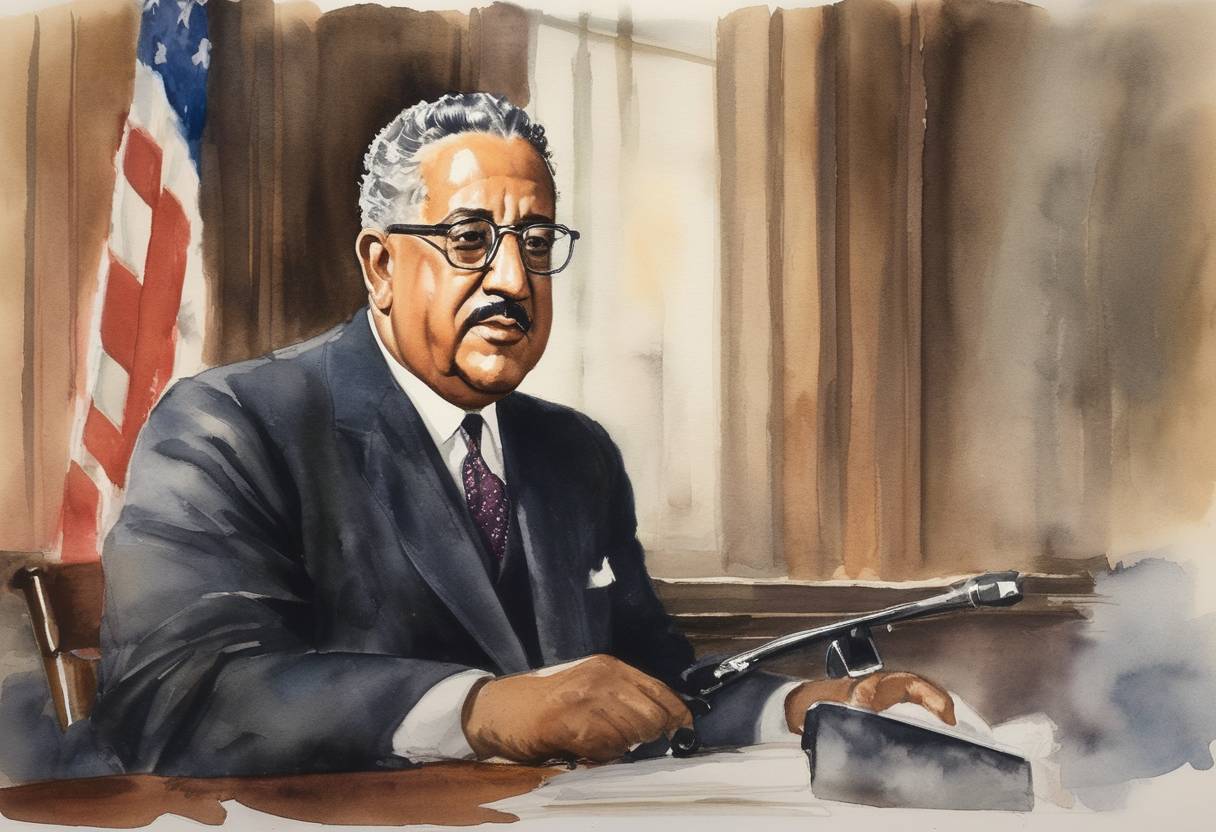
Confirmation of Thurgood Marshall to the U.S. Supreme Court
On August 30, 1967, Thurgood Marshall was confirmed as the first African American Justice of the United States Supreme Court. This historic event marked a significant milestone in the American civil rights movement and the judicial history of the United States.
Background
Thurgood Marshall was born on July 2, 1908, in Baltimore, Maryland. He was a distinguished graduate of Howard University School of Law, where he excelled academically and developed a lifelong commitment to combating racial discrimination through the legal system. Prior to his Supreme Court appointment, Marshall made a name for himself as the chief attorney of the NAACP Legal Defense and Educational Fund.
Legal Career and Achievements
Marshall’s legal career was distinguished by his involvement in numerous civil rights cases, most notably his victory in Brown v. Board of Education (1954), where the Supreme Court declared racial segregation in public schools unconstitutional. His success in this and other cases showcased his exceptional legal acumen and resolute dedication to achieving racial equality.
Appointment and Confirmation
On June 13, 1967, President Lyndon B. Johnson nominated Thurgood Marshall to the Supreme Court to fill the seat vacated by Justice Tom C. Clark. During the ensuing Senate confirmation hearings, Marshall faced rigorous questioning, particularly regarding his views on constitutional interpretation and civil rights.
Despite opposition from some Southern senators who were resistant to his progressive views on race and equality, Marshall prevailed. On August 30, 1967, the Senate voted 69–11 to confirm his appointment, allowing him to take oaths in October 1967.
Significance and Impact
Thurgood Marshall’s confirmation was a transformative moment in the history of the Supreme Court and the United States as a whole. His presence on the bench provided an influential voice for minorities and civil rights, furthering social justice through landmark decisions. Marshall served on the Supreme Court for 24 years, retiring in 1991.
Throughout his tenure, he continued to advocate for individual rights and equal protection under the law, leaving an indelible legacy on American jurisprudence and inspiring generations of lawyers and civil rights advocates.