Papal Bull Quantum praedecessores and the Second Crusade
Background
The city of Edessa fell to Muslim forces led by Zengi, the atabeg of Mosul, on December 24, 1144. This was a significant blow to Christian territories in the Levant, as Edessa was one of the first Crusader states established after the First Crusade. The collapse of Edessa sent shockwaves through the Christian world, prompting calls for a response.
Issuance of Quantum praedecessores
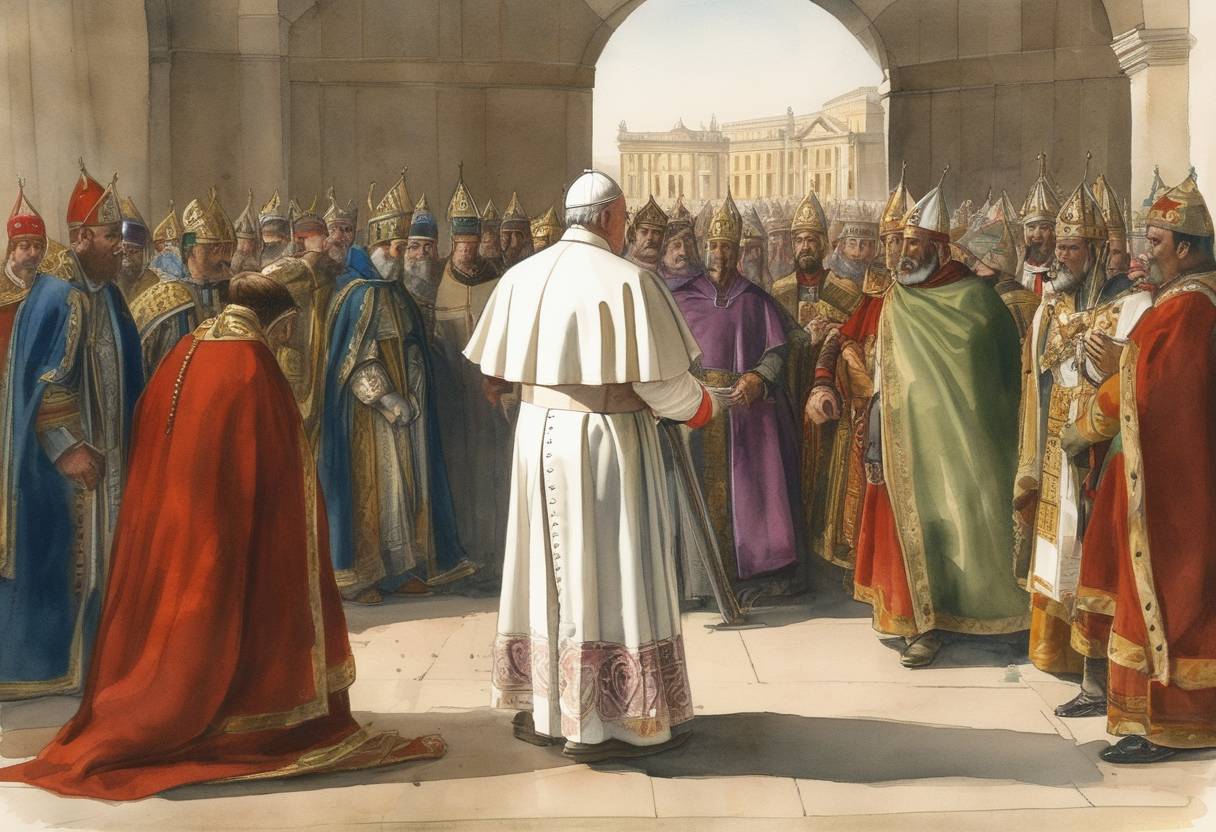
On December 1, 1145, Pope Eugene III issued the papal bull Quantum praedecessores. This was a formal proclamation urging Western Christian monarchs and their subjects to embark on what would become known as the Second Crusade. This call was motivated by the perceived need to defend Christian realms in the Holy Land and reclaim lost territories such as Edessa.
Contents and Significance
Quantum praedecessores served as an official call for crusade, reminiscent of Pope Urban II’s call for the First Crusade in 1095. The document appealed to the memory of past Christian warriors (hence the Latin term praedecessores, meaning predecessors) who had previously demonstrated piety and valor in reclaiming Jerusalem and other holy sites.
In the bull, Pope Eugene III outlined the spiritual benefits of participating in the crusade, offering remission of sins and other ecclesiastical incentives to those who took up the cross. Additionally, it delineated the ecclesiastical and spiritual justification for engaging in warfare to recover Christian territories.
Broader Impact
- Participation: Encouraged by powerful advocates like Bernard of Clairvaux, who preached the crusade across Europe, many responded to the call. Notable figures included King Louis VII of France and Emperor Conrad III of Germany.
- Campaigns and Outcomes: The Second Crusade (1147-1150) saw major campaigns in the Eastern Mediterranean, though ultimately, it failed to recapture Edessa and ended in several defeats for the Crusaders, notably the unsuccessful siege of Damascus in 1148.
- Long-term Consequences: Despite its immediate failures, the Second Crusade had lasting impacts on the relationships between Christian and Muslim states, and highlighted growing tensions within Christendom itself, sowing seeds for future campaigns.
The issuance of Quantum praedecessores was thus a pivotal moment in the history of the Crusades, reflecting the complex interplay of religion, politics, and war during the Middle Ages. The document underscores the Pope’s role as a spiritual leader influencing secular military decisions and shaping the geopolitical landscape of the time.