Delivery of Space Shuttle Columbia to Kennedy Space Center
1979 · Cape Canaveral, United States
The first fully functional space shuttle, Columbia, was delivered to the Kennedy Space Center for launch preparation.
September 17, 1976
NASA publicly unveils its first space shuttle, Enterprise, in Palmdale, California.
Palmdale, United States | NASA
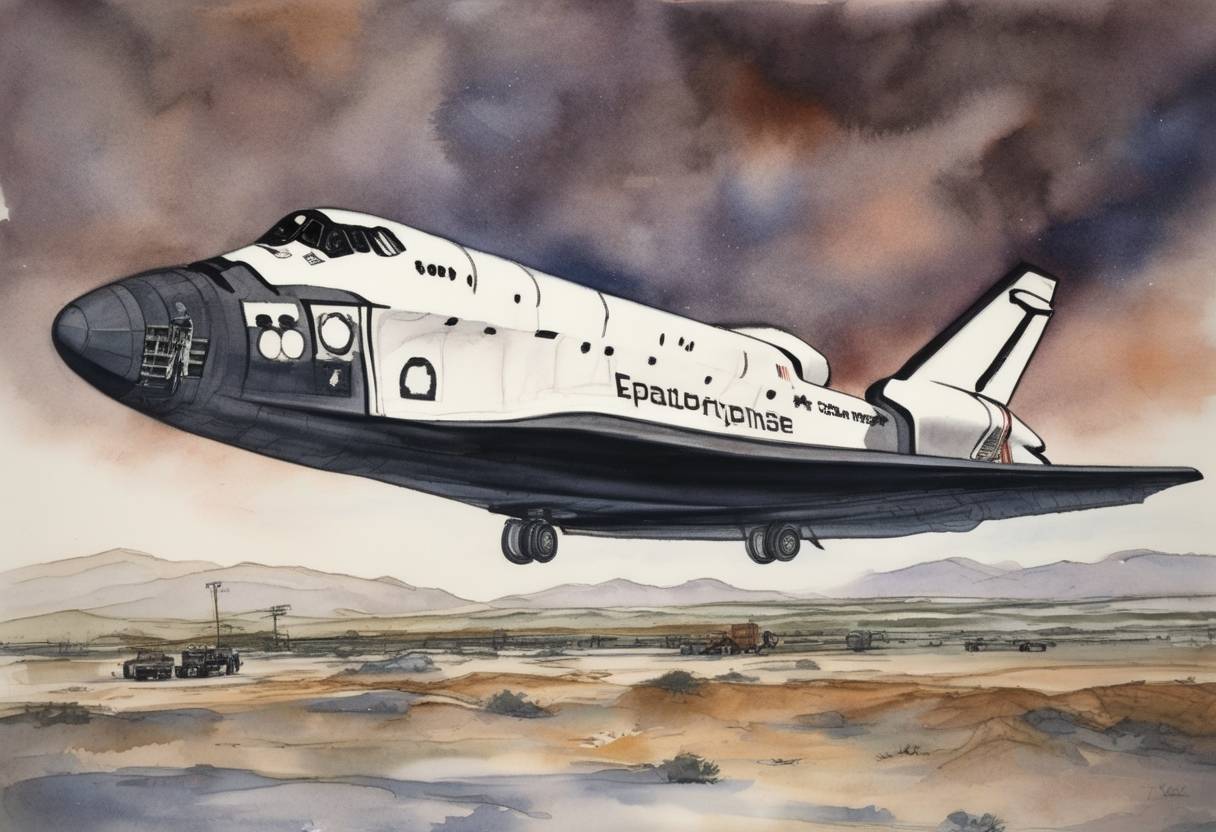
On September 17, 1976, NASA publicly unveiled its first space shuttle, the Enterprise, at the Rockwell International’s manufacturing facilities in Palmdale, California. This event marked a milestone in the United States’ space program as the Enterprise was the first orbiter constructed for the Space Shuttle program, although it was not intended for space travel.
The Space Shuttle program, formally known as the Space Transportation System (STS), was initiated in the 1970s as a bold endeavor to reduce costs in human spaceflight by developing an orbiting spacecraft that was reusable. The Enterprise, initially designated as “Constitution,” was renamed following a write-in campaign by fans of the TV show Star Trek. It was constructed primarily for Approach and Landing Tests (ALT) and did not possess engines or heat shield tiles necessary for spaceflight.
Ceremony: The unveiling ceremony was a grand event attended by many dignitaries, NASA officials, and noteworthy personalities, including members of the Star Trek cast. The presence of such figures highlighted the cultural and scientific significance of the space shuttle program.
Testing and Purpose: Though Enterprise never flew in space, it played a crucial role in the development of subsequent shuttles. It was used to perform critical ground and atmospheric flight tests that validated the shuttle’s design and flight characteristics.
Contributions to Space Shuttle Program: The data and insights obtained from the Enterprise’s tests informed the construction and improvement of future space shuttles. This was vital for subsequent missions that would eventually lead to the successful deployment of operational orbiters, starting with the Space Shuttle Columbia.
Cultural Impact: The unveiling ingrained itself into popular culture and emphasized the interconnectedness of scientific progress and societal engagement. The event reflected the technological optimism of the era and NASA’s open approach to involving the public in its endeavors.
The unveiling of the Enterprise was not just a display of America’s technological prowess but also a statement of intent towards continued exploration and innovation in space travel. The legacy of Enterprise is credited with laying the groundwork for decades of shuttle missions, fundamentally altering how humans access and utilize space.
Source: www.nasa.gov