Execution of Anne Boleyn: May 19, 1536
1536 · London, England
Anne Boleyn, the second wife of King Henry VIII of England, was executed on charges of adultery, treason, and incest.
October 15, 1520
King Henry VIII of England orders bowling lanes at Whitehall Palace.
London, England | English monarchy
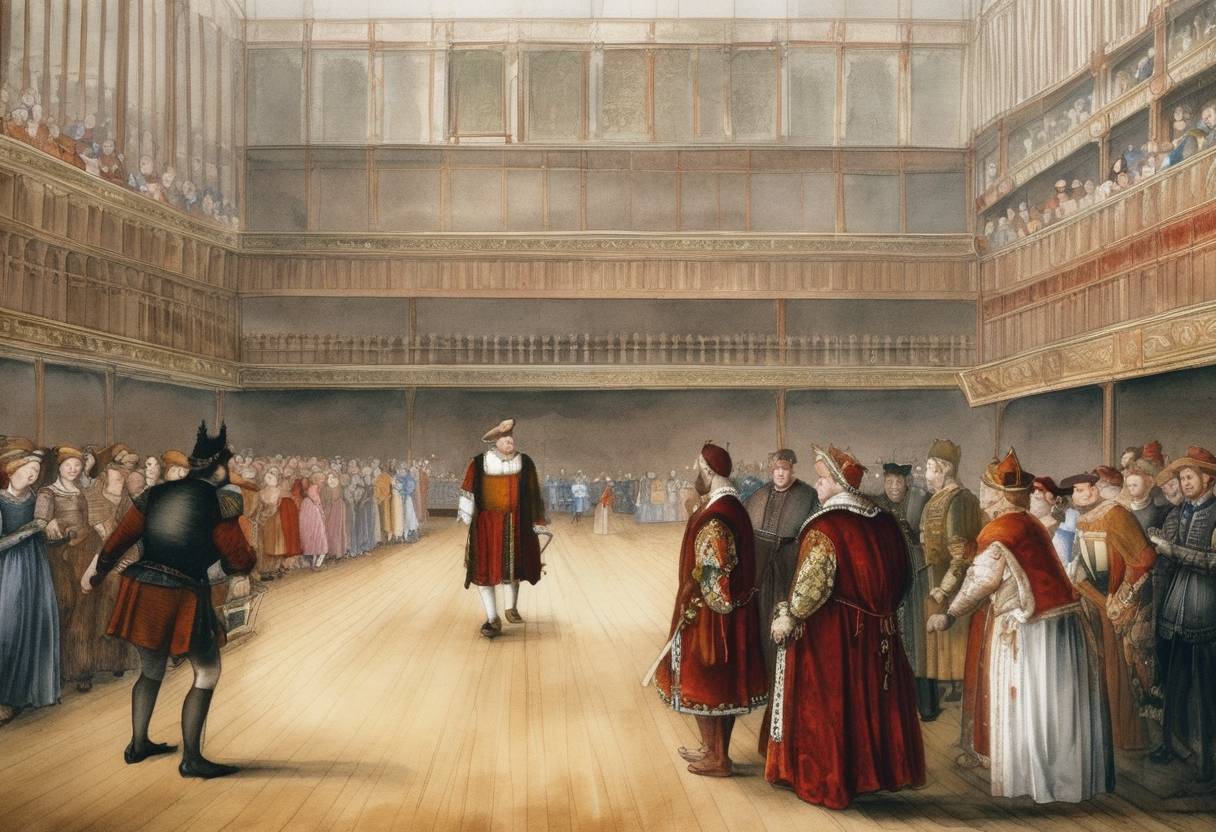
On October 15, 1520, King Henry VIII of England made a unique contribution to the leisure pursuits of the Tudor court by ordering the construction of bowling lanes at Whitehall Palace. This addition signifies not only the king’s interest in sports and recreation but also highlights the cultural aspects of the Tudor dynasty.
Whitehall Palace, located in Westminster, London, was one of the primary residences of the English monarch during the Tudor period. Renowned for his athleticism and vigor, King Henry VIII was deeply passionate about sports, which were an integral part of court life. Bowling was a popular pastime among the English aristocracy in the 16th century, serving as both a form of exercise and a social activity.
The installment of bowling lanes at Whitehall demonstrates Henry VIII’s commitment to enhancing the opulence and splendor of his court. This move indirectly encouraged the popularity and formalization of bowling as a pastime in England. Over time, royal patronage such as this contributed to the game’s evolution, eventually giving rise to modern bowling forms.
Overall, the introduction of bowling lanes at Whitehall Palace on October 15, 1520, reflects the cultural richness of the Tudor court and underscores Henry VIII’s role in shaping the leisure habits of his era.
Source: www.hrp.org.uk