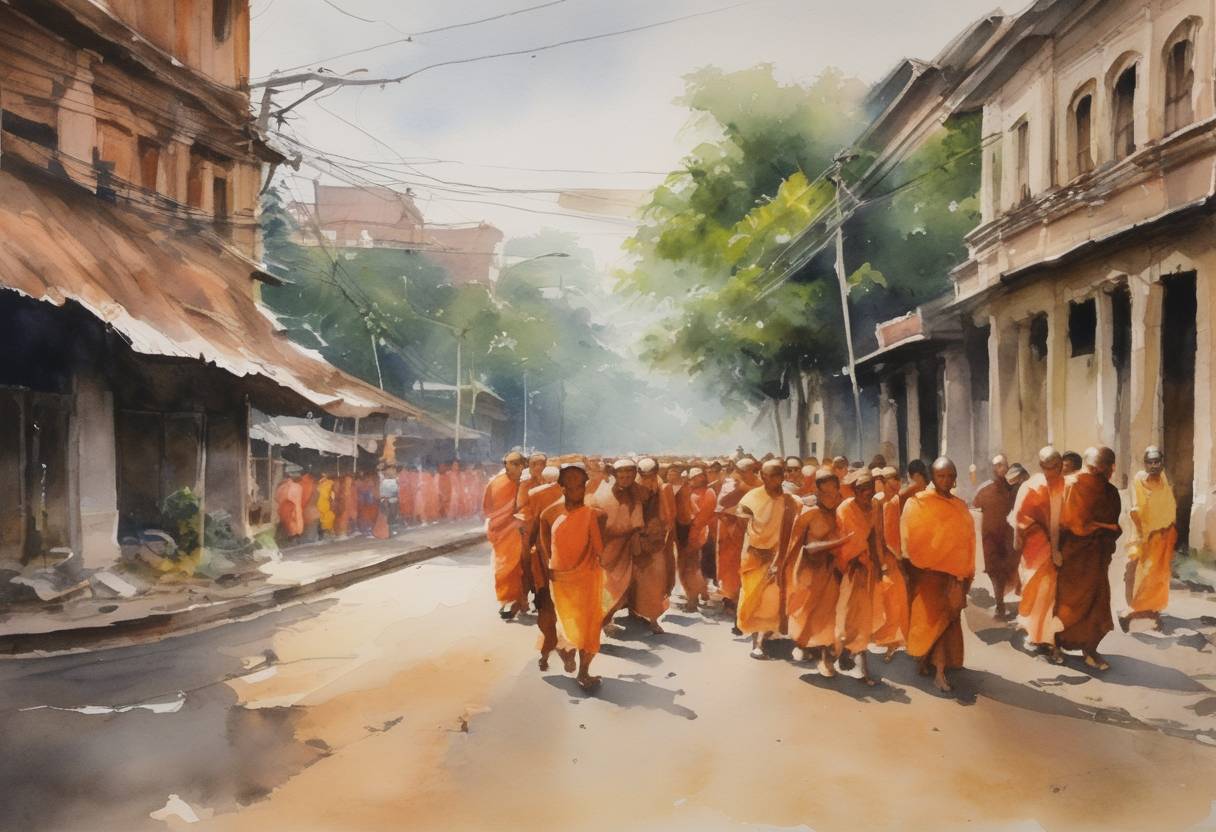
The Saffron Revolution Crackdown: September 25, 2007
On September 25, 2007, Myanmar’s military junta initiated a violent crackdown on pro-democracy protests that had been sweeping through the nation, an event later known as the Saffron Revolution. This movement, primarily led by Buddhist monks, represented one of the most significant challenges to military rule that Myanmar had seen in years.
Background
The Saffron Revolution was sparked by widespread dissatisfaction with the military government’s economic mismanagement, exemplified by an abrupt decision to remove fuel subsidies in August 2007. This policy led to a sharp increase in fuel prices, dramatically affecting transportation and the cost of goods, worsening poverty considerably.
Buddhist monks, who held a revered place in Myanmar’s society, emerged as leaders of the protests. Cloaked in their traditional saffron robes, they leveraged their moral authority and mass appeals for compassion and peace to draw attention to the populace’s suffering and push for democratic reforms. The demonstrations grew rapidly, leading to thousands marching across major cities, including Yangon and Mandalay.
September 25, 2007: The Crackdown
On September 25, the military junta responded with force. The regime imposed curfews and banned public gatherings. Security forces launched violent reprisals against the protestors, using tear gas, rubber bullets, and live rounds to disperse the crowds. The religious sanctity of the monks did not protect them; many were beaten, arrested, or forcibly confined in monasteries.
Prominent leaders of the protests were targeted, and numerous monks were detained, with reports indicating that military forces raided monasteries in nighttime operations. Despite international condemnation of the violence, the junta demonstrated its willingness to maintain control through severe repression.
Aftermath and Impact
The immediate aftermath saw thousands of arrests and an increased climate of fear as the junta restored its grip on power. International reactions included widespread criticism and calls for sanctions and diplomatic interventions. While the crackdown succeeded in quelling the protests temporarily, it deepened international isolation for Myanmar and drew global attention to the oppressive nature of its regime.
The Saffron Revolution is remembered as a key moment in Myanmar’s struggle for democracy. It exposed the junta’s brutality and highlighted the critical role that monks and religious institutions played in advocating for social and political change. The events of September 25th demonstrated both the courage of Myanmar’s people and the lengths to which the military would go to suppress dissent. Despite the suppression, the movement laid groundwork for future efforts towards democratization in Myanmar, eventually leading to some political reforms in the ensuing decade.