The Coup d'État of 18 Brumaire: Establishing Napoleonic Rule
1799 · Paris, France
The coup d'état of 18 Brumaire is declared to establish Napoleon Bonaparte as First Consul of France, effectively ending the French Revolution.
December 15, 1840
Napoleon Bonaparte's remains were transferred to Les Invalides in Paris, France. His body had been returned to France from Saint Helena following negotiations between King Louis-Philippe and the British government.
Paris, France | French Government
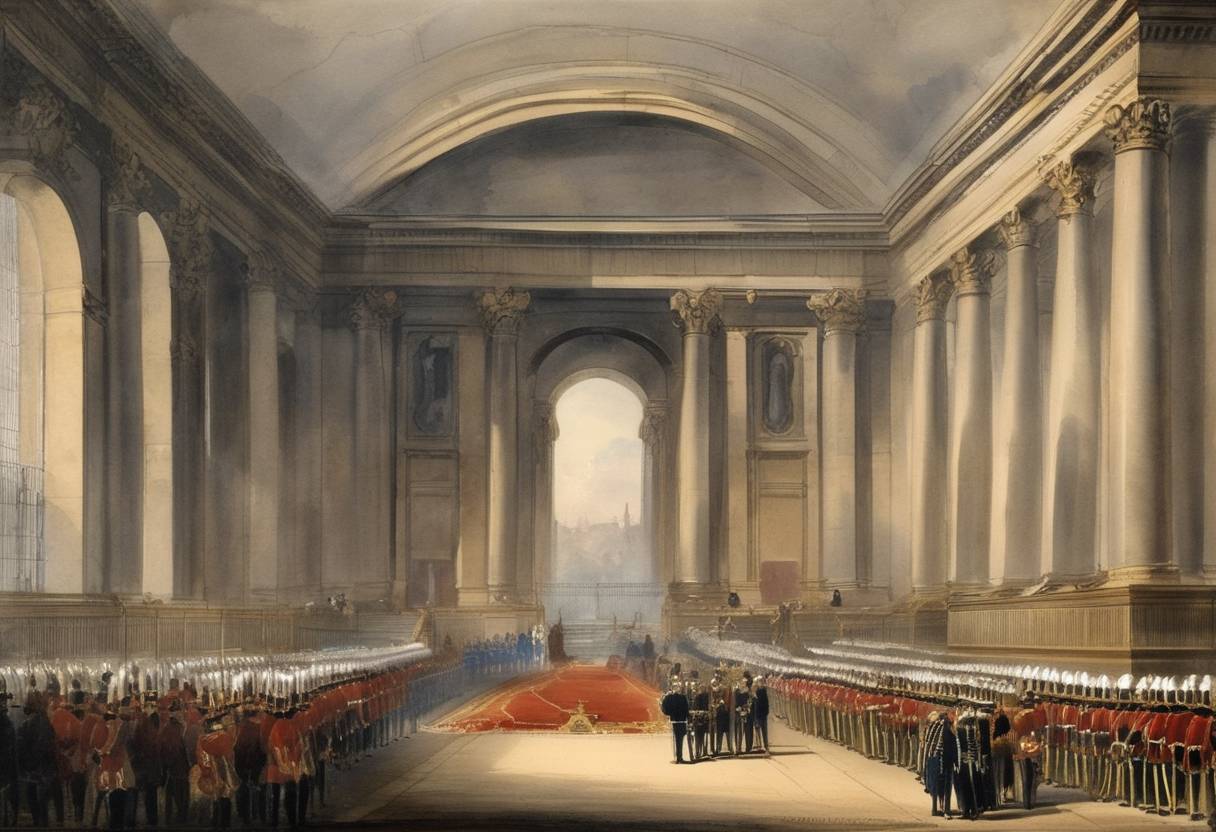
On December 15, 1840, the remains of Napoleon Bonaparte were solemnly transferred to Les Invalides in Paris, following a complex negotiation between the French government and the British authorities. This momentous occasion, often referred to as the “Retour des Cendres” or the “Return of the Ashes,” marked the culmination of efforts to honor the former Emperor of the French.
Napoleon Bonaparte had spent the last years of his life in exile on the remote island of Saint Helena, following his defeat at the Battle of Waterloo in 1815. He died there in 1821, and his body was buried on the island. Two decades after his death, in the political climate of the July Monarchy, King Louis-Philippe I saw an opportunity to bolster national pride and unify the French people by bringing Napoleon’s remains back to France.
The return of Napoleon’s remains became possible due to negotiations between King Louis-Philippe and the British government. Lord Palmerston, the British Foreign Secretary, and French diplomat Adolphe Thiers played key roles in securing an agreement for the exhumation and repatriation of Napoleon’s body.
A French naval vessel, the Belle Poule, was dispatched under the command of the Prince de Joinville to retrieve the remains. The coffin arrived in France at Cherbourg on December 8, 1840, and from there, it made its way to Paris, greeted with significant public interest and ceremonial honors along the route.
The December 15 ceremony in Paris was an elaborately planned state event, intended to reaffirm Napoleon’s place in French history. His remains were placed in a funeral cortege that traveled through the city to Les Invalides, a complex originally established by Louis XIV as a home for war veterans and known for its magnificent dome.
The procession was attended by prominent military and political figures, as well as vast numbers of the public, who lined the streets to pay their respects. The transfer was a powerful moment of national reconciliation, as it tied modern France with its imperial past.
The reburial of Napoleon at Les Invalides reinforced his legacy as a central figure of French history. It provided King Louis-Philippe with a political boost, particularly appealing to Bonapartists and nationalists. His tomb at Les Invalides, completed in 1861, remains a major historical and cultural site in France, symbolizing the enduring fascination with and debate over Napoleon’s role in shaping modern Europe.
Source: www.napoleon.org