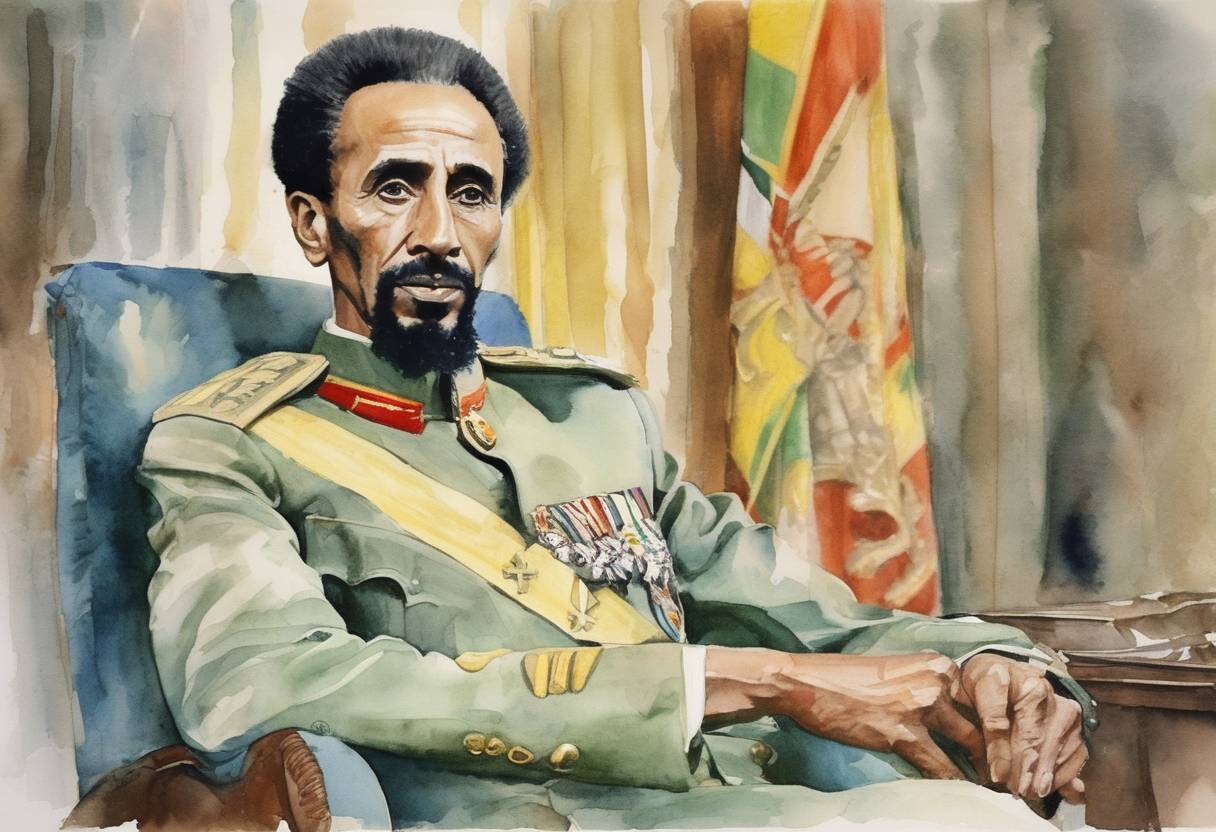
Deposition of Emperor Haile Selassie I - September 12, 1974
On September 12, 1974, Emperor Haile Selassie I of Ethiopia was deposed in a coup d’état, marking the end of his long reign and paving the way for the establishment of a Marxist-Leninist government in Ethiopia. This event was a significant turning point in Ethiopian history, leading to profound political and social changes.
Background
Haile Selassie I, born Tafari Makonnen, became Emperor of Ethiopia in 1930. His reign was marked by efforts to modernize Ethiopia and maintain its sovereignty, notably resisting Italian invasion during the Second Italo-Ethiopian War (1935-1936). He was a prominent figure on the international stage, contributing to the founding of the Organization of African Unity (OAU) and advocating for African unity and independence.
However, by the early 1970s, Ethiopia faced numerous challenges:
- Economic Struggles: Despite modernization efforts, Ethiopia remained largely agrarian and impoverished, with significant economic disparities.
- Famine: A severe famine in the Wollo province from 1972 to 1974 exacerbated public discontent, highlighting the government’s inability to address the crisis effectively.
- Social Unrest: Growing dissatisfaction among students, workers, and the military fueled protests and strikes, demanding political reform and better living conditions.
The Coup d’État
The coup was orchestrated by a group known as the Derg, a committee of military officers who capitalized on the widespread unrest. The Derg initially presented itself as a reformist body aiming to address the grievances of the Ethiopian people. On September 12, 1974, they formally deposed Haile Selassie, placing him under house arrest.
Key events leading to the coup included:
- Military Discontent: The military, frustrated with low pay and poor conditions, became increasingly politicized and influential.
- Public Protests: Demonstrations and strikes by various societal groups pressured the government for change.
- Derg’s Ascendancy: The Derg gradually gained power, positioning itself as the voice of reform and ultimately seizing control.
Aftermath and Significance
Following the coup, the Derg abolished the monarchy and declared Ethiopia a socialist state. This transition led to:
- Establishment of a Marxist-Leninist Regime: The Derg, led by Mengistu Haile Mariam, embraced Marxist-Leninist ideology, aligning Ethiopia with the Soviet bloc.
- Red Terror: The regime launched a brutal campaign against perceived enemies, resulting in widespread human rights abuses and loss of life.
- Long-term Instability: The coup and subsequent policies led to decades of conflict, including civil war and famine, profoundly affecting Ethiopia’s development.
Haile Selassie died under mysterious circumstances in 1975 while under house arrest, with many believing he was murdered by the Derg. His legacy remains complex, as he is remembered both for his efforts to modernize Ethiopia and the challenges that marked the end of his reign.
The deposition of Haile Selassie I was a pivotal moment in Ethiopian history, setting the stage for significant political and social transformations that continue to influence the country today.