State of Emergency in Pakistan - November 3, 2007
2007 · Islamabad, Pakistan
Pervez Musharraf, the President of Pakistan, declared a state of emergency, suspending the constitution and dismissing the Chief Justice of the Supreme Court.
October 12, 1999
Pervez Musharraf takes power in Pakistan through a military coup, ousting Prime Minister Nawaz Sharif.
Islamabad, Pakistan | Pakistan Armed Forces
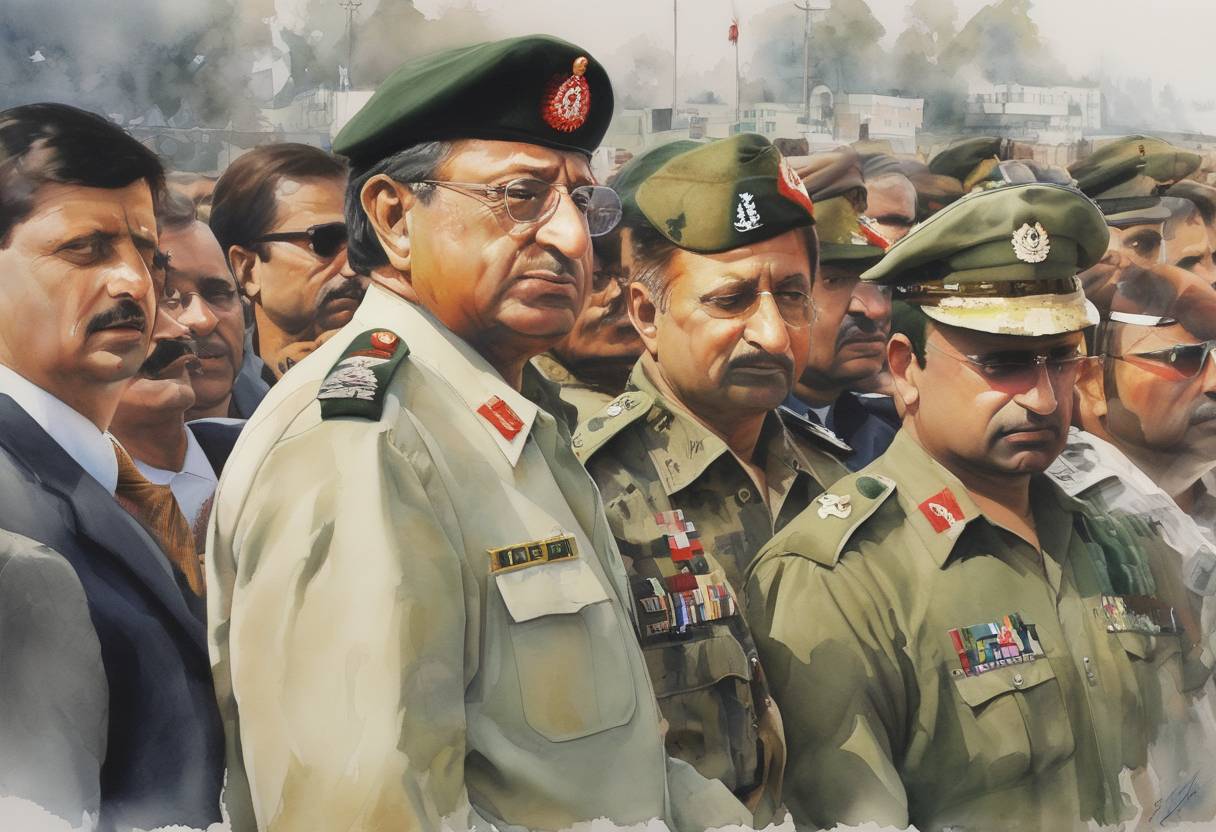
On October 12, 1999, a significant political upheaval occurred in Pakistan when General Pervez Musharraf led a military coup that ousted the democratically elected Prime Minister Nawaz Sharif. This event marked the fourth military takeover in Pakistan’s history and had profound implications for the country’s political landscape.
Leading up to the coup, Pakistan was experiencing considerable political instability and economic challenges. Nawaz Sharif, who was serving his second term as Prime Minister, faced criticism for his handling of the economy, allegations of corruption, and attempts to consolidate power. Tensions between Sharif and the military had been escalating, particularly after Sharif’s decision to withdraw Pakistani forces from the Kargil conflict with India earlier in 1999, which was seen as a humiliation by the military.
The immediate trigger for the coup was Sharif’s attempt to dismiss General Musharraf from his position as Chief of Army Staff while Musharraf was on an official trip to Sri Lanka. Sharif appointed General Ziauddin Butt as the new army chief, a move that was not well-received within the military ranks.
On October 12, as Musharraf’s plane was returning to Pakistan, Sharif ordered the Karachi airport to deny landing rights, effectively stranding the aircraft. In response, senior military officers loyal to Musharraf took control of key government installations, including the state television and radio stations, and arrested Sharif and his close associates. The military swiftly secured the airport, allowing Musharraf’s plane to land safely.
Following the coup, Musharraf declared a state of emergency, suspended the constitution, and assumed the role of Chief Executive, effectively becoming the head of government. He justified the coup by citing the need to restore stability and address corruption and economic mismanagement.
Musharraf’s regime initially received a mixed response internationally. While some countries expressed concern over the overthrow of a democratically elected government, others were cautiously optimistic about Musharraf’s promises of reform.
Political Impact: Musharraf’s takeover led to a prolonged period of military rule in Pakistan, lasting until his resignation in 2008. His regime implemented various reforms but also faced criticism for curbing civil liberties and media freedom.
Economic Reforms: Musharraf’s government pursued economic liberalization and sought to attract foreign investment, which led to some economic growth during his tenure.
War on Terror: The coup had significant implications for Pakistan’s role in the global “War on Terror” following the September 11, 2001, attacks. Musharraf became a key ally of the United States, which influenced Pakistan’s foreign policy and internal security dynamics.
The 1999 coup remains a pivotal moment in Pakistan’s history, reflecting the complex interplay between civilian governance and military influence in the country’s political system.
Source: en.wikipedia.org