West, Texas Fertilizer Plant Explosion - April 18, 2013
2013 · West, United States
A fertilizer plant exploded in West, Texas, killing 15 people and injuring over 160 others.
September 8, 2010
The San Bruno pipeline explosion occurred in San Bruno, California, when a natural gas pipeline owned by Pacific Gas and Electric Company exploded, killing eight people and destroying 38 homes.
San Bruno, United States | Pacific Gas and Electric Company
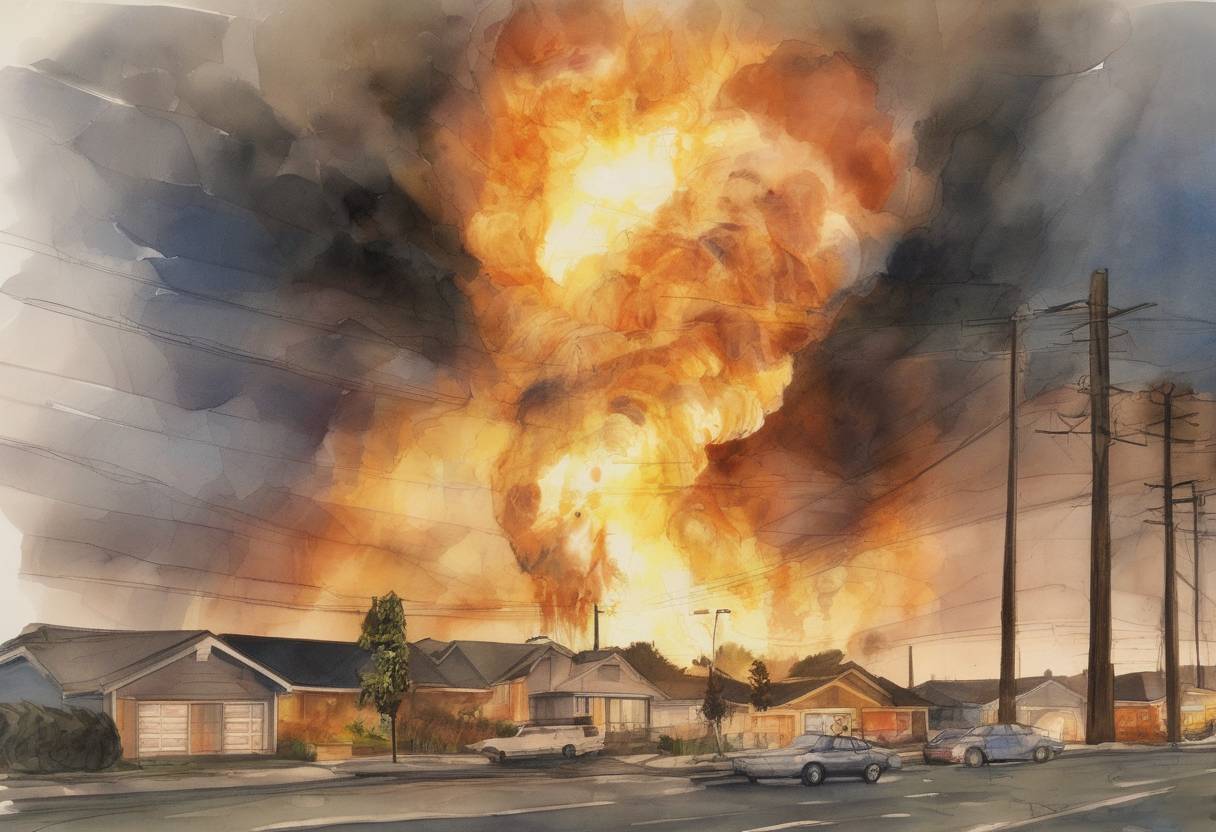
On September 8, 2010, a catastrophic natural gas pipeline explosion occurred in San Bruno, California, a suburban city located just south of San Francisco. This tragic event resulted in the deaths of eight people, injured many others, and led to the destruction of 38 homes. The explosion was one of the most devastating pipeline disasters in U.S. history and had significant repercussions for the Pacific Gas and Electric Company (PG&E), the utility responsible for the pipeline.
The pipeline involved in the explosion was a 30-inch diameter natural gas transmission line, known as Line 132, owned and operated by PG&E. This line was part of a larger network that transported natural gas across Northern California. The pipeline was installed in 1956, and over the years, concerns about its maintenance and safety had been raised.
At approximately 6:11 PM on September 8, 2010, a massive explosion occurred in the Crestmoor residential neighborhood of San Bruno. The blast created a crater 167 feet long and 26 feet wide, and the ensuing fireball reached heights of over 1,000 feet. The explosion and fire were so intense that they were initially mistaken for a plane crash by some witnesses.
The National Transportation Safety Board (NTSB) conducted an extensive investigation into the explosion. Key findings included:
The San Bruno explosion led to significant legal, financial, and regulatory consequences for PG&E:
The San Bruno pipeline explosion underscored the critical importance of infrastructure safety and the need for robust regulatory frameworks to protect communities. It served as a wake-up call for utility companies and regulators nationwide, emphasizing the necessity of proactive maintenance and transparent safety practices.
The tragedy remains a poignant reminder of the potential consequences of neglecting infrastructure safety and the ongoing need for vigilance in the management of essential services.
Source: www.ntsb.gov