Napoleon Bonaparte's Second Abdication - June 22, 1815
1815 · Paris, France
Napoleon Bonaparte abdicated for the second time after his defeat at the Battle of Waterloo, marking the end of the Hundred Days and leading to his exile to Saint Helena.
March 1, 1815
Napoleon Bonaparte returned to France from exile on Elba, marking the beginning of the Hundred Days.
Gulf of Juan, France | French Empire
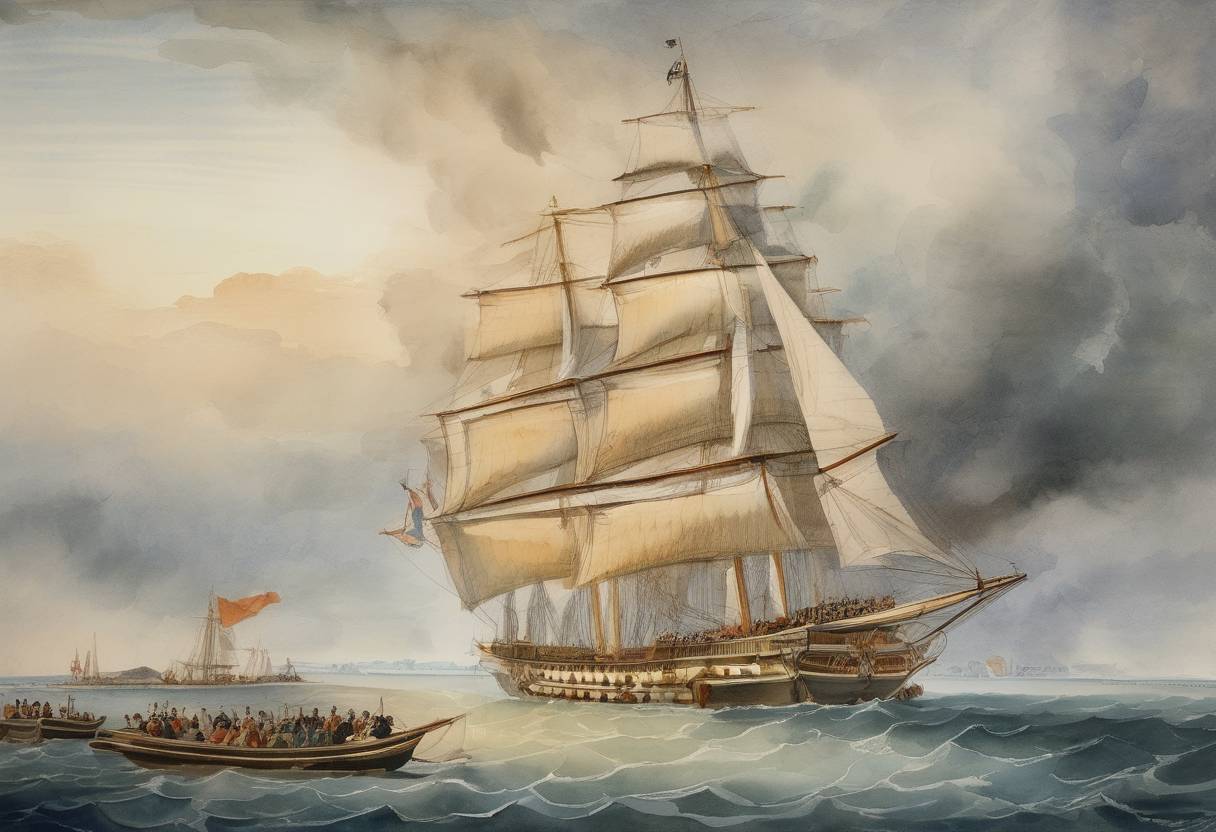
On March 1, 1815, Napoleon Bonaparte made a dramatic return to France from his exile on the island of Elba, marking the beginning of a period known as the Hundred Days. This event was a pivotal moment in European history, as it set the stage for the final confrontation between Napoleon and the allied European powers.
Exile to Elba: Following his abdication in April 1814, Napoleon was exiled to the island of Elba, located in the Mediterranean Sea off the coast of Italy. The Treaty of Fontainebleau granted him sovereignty over the island, where he was allowed to retain a small personal guard and maintain a semblance of authority.
Political Climate in France: During Napoleon’s exile, the Bourbon monarchy was restored under King Louis XVIII. However, the new regime struggled with political instability, economic difficulties, and widespread dissatisfaction among the French populace, particularly among former Napoleonic soldiers and officials.
Napoleon’s Decision to Return: Sensing the discontent in France and aware of the fragile nature of the Bourbon restoration, Napoleon decided to leave Elba and attempt to reclaim power. His decision was also motivated by reports of his supporters’ readiness to rally behind him.
Landing at Golfe-Juan: Napoleon and a small force of about 1,000 men landed at Golfe-Juan, near Cannes, on the southern coast of France. This marked the beginning of his march northward toward Paris.
The March to Paris: As Napoleon advanced, he was met with a mix of resistance and support. However, his charisma and the loyalty he inspired among many in the military led to a growing number of soldiers and officers defecting to his side.
The Rallying Cry: Napoleon’s journey was marked by his famous proclamation, “The Eagle will fly from steeple to steeple until it reaches the towers of Notre-Dame.” This symbolized his confidence in regaining control over France.
The Hundred Days: Napoleon’s return initiated the period known as the Hundred Days, during which he regained control of France and reestablished his rule. This period lasted until his defeat at the Battle of Waterloo on June 18, 1815.
The Battle of Waterloo: The Hundred Days culminated in the Battle of Waterloo, where Napoleon faced a coalition of British, Prussian, and other allied forces. His defeat led to his second abdication and subsequent exile to the remote island of Saint Helena, where he spent the remainder of his life.
Impact on Europe: Napoleon’s return and the subsequent conflict had significant implications for Europe, leading to the reshaping of the continent’s political landscape at the Congress of Vienna and reinforcing the resolve of European powers to prevent similar upheavals in the future.
Napoleon’s return from Elba remains a remarkable episode in history, illustrating his enduring influence and the complex dynamics of power and loyalty in post-revolutionary France.
Source: en.wikipedia.org