The Mayflower Sets Sail: September 16, 1620
1620 · Plymouth, England
The Mayflower set sail from Plymouth, England, carrying Pilgrims to the New World.
December 11, 1620
The Mayflower Pilgrims landed at Plymouth Rock in present-day Massachusetts, marking a significant event in the early colonization of North America.
Plymouth, United States | Pilgrims
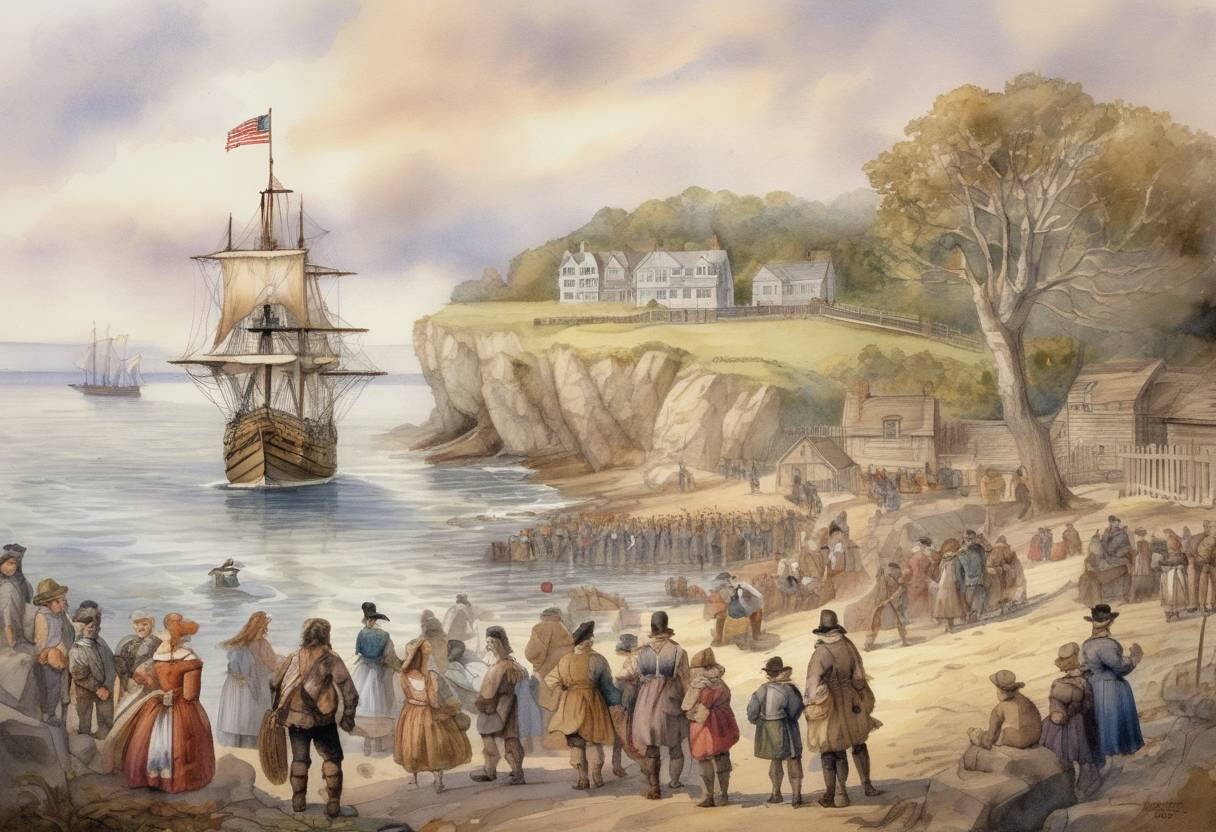
On December 11, 1620, a significant event in the early colonization of North America occurred when the Mayflower Pilgrims landed at Plymouth Rock in present-day Massachusetts. This moment marked the beginning of a new chapter in the history of European settlement in the New World.
The journey of the Pilgrims began in England, where a group of Separatists, seeking religious freedom, decided to leave for the New World. They initially moved to the Netherlands but eventually sought to establish a new colony where they could practice their faith freely. The Pilgrims secured a patent from the Virginia Company and set sail aboard the Mayflower in September 1620.
The Mayflower carried 102 passengers, including both Separatists and other settlers seeking new opportunities. The journey across the Atlantic was treacherous, with rough seas and cramped conditions. After 66 days at sea, the Mayflower sighted land on November 9, 1620, but it was not the intended destination near the Hudson River. Instead, they anchored at Cape Cod, far north of their original target.
After exploring the Cape Cod area, the Pilgrims decided to settle at a location they named Plymouth, after the English port from which they had departed. On December 11, 1620, a scouting party made the historic landing at Plymouth Rock. This site was chosen for its defensible position and the availability of fresh water.
Before disembarking, the Pilgrims drafted and signed the Mayflower Compact on November 21, 1620. This document established a rudimentary form of self-governance and was significant as one of the first attempts at democracy in America. It laid the groundwork for future governance in the colony.
The first winter in Plymouth was brutal, with harsh weather and inadequate shelter. Nearly half of the original settlers perished due to disease and malnutrition. However, the survivors received crucial assistance from the Wampanoag people, who taught them vital agricultural techniques and helped them adapt to the new environment.
The landing of the Mayflower Pilgrims is a cornerstone event in American history. It symbolizes the quest for religious freedom and the beginning of permanent European settlement in New England. The Pilgrims’ story is celebrated annually in the United States during Thanksgiving, commemorating the cooperation between the settlers and Native Americans.
The Plymouth Colony eventually grew and prospered, becoming part of the larger Massachusetts Bay Colony in 1691. The Pilgrims’ legacy continues to influence American culture and values, particularly the ideals of self-governance and religious freedom.
In summary, the landing of the Mayflower Pilgrims at Plymouth Rock was a pivotal moment in the history of North America, setting the stage for future colonization and the development of the United States.
Source: en.wikipedia.org